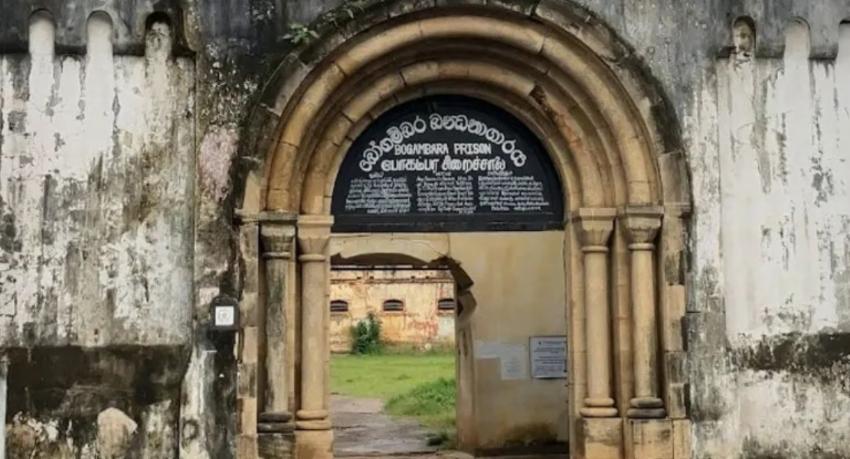
The Department of Prisons has formally asked the Ministry of Justice to act on delays in issuing Government Analyst reports, which it says are a direct cause of severe overcrowding in Sri Lanka’s jails.
Acting Commissioner General of Prisons Prasad Hemantha said the wait for Government Analyst reports leaves suspects in remand custody for extended periods, swelling the prison population well beyond capacity. Approximately 39,000 inmates are currently being held in prisons across the island, he said.
Hemantha said the department has begun transferring drug-dependent inmates to rehabilitation centres as one measure to relieve pressure on the system.
Government Analyst reports — which include the toxicology and narcotics analyses required in drug prosecutions — must generally be filed before cases can proceed, and a backlog leaves large numbers of unconvicted suspects held on remand rather than serving sentences.
The intervention places the prisons administration behind a diagnosis the Justice Ministry has already made publicly. Justice and National Integration Minister Harshana Nanayakkara said last week that report delays were among the main causes of overcrowding and that faster turnaround could cut the remand population by close to half. He said the Government Analyst’s Department had been given additional staff and resources to lift its output to between 1,500 and 2,000 reports a month.
Nanayakkara has also said the government is drafting legal amendments to allow alternatives to imprisonment, including technology-based measures such as house arrest, noting that facilities built for 10,375 inmates are holding roughly four times that number.
Conditions inside the prison system have been under scrutiny since the Negombo Prison unrest earlier this month, which left dozens dead and prompted renewed calls for structural reform of remand and sentencing practices.
Update (August 4): official census puts unconvicted inmates above 72%
The total prison population stood at 39,516 as of August 1, according to the latest official statistics reported by the Daily Mirror — putting a precise figure on the approximate 39,000 cited by the Prisons Department in July.
Unconvicted prisoners account for more than 72 per cent of that total. There are 28,646 inmates classified as unconvicted, comprising 26,935 men and 1,711 women, against 10,870 convicted prisoners — 10,588 men and 282 women. Men make up the overwhelming majority of the prison population overall, at 37,523 compared with 1,993 women.
Figures cited elsewhere on the same day differ. Ada Derana, reporting the opposition’s call for a parliamentary select committee, put the prison population at more than 40,000 against a capacity of about 10,000, with around 75 per cent of inmates awaiting the conclusion of legal proceedings.
The Committee for the Protection of Prisoners’ Rights has tied the imbalance directly to the recent disturbances at Negombo and Mahara prisons. Its chairman, Attorney-at-Law Senaka Perera, said conditions have deteriorated because inmates are held well beyond the capacity of the facilities.
Cabinet Spokesman and Minister Nalinda Jayatissa has said the prison population rose from around 28,000 to more than 40,000 since the government took office in 2024, attributing much of the increase to intensified anti-narcotics operations under the “Ratama Ekata” programme.
The government has begun recruiting additional prison officers and has commissioned construction at several facilities. Work has been completed at Pallekele Prison, new buildings at Pallansena Prison have been commissioned, and the Mahara Prison storage complex was finished in 2025. Temporary accommodation is being completed at Welikada, Magazine and Colombo prisons to reduce congestion, and a high-security facility has been established at the Welisara Navy Camp. Further projects are planned between 2026 and 2029 at Pallekele, Wataraka, Kalutara, Kuruvita and Matara.