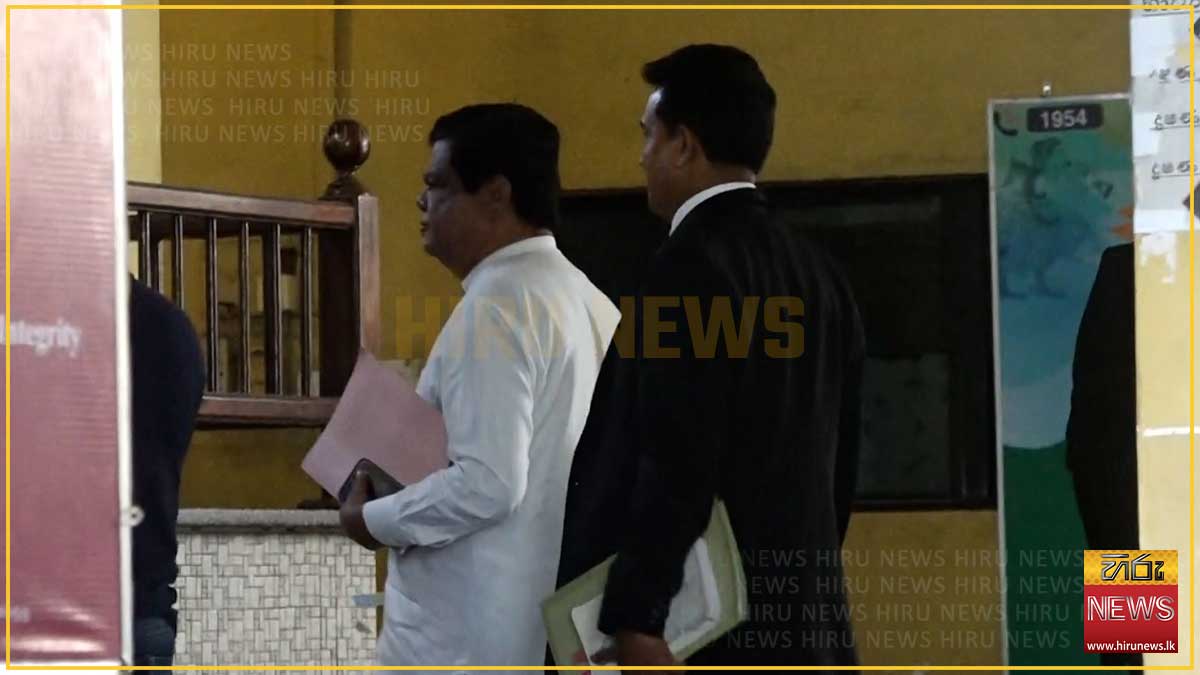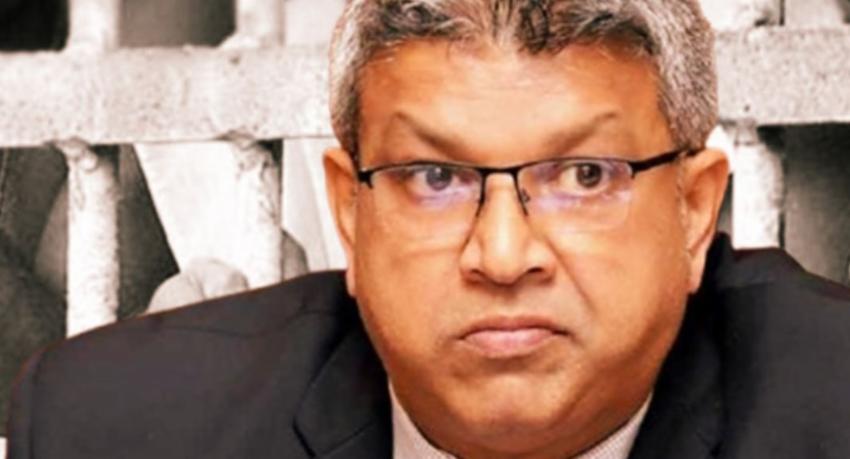
Drafting of preliminary legal provisions to allow certain inmates to be placed under house arrest has begun, Justice and National Integration Minister Harshana Nanayakkara has said, describing the measure as a way to address prison overcrowding.
The minister was speaking about the state of the prison system following the weekend unrest at Mahara Prison.
He said steps have also been initiated to strengthen security across all prisons in the country, with the Ministry of Defence and the police providing the necessary support. Authorities are acting on intelligence received by the relevant agencies, he said.
Investigations so far indicate that the confrontation at Mahara Prison took place between inmates and the prison administration, according to the minister — a characterisation he has used to distinguish it from the Negombo Prison riot in July, which he has described as a clash between rival groups of inmates.
Forensic backlog targeted
Nanayakkara said a programme has been launched to increase the issuance of forensic and analytical reports, with a target of between 7,500 and 9,000 reports a month.
That target marks a sharp escalation. When the minister first set out the house arrest plan in late July, he put the Government Analyst’s Department’s expanded capacity at 1,500 to 2,000 reports a month.
Delays in obtaining those reports are one of the principal drivers of overcrowding, because they prolong the remand period of suspects awaiting trial. The minister has previously said that if the reports were issued more promptly, the remand population could be cut by close to half.
The scale of the problem
Sri Lanka’s prisons were built to hold 10,375 inmates and are currently holding roughly four times that number.
The pressure is concentrated in individual facilities. The Committee for the Protection of Prisoners’ Rights says Mahara Prison has an official capacity of 991 but was holding 4,447 inmates when the unrest broke out on Saturday, leaving one inmate dead and causing damage put at more than Rs. 150 million.
Source: NewsFirst.
Update — August 4: Cabinet orders the draft finished as a priority
The Cabinet of Ministers has approved a proposal to expedite the drafting of the house arrest legislation, instructing the Legal Draftsman to finalise the bill by incorporating additional provisions identified during a review of the existing draft.
The proposal was submitted by the Minister of Justice and National Integration. The initiative rests on an earlier Cabinet policy decision to let courts place eligible suspects and convicts under house arrest instead of remanding or imprisoning them in appropriate cases.
Cabinet had approved a further review of the Legal Draftsman’s draft at its meeting on June 23, 2025, and that review identified several provisions that needed to be added. Tuesday’s decision authorises the Legal Draftsman to complete the drafting as a priority, Ada Derana and the Daily Mirror reported.
Prison population now at 41,000
Cabinet Spokesman and Health Minister Dr. Nalinda Jayatissa said on the same day that the prison population has risen to 41,000, which he attributed to the intensified crackdown on drug trafficking and organised crime. He said there were already 19,000 inmates when the current administration took office in 2024, against a system built for about 10,000.
The government plans to expand existing prisons and build new facilities over this year and the next two, alongside recruiting additional prison officers, he said.
Jayatissa also said attempts may be made to obstruct law enforcement operations depending on the political connections behind them, and that “even emergency situations within prisons could be exploited to disrupt the processes of arrests and legal action.” He said the government would not be deterred.
Sources: