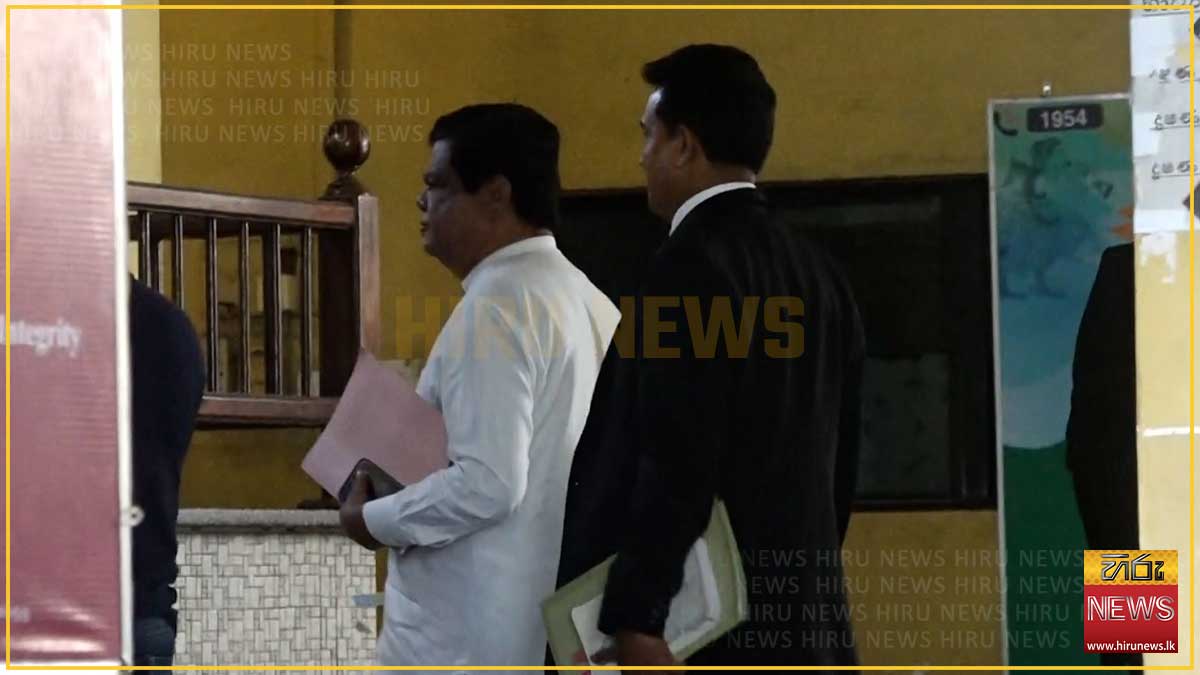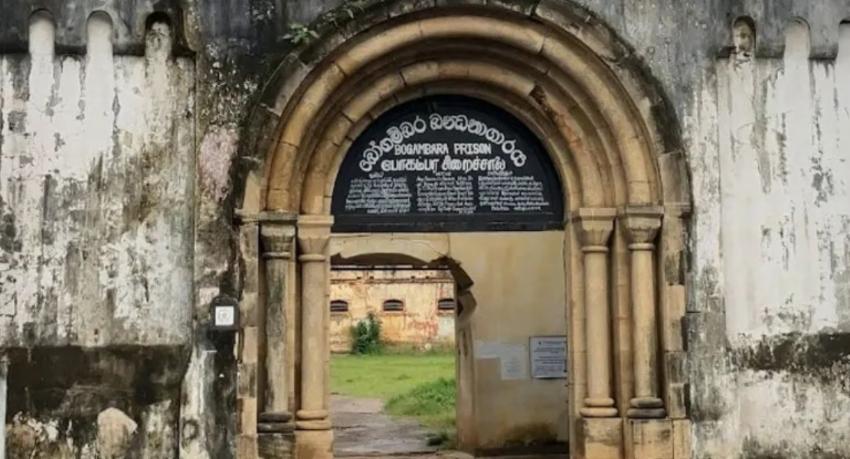
A joint mechanism bringing together prison officials, the police, the Special Task Force and the Tri-Forces is to be established to safeguard inmates across all 33 prisons in Sri Lanka.
The decision was taken at a special discussion chaired by President Anura Kumara Dissanayake on Friday afternoon, called to review conditions in the prison system and the steps needed to protect inmates after two days of disturbances at several facilities.
Officials at the meeting reviewed the situation in each prison and discussed measures to improve prison management, according to the Daily Mirror and Hiru News.
What the mechanism is meant to do
The body will identify and address problems faced by inmates, monitor their welfare, and set out how authorities should respond during emergencies. It is also to engage directly with inmates so their concerns can be understood and dealt with, rather than relying solely on reports through the prison administration.
The Daily Mirror reported that the mechanism will be established next week.
The meeting the government had promised
Public Security Minister Ananda Wijepala had told Parliament earlier on Friday that the President would meet prison stakeholders that evening and that urgent measures would follow. Wijepala also said intelligence reports had raised suspicions that the disturbances may be organised and coordinated, and that the Cabinet had already appointed a committee chaired by the Justice Minister to examine prison conditions.
Three inmates died and more than 50 people were injured in incidents at the New Magazine Prison in Colombo, Kuruwita Prison in Ratnapura and the Pallansena camp in Negombo over roughly 36 hours. Authorities said on Friday evening that the situation at Kuruwita and Pallansena had been brought under control.
Separately, Justice Minister Harshana Nanayakkara said the same day that the law would be amended to let certain drug suspects seek bail from the High Court, addressing one of the grievances raised by inmates.
Update — August 8: forces on standby, and the bill for what comes next
Major correctional facilities have been placed under heightened security, with police, the tri-forces, the STF, riot squads and aerial surveillance units held on standby to respond to further unrest, the Daily Mirror reported on Saturday. Military and STF personnel have set up outer perimeters at major prisons, while prison staff hold security inside.
The government’s assessment is that the wave is organised. Intelligence reports and high-level security reviews point to a plot linked to drug syndicates and underworld networks, according to the Daily Mirror — the framing Public Security Minister Ananda Wijepala had put to Parliament on Friday. Wijepala rejected opposition claims that the unrest amounts to a failure of national security.
Authorities have begun stripping prisons of items that could be dismantled and used as weapons, and notorious underworld figures have been moved selectively to high-security facilities — the new high-security unit at the Welisara Navy Camp and Boossa — to stop them coordinating syndicate operations from inside.
The numbers behind the strain
Justice Minister Harshana Nanayakkara said the prison population has climbed from around 29,000 to nearly 40,000 since the current administration took office, describing overcrowding as the product of decades of under-investment in prison infrastructure.
Official figures put the total at 39,400 inmates as of August 5. Of those, 28,702 are unconvicted and 10,698 convicted — 10,434 men and 264 women. Unconvicted prisoners therefore make up close to three-quarters of the population, which is why the government’s response has centred on bail and sentencing reform as much as on security.
What is being spent
Rs. 46 million has been allocated for capacity-building programmes and specialised weapons training for prison officers. Procurement has started for body cameras and riot control equipment worth Rs. 13.7 million, including 150 riot helmets, 300 riot batons and 300 riot shields.
New officer barracks are planned at Welikada, Vavuniya, Anuradhapura, Trincomalee, Monaragala, Pallansena, Boossa, Mahara and Negombo prisons. A committee has been appointed to design compensation for officers affected by the violence, covering financial assistance, pensions, disability benefits and family welfare.
A separate high-level ministerial committee chaired by Nanayakkara will examine the root causes of congestion and recommend reforms — reducing court delays, reviewing bail procedures and alternative sentencing, expanding rehabilitation, and improving prison capacity and management.
The opposition’s case
The opposition blamed the unrest on poor management and long-standing systemic problems rather than a security lapse, and pressed the government to prioritise reform over tighter security. It also criticised the failure to appoint a permanent Commissioner General of Prisons, questioning why the post remains vacant.
Preventive security had already been raised at Jaffna and five outstation prisons and, earlier this month, across the five Southern Province facilities reviewed by Governor Prof. Susiripala Manawadu.
Update — August 8 evening: ringleaders identified, inmates being moved
Police have identified the groups that started the clashes at the Kuruwita, Pallansena and New Magazine prisons, Ada Derana reported on Saturday evening. The Department of Prisons said it is taking action accordingly, including transferring the identified inmates to other facilities.
Police put the toll from the August 6 and 7 disturbances at three inmates dead and 54 injured. Two of the dead had gunshot wounds, according to police.
Kuruwita: damaged roofs and a rain problem
A tense situation had developed at Kuruwita Prison after inmates destroyed cell roofs during Friday’s unrest. The damage has created a practical problem, because frequent rain in the area makes the affected cells difficult to house inmates in.
Investigations were carried out at the prison on Saturday under the supervision of Deputy Inspector General of Police for the Ratnapura Division, Renuka Jayasundara, and security at the facility has been strengthened. Visits to Kuruwita remain temporarily suspended.
Pallansena: no damage to state property, 78 inmates transferred
The Department of Prisons said the unrest at the Dalupotha Pallansena prison has been brought fully under control and that no damage was caused to prison buildings or other state property, Hiru News reported.
The situation inside the premises returned to normal by around midnight on Friday, after which additional security teams withdrew. By Saturday morning relatives were arriving to visit inmates as usual and the prison administration allowed the visits to proceed, with daily operations running normally.
Seventy-eight inmates have been transferred out of Pallansena to other prisons for security and administrative reasons. Twenty-eight of them were sent to the Welikada Prison Hospital for further treatment and medical examinations. Investigations into the incidents are continuing.
Sources: Daily Mirror, Hiru News, Ada Derana, Daily Mirror, Ada Derana, Hiru News.