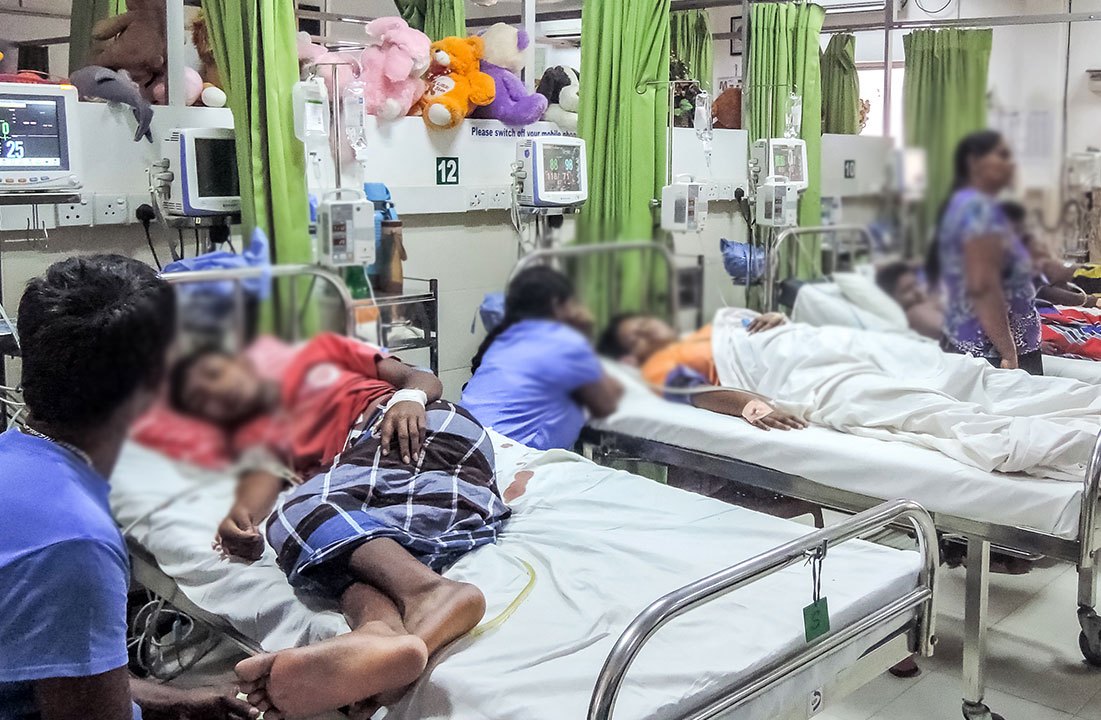
Sri Lanka has recorded 65 dengue deaths so far this year and 89,395 reported cases, according to the latest figures from the National Dengue Control Unit (NDCU).
The caseload is now within 600 of the 90,000 mark. The death toll is based on data recorded up to August 8.
The Western Province accounts for more than half the national total — 47,310 infections, or 52.92%.
Gampaha remains the worst-hit district
Gampaha has passed 19,000 cases, at 19,007 — the highest of any district. Colombo District follows with 17,725 cases, and Kandy is third with 6,341. Within the Colombo Municipal Council area alone, 3,569 infections had been recorded as of the NDCU’s August 8 report.
July was the heaviest month of the year, with 29,973 cases. A further 4,048 infections were reported in the first eight days of August — a pace that, if sustained, would fall short of July’s total but still leave August among the worst months of 2026.
Health authorities have identified 119 Medical Officer of Health (MOH) areas as high-risk dengue zones, and mosquito control operations are continuing across them.
Larvae density has begun to fall
The NDCU says a decline in mosquito larvae density has been observed — the first indication that this year’s control effort is reducing the breeding base rather than only the reported case count.
Director of the National Dengue Control Unit Dr. Kapila Kannangara said sustained work to eliminate breeding sites, through eradication programmes and community participation, has contributed to the fall in larvae density and to a reduction in the spread of dengue.
Kannangara urged the public to keep their surroundings clean and free of stagnant water to prevent mosquitoes breeding.
The two trends are not in conflict: larvae surveys measure the current breeding population, while the case and death totals are cumulative for the year and will keep climbing even as transmission slows.
Weeks of steady escalation
The figures mark a continued climb from the NDCU’s July 25 report of 61 deaths and 80,905 cases — an increase of four deaths and more than 8,000 infections in a fortnight.
The district rankings have also shifted since that report. Matara, previously third by caseload, has been overtaken by Kandy, while Gampaha and Colombo remain the two most affected districts.
Officials continue to urge the public to clear mosquito-breeding sites at homes, schools and workplaces, warning that discarded containers, blocked gutters and standing water sustain the Aedes mosquito population. Anyone with a persistent high fever is advised to seek medical treatment early, as delayed care remains a leading factor in dengue deaths.
Update (August 9): The NDCU’s latest release raised the toll to 65 deaths and 89,395 cases, from 64 deaths and 89,033 cases reported a day earlier, and the unit reported the decline in larvae density set out above.
Update — August 11: caseload passes 90,000
Sri Lanka’s total for the year has crossed 90,000. The NDCU put the count at 90,306 cases with 65 deaths, a case fatality rate of 0.07 percent. The death toll is unchanged from August 9, while the caseload has risen by about 900 in two days.
August is running heavily. The unit recorded 4,959 cases in the first 10 days of the month — a pace close to July’s, which at 29,973 cases remains the worst month of the year.
The Western Province now accounts for 47,824 cases, or 52.96 percent of the national total. The Southern Province follows with 13,361 and the Central Province with 8,027.
The 119 Medical Officer of Health divisions previously identified as high-risk zones remain under mosquito control operations. Community Medicine Specialist Dr. Prashila Samaraweera of the NDCU urged the public to stay vigilant, pointing to the prevailing rainy weather as a factor in continued breeding.
Ada Derana, NewsFirst and Hiru News all carried the same figures.
Update — August 13: toll reaches 68, caseload passes 91,000
The death toll has risen to 68 and the caseload to 91,059 as of August 12, according to the NDCU’s latest NaDSys surveillance data — four more deaths and about 750 further cases since the August 11 report.
August has now recorded 5,714 cases. July remains the worst month of the year, which the latest release puts at 29,971 cases. The case fatality rate stands at 0.075 percent.
The average weekly case total was 1,509, which the NDCU says indicates transmission is still running at a high level. The 119 MOH areas previously designated high-risk remain classified as such.
Gampaha is still the worst-affected district with 19,406 cases, or 21.31 percent of the national total, followed by Colombo on 18,101 cases, or 19.88 percent. Between them the two districts account for more than 37,500 infections — over 41 percent of all dengue cases recorded in the country this year.
With the toll continuing to climb, health authorities have again urged the public to intensify efforts to eliminate mosquito-breeding sites.
Source: Ada Derana, August 13.
Sources: Ada Derana, August 8; NewsFirst, August 8; Ada Derana, August 9; NewsFirst, August 9; Ada Derana, August 11; NewsFirst, August 11; Hiru News, August 11.