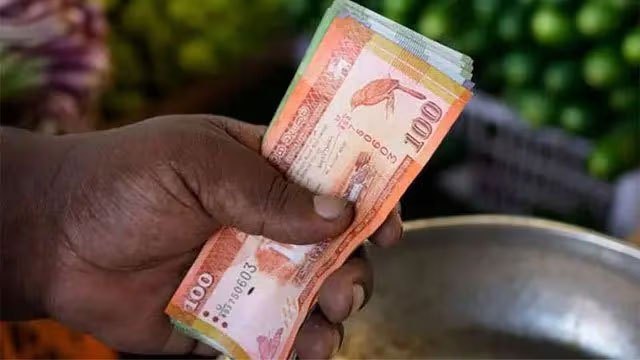
Sri Lanka’s headline rate of inflation rose to 8.0% in August 2026 from 7.3% in July, its highest level in more than three years, the Department of Census and Statistics said on Monday.
The measure is the year-on-year change in the Colombo Consumer Price Index, the country’s benchmark gauge of urban retail prices. The index for all items stood at 208.8 in August, up 0.6 index points from 208.2 in July, Ada Derana reported.
Food is driving the increase
Food inflation accelerated sharply, to 8.5% in August from 6.3% in July — a 2.2 percentage point jump in a single month, and its highest reading since May 2023, EconomyNext reported.
Non-food inflation moved the other way, easing marginally to 7.7% from 7.8%.
The pattern is the same one that drove July’s rise to 7.3%, when food inflation nearly doubled to 6.3% from 3.6% in June while non-food eased. What has changed is the ranking: in July non-food inflation was still running ahead of food, and in August food overtook it.
Core inflation, which strips out the most volatile food and energy items and is read as a gauge of underlying price pressure, accelerated to 5.5% in August from 4.4% in July.
Above the Central Bank’s ceiling for a second month
The reading breaches the Central Bank’s upper inflation target of 7% for a second consecutive month. The bank targets 5% over the medium term with a tolerance band of 3% to 7%; July’s 7.3% was the first breach.
The Central Bank has held its key policy rate at 8.75% since its July review, a level set when price pressures were milder than they are now. Neither report said whether the Monetary Policy Board will respond to the August figure.
The El Niño link
The food component is the transmission channel for a shock the country has been tracking all winter. The Meteorological Department has described the current El Niño as the strongest in living memory, and the government reported last week that the dry spell had affected 84,546 people and pushed vegetable prices up.
Imported staples have moved as well. The wheat flour price rose by Rs. 17 a kilogram on 29 August, with millers citing shipping costs, maritime insurance and world grain prices amid the conflict in the Middle East. Bakery products and short eats followed within days.
How the two indices differ
The CCPI covers urban households in the Colombo District only, using a basket of 426 items weighted to the 2019 Household Income and Expenditure Survey, with 2021 as the base year. The broader National Consumer Price Index, which covers the whole country, reached 7.2% in July and is published later in the month. The August NCPI has not yet been released.
Neither Ada Derana nor EconomyNext published a district-level or item-level breakdown of the August increase, and neither gave the Department’s commentary on what it expects for September. The Daily Mirror supplied the item-level detail a day later — see the update below.
Update: the item-level breakdown, and why this is not yet a formal breach
The Daily Mirror published the monthly decomposition on Tuesday, along with an important qualification about what “breaching the band” means in practice.
It is not yet a formal breach. Compliance with the Central Bank’s target is assessed on quarterly average inflation, and a formal breach occurs only when inflation stays outside the range for two consecutive quarters. August is the second consecutive month above the ceiling, not the second consecutive quarter. The Daily Mirror also frames the band as 5% with a deviation of two percentage points either side — the same 3–7% range described above, stated differently.
August was the sixth consecutive monthly acceleration since February.
The monthly move was small
Despite the headline rate rising, month-on-month price growth was contained: the CCPI rose 0.28% in August against 0.24% in July.
Food contributed 0.20 percentage points of that monthly increase. Milk powder was the largest single positive contributor at 0.09 percentage points, followed by dried fish, fresh fruit, ice cream and green chillies at 0.05 percentage points each. Eggs, big onions, coconuts and dried chillies also rose.
Those increases were partly offset by falls in sea fish and vegetables, which reduced the monthly index by 0.14 and 0.10 percentage points respectively, along with limes, rice and red onions.
Fuel cut the monthly figure but transport still drives the annual one
Lower domestic fuel prices helped hold down the August monthly reading. Transport nonetheless remained the single largest contributor to the annual increase — a distinction neither of the Monday reports drew.
The Governor’s forecast
Central Bank Governor Dr. Nandalal Weerasinghe said in a mid-August interview with Bloomberg’s The Asia Trade that inflation was expected to fall back towards the 5% target later this year and into early next, provided oil prices stayed around the Central Bank’s baseline assumption of US$80 a barrel.
That condition is the one to watch. The assumption is exposed to the renewed US–Iran exchange of strikes, which has already moved crude, and the Daily Mirror noted the outlook could also come under pressure if food inflation stays elevated.