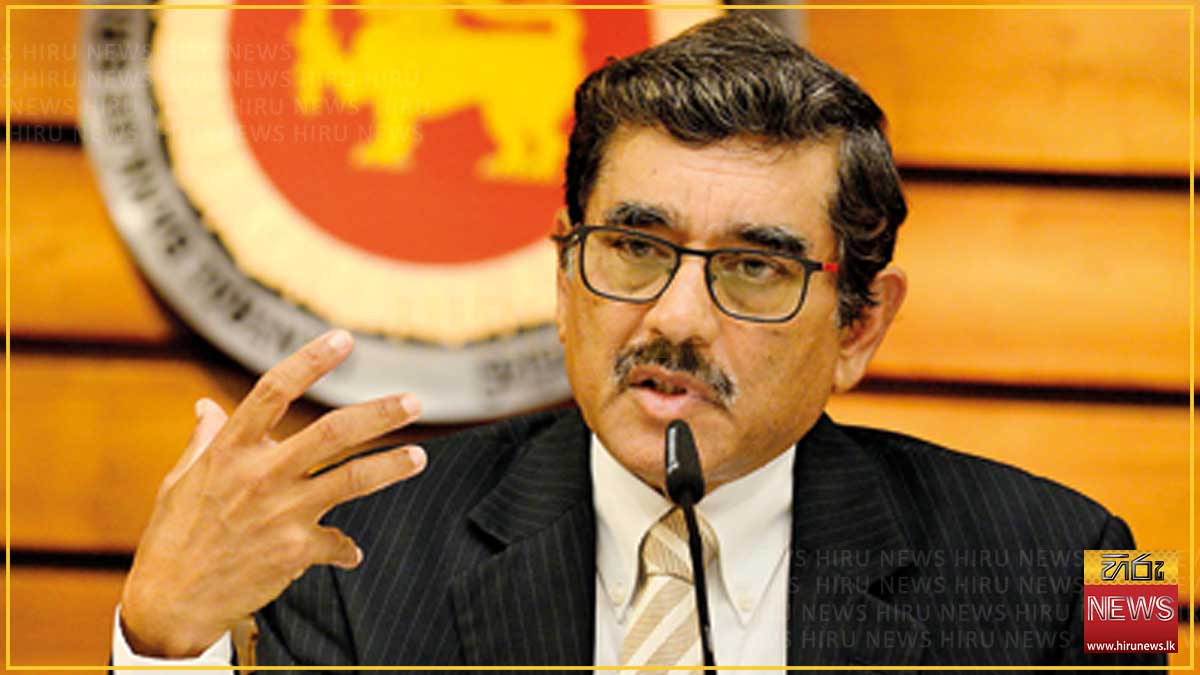
The government plans to raise lending through the Samurdhi banking system from about Rs. 60 billion last year to Rs. 70 billion next year, Minister of Rural Development, Social Security and Community Empowerment Dr. Upali Pannila said, according to the Daily Mirror.
That is an increase of roughly 17% in nominal terms. The Minister was addressing an awareness programme for Samurdhi officials covering the Matara and Hambantota districts, held on September 16 at the Rabindranath Tagore Memorial Auditorium of the University of Ruhuna.
Credit, not cash transfers
The figure refers to loans disbursed through Samurdhi banks, not welfare payments — a distinction that matters, because the same ministry administers the separate Aswesuma cash-transfer scheme. Pannila said the Samurdhi banking system should serve as an important mechanism for economically empowering low-income communities.
The department has been tasked with empowering 1.2 million Aswesuma beneficiary families by 2029 through a set of programmes the Minister listed:
- the ‘Savibala’ loan scheme
- micro-credit facilities for small businesses
- vocational training loans for young people
- self-employment training and equipment
- livelihood development programmes
Pannila said the Samurdhi Development Department must be comprehensively restructured to respond to current social, political and economic conditions, and described the government’s objective as eradicating poverty “within the current generation” by moving people from dependency to economic and social self-sufficiency.
The programme carrying it
The Matara–Hambantota session was part of ‘Praja Saviyata New Balayak’, an islandwide programme to strengthen and streamline Samurdhi empowerment work.
This should not be confused with Prajashakthi, a different scheme under the same ministry, which spent Rs. 23 billion on about 23,000 locally prioritised projects from a Rs. 25 billion Budget 2026 allocation and operates through Community Development Councils. The names are similar; the instruments are not.
Pannila has been the ministry’s public face on rural poverty this year, including in a June meeting with Canadian High Commissioner Isabelle Martin on support for poverty eradication.
Not reported
The Daily Mirror does not say how the Rs. 70 billion is to be funded, whether it requires a Budget 2027 allocation or is met from Samurdhi bank deposits and loan recoveries, or what the repayment performance on the Rs. 60 billion disbursed last year has been. It gives no interest rates, no average loan size, no borrower count, and no year-on-year series beyond the two figures — so it is not possible to say whether Rs. 60 billion was itself a rise or a fall.
Nor does the report say what “comprehensively restructured” means for the department’s staff or branch network, how the 1.2 million-family target relates to the current Aswesuma caseload, or what share of Aswesuma recipients already borrow from Samurdhi banks. Whether a Rs. 10 billion nominal increase keeps pace with inflation is not addressed.
Update: Hiru corroborates, and the Rs. 60 billion figure does not appear
Hiru News filed its own account on 18 September, agreeing with the Daily Mirror on the amount — which it renders as Rs. 70,000 million — the minister, the ministry, and the venue and date of the Ruhuna event on 16 September.
Two differences are worth noting. Hiru presents the Rs. 70 billion as a flat commitment rather than an increase: it carries no prior-year comparison, so the Rs. 60 billion disbursed last year — the figure that makes this a roughly 17% rise — appears only in the Daily Mirror. Readers seeing the Hiru version alone would have no way to tell whether the number represents growth, a freeze or a cut.
Hiru also gives fuller language on the reform: Pannila said the objective is to eradicate poverty “within the present generation” by freeing the public from a dependency mindset and making them independent and economically empowered, and that the Department of Samurdhi Development must undergo complete reform to align with current conditions. That is the same substance the Daily Mirror summarised as “comprehensively restructured,” with no more operational detail attached.
Neither account closes any of the gaps listed above.