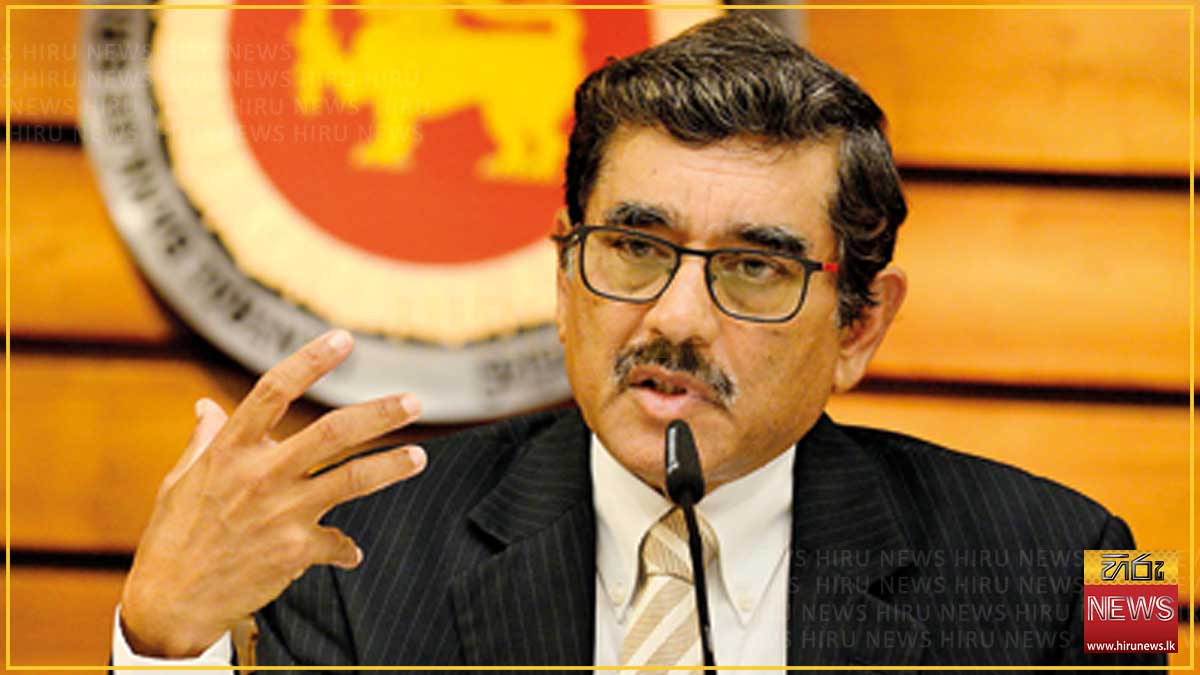
Energy Minister Anura Karunathilake has dismissed as “entirely baseless” claims that the government is curtailing rooftop solar power while favouring other generation sources, telling a news briefing in Colombo on Saturday that solar capacity is being expanded, not squeezed.
The denial follows sustained complaints from the solar industry, including a National Chamber warning that new directives put sector jobs at risk.
The numbers the minister gave
Karunathilake said the government facilitated the addition of 1,513 MW of rooftop and ground-mounted solar to the national grid over the past two years, the Daily Mirror reported.
He broke that down as 1,141.1 MW of rooftop solar added during 2025 and 2026 and a further 534 MW from ground-mounted projects.
Looking ahead, he said grid-connected solar capacity would rise by a further 4,585.7 MW by 2029. For 2027 alone, the plan is to add 1,392 MW, comprising 500 MW of rooftop solar and 642 MW of ground-mounted projects.
The figures did not reconcile — and NewsFirst has now resolved most of it
As first published, the minister’s own numbers failed to add up in two places:
| Stated total | Components given | Components sum to | Gap |
|---|---|---|---|
| 1,513 MW added | 1,141.1 + 534 | 1,675.1 MW | 162.1 MW over |
| 1,392 MW planned for 2027 | 500 + 642 | 1,142 MW | 250 MW short |
Update, September 27. NewsFirst has published a fuller year-by-year breakdown that resolves the first of those gaps. It gives ground-mounted solar as 370 MW, not the 534 MW carried by Hiru News and the Daily Mirror:
| Segment | 2025 | To August 2026 | Total |
|---|---|---|---|
| Rooftop solar | 938.8 MW | 202.3 MW | 1,141.1 MW |
| Ground-mounted solar | 177.2 MW | 193.4 MW | 370 MW |
| Combined | ≈1,511 MW |
On NewsFirst’s figures the rooftop sub-total reconciles exactly (938.8 + 202.3 = 1,141.1), and the combined total comes to about 1,511 MW — within roughly 2 MW of the stated 1,513 MW, a difference consistent with rounding. The 534 MW ground-mounted figure printed by the other two outlets appears simply to be wrong; it overshoots the minister’s own total by 162 MW.
NewsFirst also dates the period more precisely than the other accounts. The 1,513 MW covers 2025 and the first eight months of 2026 — “from last year till last month” — rather than a full two years.
Update, September 28. The surviving discrepancy now has a likely explanation. Hiru News and the Daily FT, both reporting the same Saturday briefing, state that the National System Operator plans to add 1,392 MW of solar alongside 1,240 MW / 4,660 MWh of battery storage between 2027 and 2029 — a three-year total, not a 2027 figure. On that reading the 500 MW and 642 MW components describe a single year inside the period rather than the whole of it, which would account for the 250 MW shortfall without either number being wrong. No outlet states this explicitly and the ministry has issued no correction, so this remains an inference. See our fuller report on the minister’s refusal to give a tariff-cut timeline.
(A small rounding artefact remains in NewsFirst’s own figures too: 177.2 + 193.4 = 370.6, which it states as 370.)
Context
The dispute is about curtailment — the practice of ordering solar output down when daytime generation exceeds demand and threatens grid stability. The government has argued that battery storage is the fix, and has been procuring it: WindForce won battery awards totalling 28.25 MW this week, and 16 battery facilities were commissioned at Galle earlier this month.
Not reported
Neither outlet says who made the allegations the minister was rejecting, and neither puts to him the industry’s specific complaints about net metering terms or new connection approvals. No CEB official is quoted, and neither report gives the volume of solar generation curtailed to date.