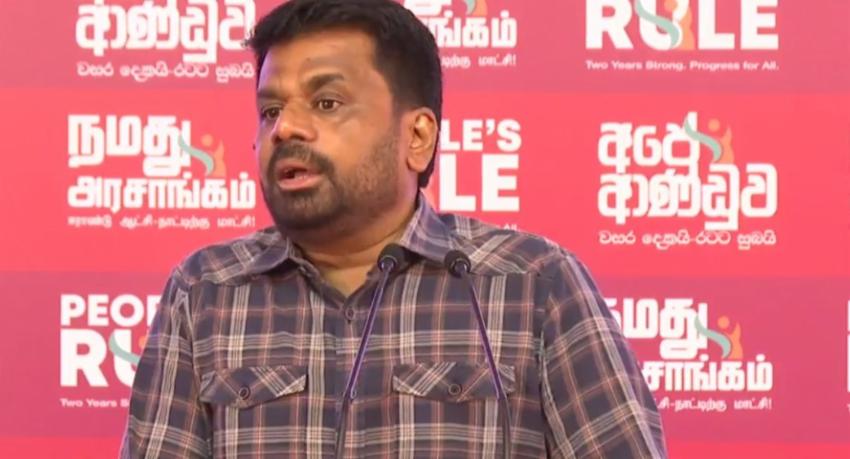
President Anura Kumara Dissanayake announced on Sunday that the Government will allocate Rs. 41 billion for a fuel subsidy covering the next three months, with a Cabinet paper seeking approval for the money to be placed before ministers on Monday.
Speaking at a public rally in Gampaha, the President said the concessions are intended to run through October, November and December, Daily Mirror reported.
The subsidy would be provided “without passing the full cost of fuel on to the public,” he said, according to NewsFirst. He attributed the Government’s ability to absorb the cost to the economic position it has built up.
What this settles, and what it does not
The announcement puts a figure and a timeline on a subsidy that until now had been described only in general terms. On Friday, Energy Minister Anura Karunathilaka said a diesel subsidy of between Rs. 80 and Rs. 100 a litre was under consideration, with the final figure to be fixed only after data on fuel retailers’ losses had been analysed.
Neither report published on Sunday says whether that Rs. 80–100 range survives into the Cabinet paper, how the Rs. 41 billion divides between diesel and petrol, or how it is split across the three months. Sri Lanka revises fuel prices at the start of each month, so the first test of the subsidy falls on 1 October — before which the Cabinet must act.
Daily Mirror also reports the President as saying the Government had previously allocated Rs. 100 billion in relief after fuel prices rose on the back of conflict in the Middle East. NewsFirst does not carry that figure, and we were unable to corroborate it from a second newsroom.
Hiru News independently confirms the three-month scope and puts the Cabinet submission at “tomorrow (28)” — Monday, 28 September — with the President saying further measures will follow promptly once approval is granted. Hiru gives the rally its Sinhala name, Vasara Dekai – Ratata Subhai. It does not carry the Rs. 41 billion figure.
Also at the rally
The President said there would be no limit to action against those who have taken public property, that some investigations now require international assistance, and that the Government was not pursuing political revenge. He said the rule of law must apply equally, and that racism would no longer be used as a route to political power — claiming two years had passed without a police complaint arising from racial conflict.
Update, September 29: Cabinet approves the package — and excludes petrol
Cabinet has approved the three-month relief programme, and the approved version answers two of the three questions left open above.
Petrol is excluded
The subsidy covers Auto Diesel and Industrial Diesel only. Petrol will not receive relief, Cabinet spokesman Minister Nalinda Jayatissa said, EconomyNext reported.
That is a change from the structure of the previous round. Between April and June the Government spent Rs. 57 billion out of a Rs. 100 billion package absorbing Rs. 100 a litre on diesel and Rs. 20 a litre on petrol. This time the petrol component is gone.
The money tapers across the three months — and totals less than Rs. 41 billion
The allocation is capped month by month:
| Month | Maximum allocation |
|---|---|
| October | Rs. 15 billion |
| November | Rs. 13.5 billion |
| December | Rs. 12.15 billion |
| Total | Rs. 40.65 billion |
Both Daily Mirror and EconomyNext carry the same three figures, and Daily Mirror states the total explicitly as Rs. 40.65 billion — headlining it as “over Rs. 40 Bn” rather than the Rs. 41 billion the President announced in Gampaha two days earlier. The approved sum is about Rs. 350 million short of the figure announced at the rally. Neither outlet notes the gap or explains it.
The proposal was submitted by President Dissanayake in his capacity as Minister of Finance, Planning and Economic Development, according to Daily Mirror.
Prices will still rise
Asked directly whether retail prices would go up anyway, Jayatissa said they would.
“Fuel prices in the world market have already increased anyway. What the government is attempting to do is absorb the largest possible share so that the entire burden is not placed on the country’s public, thereby managing the price.”
He framed the aim as maintaining prices “at an affordable level for consumers — without passing on the burden of rising international fuel prices.”
Still unanswered
The per-litre subsidy rate remains unset. The Ceylon Petroleum Corporation will announce both the final price adjustment and the per-litre rate at the monthly review — so the Rs. 80–100 range floated by the Energy Minister on 26 September is neither confirmed nor withdrawn.
Jayatissa said both the CPC and Lanka IOC hold adequate import stocks, and warned filling stations against hoarding ahead of the revision.
Sources
- Sri Lanka cabinet approves Rs41bn diesel subsidy; petrol excluded — EconomyNext, September 29
- Cabinet approves over Rs. 40 Bn fuel relief programme — Daily Mirror, September 29
- President announces Rs. 41 Billion fuel subsidy for three months — Daily Mirror, September 27
- President Highlights Political Transformation At Gampaha Rally — NewsFirst, September 27