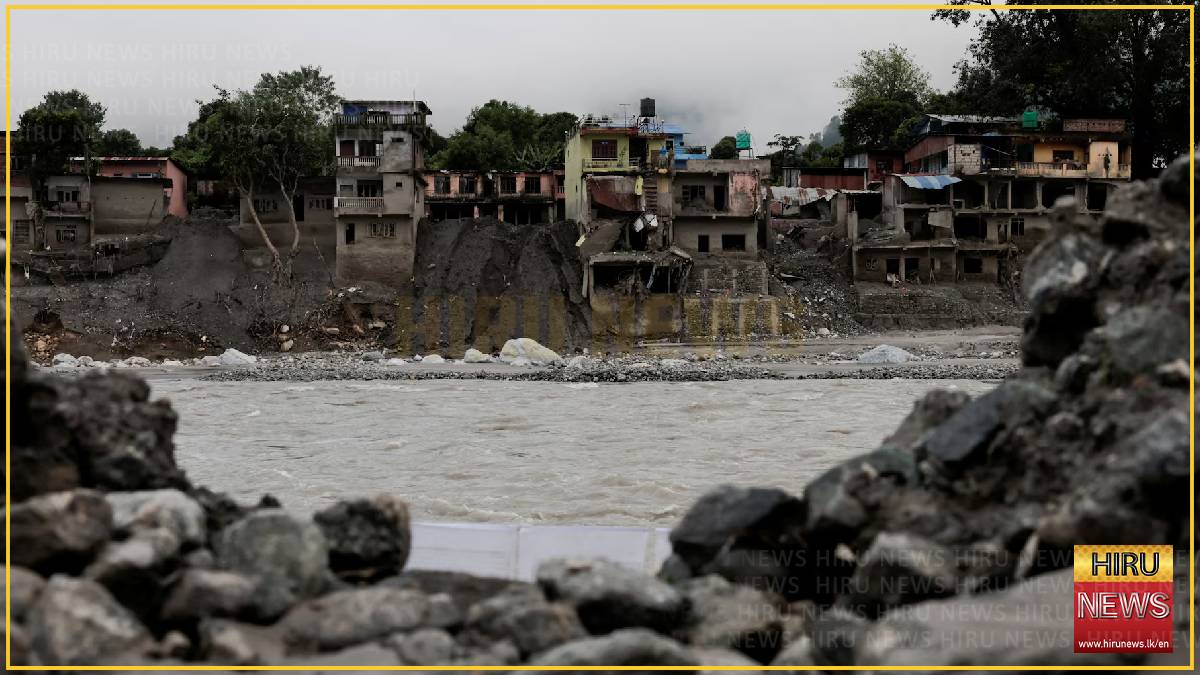
At least 19 people have been killed and 10 workers are missing after heavy rain triggered floods and landslides across northern India and Nepal, with major rivers rising above danger levels.
In India’s Uttar Pradesh, state authorities said on Saturday that 15 people were killed and five injured over the preceding 48 hours, and 117 houses were damaged. Storms and heavy rain affected 63 districts. The state recorded 19 times its normal rainfall in the 24 hours to Saturday.
Nepal: a landslide and an avalanche
Four people — three children and a woman — died in Nepal when a landslide buried their house as they slept in Nishi Khola village, Baglung district, according to Krishna Prasad Acharya, the district’s senior-most bureaucrat.
Separately, 10 Nepali workers are missing after an avalanche buried the base camp of Himlung Himal, a 7,126-metre (23,379 ft) peak in the northern Manang district. Hiking officials said the workers had been pitching tents for foreign climbers, who were not at the camp when the avalanche struck.
Nepali authorities warned of possible flash floods in 49 of the country’s 77 districts, with more than half facing high flood or flash-flood risk as river levels continued to rise.
Shanti Mahat, a spokesperson for the National Disaster Risk Reduction and Management Authority, said Rasuwa and Nuwakot — the districts worst hit by last month’s floods, which killed more than 1,450 people and left thousands missing — should remain “alert” but are not currently rated high-risk.
Infrastructure damage
Flooding on the Rahuganga River damaged the structure and transmission-line towers of a 40-megawatt hydropower project, Water Resources and Energy Minister Biraj Bhakta Shrestha said. A technical team has been sent to assess the damage and restore the project.
Floods and landslides also cut telecommunications in parts of Nepal after damage to optical fibres and power supplies, Communications Minister Bikram Timilsinha said.
Rivers above danger levels in India
India’s Central Water Commission said 30 river-monitoring stations across seven states were in a “severe situation”, with water levels between the designated danger marks and previous record flood levels.
Several major rivers were above danger level at monitoring stations, including the Ganga, Gandak, Kosi, Bagmati and Narmada.
Update, September 27 evening: the Himlung Himal avalanche
A fuller account of the avalanche has since reached Sri Lankan readers through a BBC report carried by Hiru News, and it changes the picture in one respect: the missing are not general labourers but Nepali climbers and guides sent ahead to lead an expedition — tasked with preparing the camp, managing the route and fixing ropes on the mountain before the foreign climbers arrived.
Bibhuti Chand Thakur of Himalaya Holidays Trekking told the AFP news agency: “Eight members of our expedition team and two more from another company have been reported missing.” That accounts for all ten across two operators.
The avalanche struck on Sunday morning at a staging point close to the 7,126-metre (23,380 ft) peak, which sits on Nepal’s border with Tibet. Heavy snowfall had been forecast around the mountain in recent days. Poor weather has hampered the rescue, with helicopters and ground teams unable to reach the site.
Conditions across Nepal’s mountain districts have been deteriorating for days. Climbers were forced off Mount Manaslu, the world’s eighth-highest peak, earlier in the week as avalanche risk rose.
Context the wire adds
The BBC report places the incident less than two months after six climbers died on Broad Peak in Pakistan, among them the British-Nepali mountaineer Nirmal Purja. It also puts the toll from August’s glacial collapse in the Himalayas — which sent water and debris down the Trishuli River valley, sweeping away settlements — at more than 1,400 confirmed dead, with more than 6,000 people still missing on the Nepal-Tibet border as body-recovery efforts continue.
An open figure. Our original report, and the BBC account above, both put the number missing at ten, and Thakur’s 8-plus-2 breakdown reconciles to exactly that. Several non-verified outlets were carrying a higher figure of 14 later on Sunday, apparently by including additional expedition staff. No verified newsroom had confirmed that revision at the time of writing, so this article stays with ten; the count should be treated as provisional until the two operators’ rosters are published.
A note on sourcing
This account reaches Sri Lankan readers as an international wire report carried by Hiru News. The same report appears under an identical headline on other wire subscribers, indicating a single agency origin; the originating agency’s own page was not reachable from our systems for direct verification, so this article is published from the Hiru text alone. The figures above are the wire’s, as of Saturday.
This is a separate event from the August floods in Rasuwa and Nuwakot, which we covered as Nepal deployed drones for relief and when a Sri Lankan family was reported missing. The wire references that earlier disaster only to note that those districts are not currently high-risk.