Update — September 29, 2026: Later filings report what Rajapaksa actually said, which this article originally noted no outlet had covered. Much of the questioning concerned the 2008 abduction of journalist Keith Noyahr, and Rajapaksa answered repeatedly that he could not remember. See the update section at the end.
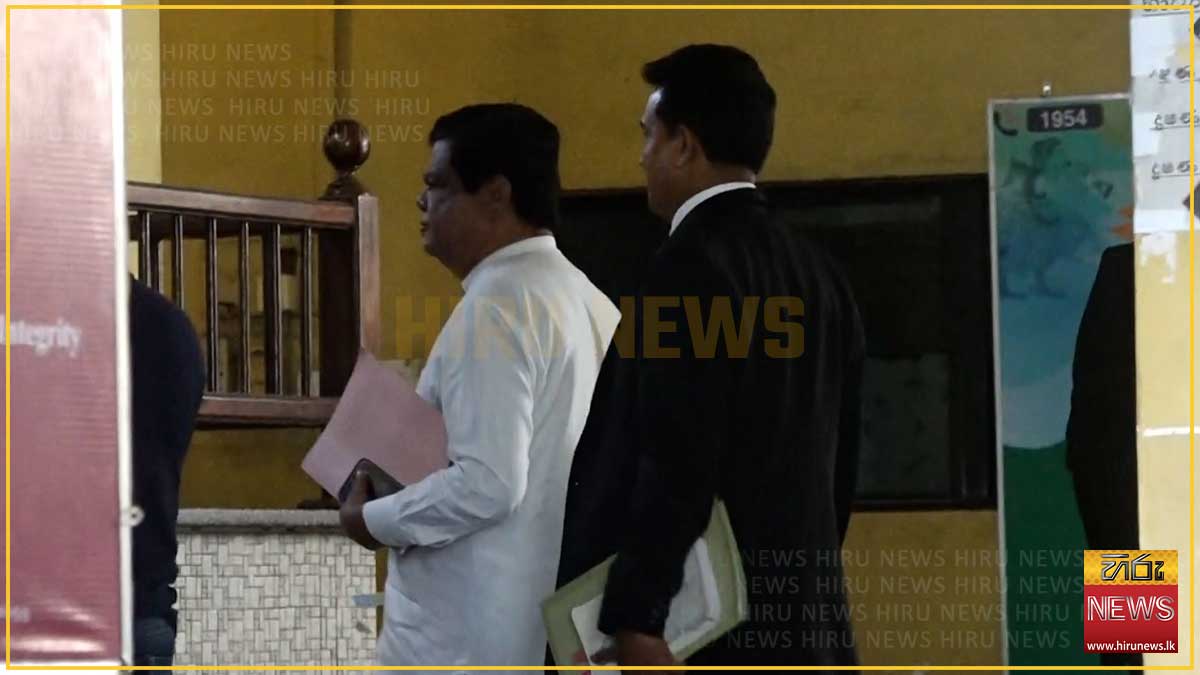
Former President Gotabaya Rajapaksa gave evidence on Tuesday in the case concerning the 2011 disappearance of activists Lalith Kumar Weeraraj and Kugan Muruganandan, testifying by video link from the Colombo Chief Magistrate’s Court to the Jaffna Magistrate’s Court.
Jaffna Magistrate S. Lenin Kumar ordered that further recording of evidence continue on 27 November, NewsFirst reported. The court also directed that two lawyers be permitted to appear alongside Rajapaksa while he testified on the virtual platform.
Rajapaksa appeared in person at the Colombo court and gave his evidence remotely to Jaffna, the Daily Mirror reported. His lawyers had asked for the video arrangement on the grounds that he would face difficulties travelling to Jaffna for security reasons.
Seven years between notice and testimony
The procedural history explains why Tuesday mattered. Rajapaksa was issued notice in 2019 to appear and give evidence in the case, filed by relatives of the two men — but had not previously appeared before the Jaffna Magistrate’s Court.
When the matter was taken up on 6 February this year, his lawyers requested permission for virtual testimony. The court granted that permission on 2 June. A further order, issued when the case was taken up before the Jaffna court on 7 August, directed him to attend the Colombo Chief Magistrate’s Court and give his evidence from there.
The case
Lalith Kumar Weeraraj and Kugan Muruganandan disappeared in Jaffna on 9 December 2011. They had been helping organise a demonstration by families of the disappeared, scheduled for the following day — International Human Rights Day.
Neither man has been found, and no one has been held accountable in the years since. Rajapaksa was Defence Secretary at the time.
The inquiry is one of the longest-running enforced-disappearance cases in the Sri Lankan courts, and forms part of the body of unresolved wartime and post-war accountability matters raised repeatedly in reporting to the UN Human Rights Council.
Neither outlet reported the substance of the evidence Rajapaksa gave. Ada Derana also filed on the appearance, but the site remained unreachable at the time of writing.
Update: the substance of the evidence
Rajapaksa gave evidence from about 1.45 p.m. to 3.00 p.m., the Daily Mirror reported in a second filing, confirming that the Jaffna Magistrate’s Court fixed 27 November at 1.30 p.m. for further evidence.
A substantial part of the questioning turned not on Weeraraj and Muruganandan but on the 2008 abduction and assault of journalist Keith Noyahr, Newswire reported.
Asked whether he had received a call from Lalith Alahakoon after Noyahr was abducted, Rajapaksa said: “I don’t remember that, Your Honour.” He said the events were about 15 years ago and that he had not reviewed the details before testifying.
He also said he did not know that several members of the Army’s Tripoli Camp had been arrested over the Noyahr abduction. He “completely” denied a suggestion put to him that Noyahr had been released because of his intervention.
Asked about allegations of abductions and disappearances during his time as Defence Secretary, Rajapaksa rejected them as false and politically motivated, saying they had been made to damage the country’s reputation.
A note on sourcing: the account of what was said inside the courtroom comes from Newswire, which is not among the newsrooms this site treats as verified. The Daily Mirror and NewsFirst confirm the hearing, the video-link arrangement and the November 27 date, but not the exchanges quoted above. The quotations should be read as Newswire’s account until a verified newsroom files its own.
The Noyahr line of questioning reaches into a separate, long-running matter. Noyahr was abducted in 2008, assaulted and released. Former Navy Commander Admiral Ravindra Wijegunaratne has previously been the subject of court proceedings linked to that case, and was named a suspect in June in a separate investigation into 11 alleged ransom abductions in Colombo between 2008 and 2009.
Update, 30 September: a verified newsroom files the transcript
The sourcing caveat above is now resolved. The Daily Mirror has published its own account of the evidence, including a verbatim question-and-answer record, under the byline of Bhagya Silva. It confirms the central claim previously carried only by Newswire, and adds material neither outlet reported on the day.
Rajapaksa told the court that allegations of abductions and disappearances during his tenure as Defence Secretary were completely false, and that claims that the military and intelligence agencies were involved had been made “for political advantage and to damage the reputation of the country.”
Two procedural details are new. Recording of evidence commenced at about 1.40 p.m., and the questioning was conducted from the Jaffna Magistrate’s Court on behalf of the prosecution under the direction of Counsel Nuwan Bopage. Rajapaksa’s general answer to much of it was that he could not remember the incidents, a considerable period having passed.
A second abduction raised in court
The Daily Mirror’s transcript shows a line of questioning absent from every other account — the alleged abduction of former Western Provincial Council member Sagala Senaratne.
Asked whether he had received information when Senaratne was abducted, Rajapaksa answered: “I cannot answer that, Your Honour. That happened 15 years ago.” Asked whether he recalled Senaratne saying at a media briefing that his life had been saved because of the then President and himself, he said: “No. I do not remember that.” Put to him directly that he had become aware of the abduction after it occurred, he again said he did not remember.
On the broader principle, asked whether civilian disappearances posed a threat to national security, he replied: “People disappear for various reasons. The police take specific action regarding such incidents. Not every disappearance is brought before the National Security Council.”
On Noyahr
The Daily Mirror’s record is more qualified than the “I don’t remember” summary above. Asked whether he remembered the journalist, Rajapaksa said: “I remember him. I remember the incident to some extent. I do not remember the details.” Pressed on what “to some extent” meant, he said: “I remember that an incident took place. I did not come prepared for this today.”
Asked whether he remembered that Noyahr had disappeared, he drew a distinction: “Your Honour, to my knowledge, Keith Noyahr had not disappeared.” Noyahr was abducted, assaulted and released, so the answer is consistent with the record — but it declines the premise of the question rather than the underlying event.