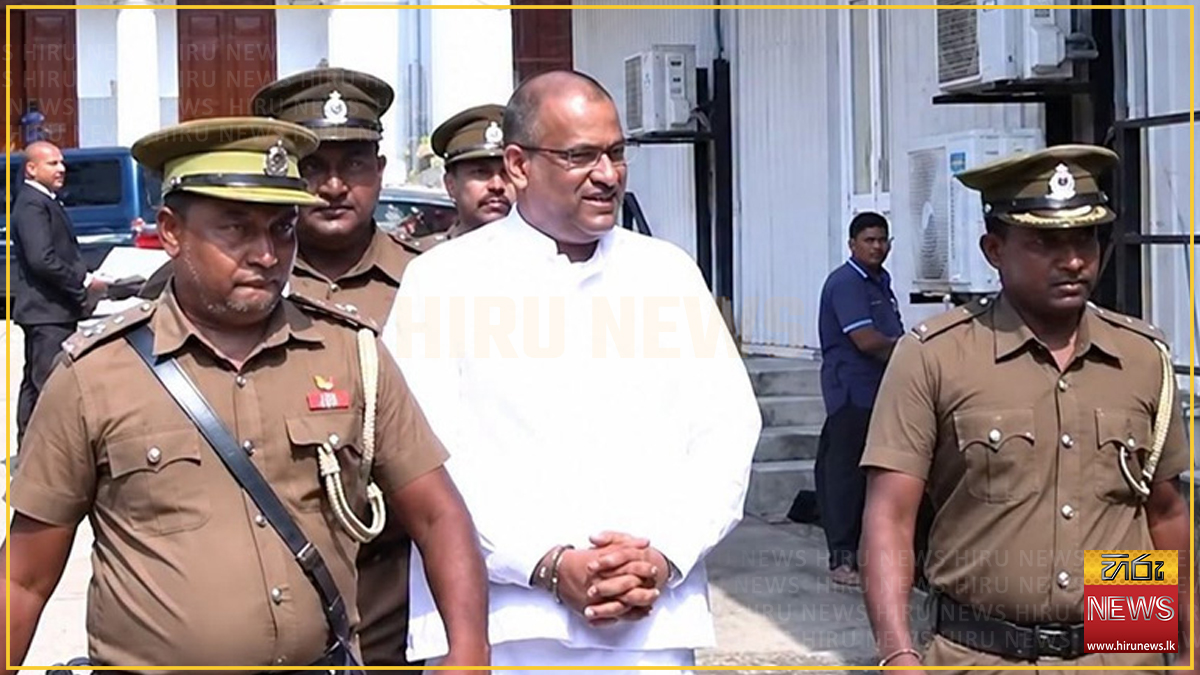
A campaign over the treatment of the imprisoned Ven. Galagoda Aththe Gnanasara Thera began on Saturday morning in front of the Sri Dalada Maligawa in Kandy — and it is not a stationary protest but a six-day walk that reaches Colombo on 15 October.
Hiru News reported the campaign’s launch at the Temple of the Sacred Tooth Relic, with Ven. Ulapane Sumangala Thera saying the first step would take the form of a satyagraha at the site.
The Daily Mirror reported the event under its organisers’ own names — the “Justice for the Robe – National Commitment Pooja” and a “Freedom Walk” — and set out what follows it. The walk, organised by the Maha Sangha, calls for the protection of the religious rights of Gnanasara Thera and other imprisoned monks.
The route
The walk is scheduled to pass through several major towns on its way to Colombo:
| Date | Leg |
|---|---|
| 10 October | Kandy → Kadugannawa |
| 11 October | Kadugannawa → Kegalle |
| 12 October | Kegalle → Warakapola |
| 13 October | Warakapola → Nittambuwa |
| 14 October | Nittambuwa → Kadawatha |
| 15 October | Kadawatha → Colombo |
That is the Kandy–Colombo road, covered in six daily stages. The Maha Sangha launched the protest and the religious observance in response to concerns over the legal situation of imprisoned monks and reported incidents of monks being stripped of their robes.
The choice of starting point is itself significant. The Sri Dalada Maligawa is the most venerated Buddhist site in the country, and beginning there puts the dispute over Gnanasara Thera’s robes at the symbolic centre of Sinhala Buddhist religious life — then carries it, over six days, to the seat of government.
Update, 11 October: day two, and a second protest in Kekirawa
The walk completed its first leg in Kadugannawa on Saturday and resumed there on Sunday morning bound for Kegalle, Hiru News reported — confirming the first two rows of the schedule above as walked rather than merely announced.
Hiru gives the campaign its organisers’ Sinhala name, “Nidahase Pada Yathra” (Freedom Foot March), which is how it is now being reported; this desk first carried it under the “Justice for the Robe” and “Freedom Walk” labels used by the Daily Mirror. They are the same march.
Hiru also fixes the starting point more precisely than Saturday’s filings did: the Maha Maluwa of the Temple of the Sacred Tooth Relic, near the statue of Ven. Wariyapola Sri Sumangala Thera. Participants are marching under the slogan “Do not touch the robe”, and Hiru states plainly what prompted the campaign — reports that Gnanasara Thera was taken to court wearing civilian clothing.
The remaining schedule Hiru gives matches the table above: Kegalle to Warakapola on 12 October, Warakapola to Nittambuwa on 13 October, Nittambuwa to Kadawatha on 14 October, and Colombo on 15 October.
The protest is no longer only on the Kandy road
A separate demonstration was held the same day in Kekirawa, in the North Central Province and well off the Kandy–Colombo march route, Hiru reported. Monks representing temples in Kekirawa, Palagala and Palugaswewa gathered in the town carrying placards and walked in silent procession to the Kekirawa Clock Tower roundabout.
That matters for reading the campaign: what began as a single walk along one road now has at least one independent expression elsewhere in the country, organised by local temples rather than by the Kandy organisers.
What the Malwathu chapter says the President agreed
Separately, the Malwathu Maha Viharaya chapter issued a clarification on the meeting held last Thursday between representatives of the Chief Prelates of the three chapters and President Anura Kumara Dissanayake.
According to that clarification, the President accepted that the concerns the Chief Prelates raised about monks serving prison sentences were justified, but said prison officials had acted within the law as it stands.
The Maha Sangha then proposed a change: that prison authorities be required to notify the relevant Buddhist chapter when a monk is serving a sentence of more than three years, and to act on that chapter’s recommendations regarding the monk’s robes. The clarification says the President agreed to the proposal and instructed the Justice Minister to finalise the regulations within two weeks.
That two-week deadline matches what was reported at the time. This newsroom reported on Thursday that the President had appointed a committee to propose new standing orders and regulations and given it two weeks — a panel drawn from the Attorney General’s Department, the ministries of justice, public administration and Buddhasasana, prison officers and the Commissioner General of Prisons.
The three-year threshold in the chapter’s account describes the proposal, not the law in force. Tamil Guardian reported that the only existing provision dealing specifically with monks is Regulation 216, under which monks held on remand may keep their robes while those sentenced to rigorous imprisonment must wear prison-issue clothing.
Where the dispute stands
Two other strands reported alongside the satyagraha have already been covered here. Ven. Teeniyawala Palitha Thera filed a writ application in the Court of Appeal on Friday seeking to quash the removal of the robes, and the Kotte chapter — to which Gnanasara Thera belongs — has written to the President asking for its own meeting before the monk is next produced in court, saying it was left out of Thursday’s discussion.
Gnanasara Thera is serving a six-year sentence imposed for contempt of court in the Eknaligoda case.
Not reported
The Daily Mirror’s filing answers what Hiru’s did not: the campaign runs six days and ends in Colombo on 15 October. What none of the reports gives is how many monks or lay supporters are taking part — Sunday’s filing says only “a large number of people” — whether the Diyawadana Nilame or the Asgiri and Malwathu chapters sanctioned an event on temple premises, or whether police permission was obtained for a walk along a main road.
Sunday’s filings add their own gaps: no filing says whether the Kekirawa protest was coordinated with the Kandy organisers or arose independently, how many monks took part there, or whether further protests are planned in other towns.
Neither says what happens when the walk reaches Colombo on 15 October — whether a rally, a petition or a handover is planned, or where it ends. Neither carries a response from the Presidential Secretariat or the Department of Prisons, names the organising body within the Maha Sangha, or gives the date of Gnanasara Thera’s next court appearance.
The Tamil Guardian report cited above covers Thursday’s meeting and the prison rules, not the Kandy campaign.
Update, 11 October: day two, and the full route
The march reached its second day on Sunday, walking from Kadugannawa to Kegalle, the Daily Mirror reported. The first day’s leg, from the Maha Maluwa of the Sri Dalada Maligawa in Kandy, concluded at Kadugannawa.
Hiru gives the campaign its own name — “Nidahase Pada Yathra”, the freedom foot march — and reports that participants are walking under the slogan “Do not touch the robe.”
The complete schedule is now on the record, and it fills the gap left by the earlier filings:
- 11 October — Kadugannawa to Kegalle
- 12 October — Kegalle to Warakapola
- 13 October — Warakapola to Nittambuwa
- 14 October — Nittambuwa to Kadawatha
- 15 October — concluding in Colombo
The Daily Mirror’s account of the later legs is slightly compressed: it has the march “resume from Nittambuwa on October 14 and reach Kadawatha that evening”, omitting the 12 and 13 October legs that Hiru sets out. The two accounts agree on the endpoint and on the 14 October Nittambuwa–Kadawatha leg, so this reads as a summary rather than a conflict.
Both filings restate the cause: the march follows Gnanasara Thera being produced in court in civilian clothing while serving his sentence.
What this closes
This answers the question flagged above about the route — the walk’s intermediate stops and daily legs are now known. It does not answer what happens on arrival in Colombo on 15 October, which remains unreported by every filing. Still open too: participant numbers, whether police permission was obtained, and whether the Asgiri and Malwathu chapters sanctioned the Kandy launch.