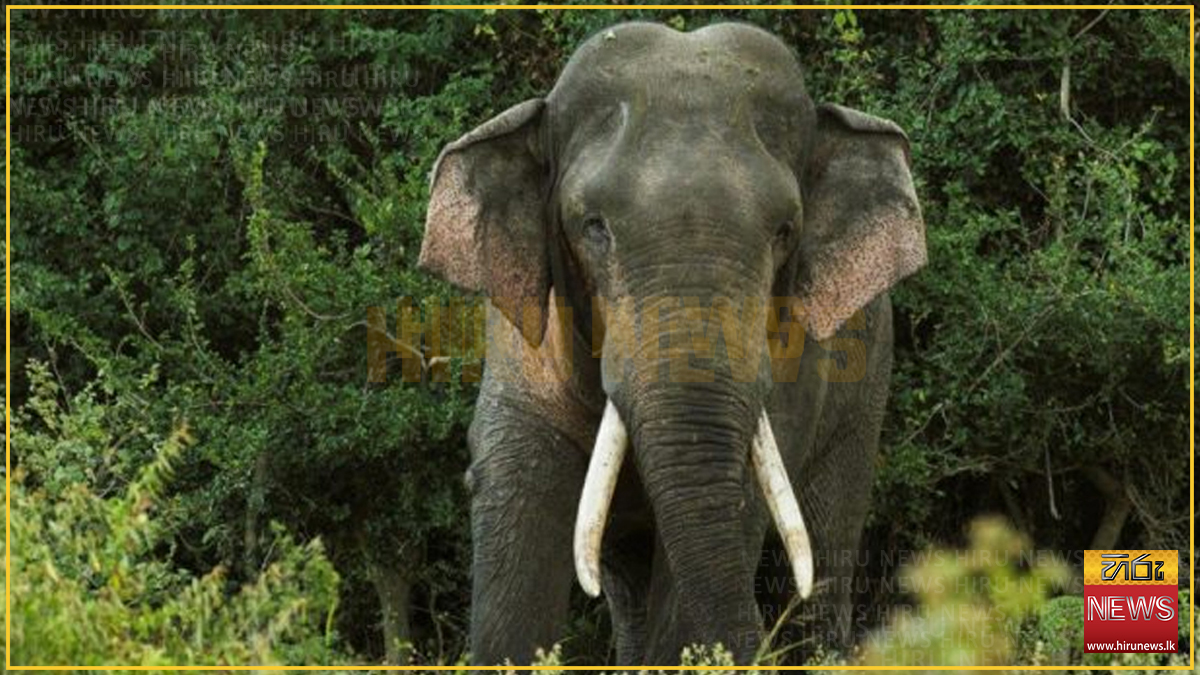
President Anura Kumara Dissanayake has appointed a six-member expert committee to establish how the tusker Kavantissa died at Galgamuwa, whether anyone was negligent in treating him, and what a national elephant conservation programme should look like. It has 30 days to report.
The appointment was announced by the President’s Media Division and reported by Hiru News at 7.07 p.m. and the Daily Mirror at 7.37 p.m. on Monday. The two filings agree on every name, task and deadline.
Who is on it
Former ministry secretary A. H. Sarath Wijesinghe chairs the committee. The members are:
- Professor T. Saminda Fernando
- Professor A. G. Anil Pushpakumara
- Professor U. K. Kalinga Padmalal
- Dr Jagath Gunawardena
- Attorney-at-Law Charaka Jayaratne
W. W. Harrison, Additional Secretary to the President, will coordinate its work.
What it has been told to do
The committee must examine the circumstances of the death at Siyambalangamuwa, Galgamuwa, on or around 16 October 2026, including its immediate and underlying causes, and determine whether any lapses or negligence occurred during the animal’s treatment.
Beyond the death itself, it must draft standard operating procedures for the welfare of wild elephants and recommend a national elephant conservation programme. A complete report covering all three — findings, SOPs framework and programme recommendations — is due to the President within 30 days, which places it around 18 November.
Kavantissa had been receiving treatment for an injured front leg.
The foreign-expert question has now been answered
The committee has been authorised to seek the assistance of both local and international experts. Both newsrooms carry this.
That matters because it closes a question this desk has been tracking. Opposition Leader Sajith Premadasa has repeatedly demanded that local and international experts be involved in investigating Kavantissa’s death. When he launched an organisation in the tusker’s name on Monday morning, this archive recorded that the only government answer on offer came from Environment Minister Dr Dhammika Patabendi on 18 October, who described an investigation running through several channels — all of them domestic — and that no filing showed the government addressing the foreign-expert demand directly.
By Monday evening it had. The committee’s terms expressly permit international expertise. No filing frames it as a response to Premadasa, and this article does not claim it was one; the point is that the question is no longer open.
Negligence in treatment is now inside the terms of reference
The instruction to determine whether there were lapses or negligence during treatment points the inquiry at the state’s own veterinary response, not only at whoever fired the shot.
That is a wider remit than the criminal case. On the same day the committee was announced, two men were remanded until 28 October over the shooting by a magistrate who said wildlife officials had not presented sufficient grounds. The committee is being asked to examine the conduct of the same department whose handling of the court case the magistrate criticised — though no filing connects the two, and the committee’s remit concerns the animal’s treatment rather than the prosecution.
This desk covered Kavantissa while he was still under treatment at Galgamuwa in September.
Not reported
Neither filing gives the committee’s members’ institutional affiliations or specialisms, says whether it can compel evidence or summon witnesses, states whether its report will be published, or explains how its work relates to the police investigation, the post-mortem, or the Environment Ministry’s own inquiry. Neither says what happens if the 30-day deadline is missed.
Sources: Daily Mirror, Hiru News.
Update, 21 October — the committee meets, and it is not the only one
The President’s committee convened for the first time on Wednesday morning. On the same morning it emerged that a second, separate committee is also investigating Kavantissa’s treatment — and that the CID has opened a third inquiry.
Hiru News reported at 8.34 a.m. that the expert committee appointed by President Anura Kumara Dissanayake was due to meet for the first time on the morning of Wednesday 21 October. That is three days after its appointment, and it leaves the panel around 27 days of its 30-day deadline.
The filing confirms the membership exactly as recorded above — Sarath Wijesinghe in the chair with Professors Fernando, Pushpakumara and Padmalal, Dr Gunawardena and Mr Jayaratne — and restates the deadline as a report to the President within one month.
It also closes one of the gaps this article recorded. Sarath Wijesinghe is identified as a former Secretary to the Ministry of Environment and Wildlife. The appointment notice had said only “former ministry secretary”; the chair of the inquiry is a former secretary of the ministry whose department’s conduct the inquiry is examining.
A second committee, and why the two are easily confused
Separately, NewsFirst reported at 8.49 a.m. that the Director General of Wildlife has appointed a three-member committee to investigate the entire treatment process and related events concerning Kavantissa.
Its members are:
- Anoma Priyadarshani, Director of Operations at the Department of National Zoological Gardens — chair
- A. L. Basnayake, Director of Investigations at the Ministry of Environment
- H. E. L. de Seram, Senior Lecturer at the Faculty of Veterinary Medicine, University of Peradeniya
Director General of Wildlife Ranjan Marasinghe said this committee has also been instructed to report within one month. He is the same official who set out the department’s view of Sri Lanka’s elephant density this week.
These are two different committees and should not be merged. They differ in who appointed them (the President; the Director General of Wildlife), in size (six; three), and in membership — no person sits on both. They share a subject and a one-month deadline, which is precisely what makes them easy to conflate: a report of “a three-member committee to probe Kavantissa’s treatment and death” describes the wildlife department’s panel, not the President’s. NewsFirst itself draws the distinction, noting that “another investigation committee has already initiated inquiries into the death… on the instructions of the President.”
The second panel’s composition is notable in one respect. The Director General of Wildlife has appointed a committee to examine a treatment process carried out by his own department’s veterinarians, and has drawn its three members from the zoological gardens department, the Environment Ministry and a university faculty rather than from the Department of Wildlife Conservation itself.
A third track: the CID
NewsFirst also reports that the Criminal Investigation Department has launched a separate investigation into the incident, and that police said a CID team recorded statements on Tuesday 20 October from officers attached to several Range Forest Offices.
That makes three inquiries now running in parallel — the President’s expert committee, the wildlife department’s three-member committee, and the CID — alongside the criminal case in which two men were remanded until 28 October. This article’s original “Not reported” section asked how the committee’s work would relate to the police investigation and the Environment Ministry’s own inquiry. There are now more tracks than before, and still no filing explains how they relate to one another, whether they will share evidence, or which one’s findings will govern.
That CID officers took statements from Range Forest Offices — part of the Forest Department rather than the Department of Wildlife Conservation — indicates the criminal inquiry is reaching into a second state agency. No filing explains why.
A detail on the death
NewsFirst gives the injury more precisely than earlier filings. Kavantissa was being treated by wildlife veterinarians for a gunshot wound to his front right leg, and died last Friday after collapsing in a paddy field in the Siyambalangamuwa Yaya 3 area. Earlier reporting in this archive recorded only an injured front leg.
Still not reported
Neither filing says what the President’s committee did at its first meeting, whether it has begun taking evidence, or whether it will sit in public. Neither says whether the two committees will co-ordinate, nor whether either report will be published. No filing gives the Director General’s reason for appointing a second panel while the President’s committee was already constituted.