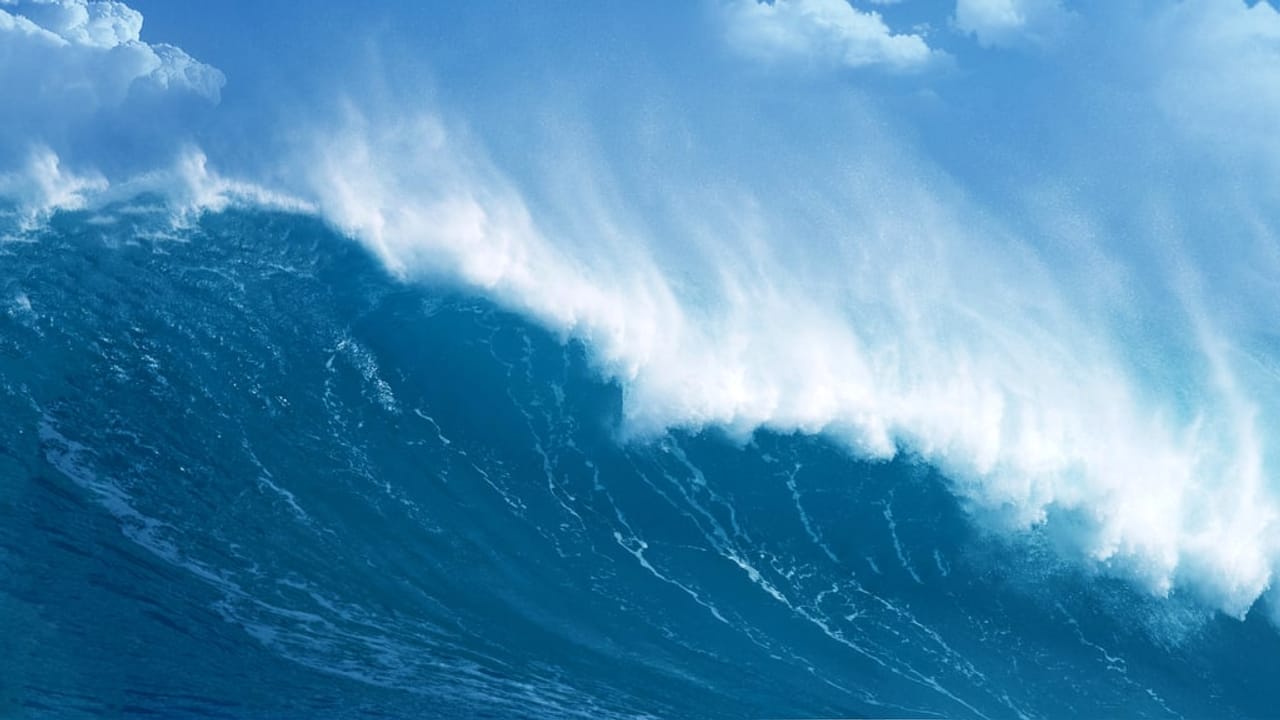
A Category 5 super typhoon named Champi has formed in the western Pacific, carrying sustained winds of close to 295 kilometres per hour, and is tracking towards Japan’s southern islands.
Measured on wind speed, Champi is the most powerful storm to form anywhere on Earth in 2026, Hiru News reported in a filing stamped just after midnight Colombo time.
Meteorologists quoted in the report attribute the storm’s rapid escalation to this intensity over a short period to unusually high ocean surface temperatures, combined with the El Niño weather pattern.
Where it is going
Champi is moving towards the Okinawa island group in southern Japan and is expected to strike at the coming weekend.
It is the 30th named storm to affect Japan in 2026 — a figure that says as much about the season as the storm does. Thirty named systems reaching one country in a single year is the context in which this one arrives, not an isolated event.
This is not a storm that can reach Sri Lanka
Worth stating plainly, because the vocabulary invites confusion: Champi is a Pacific typhoon, and Sri Lanka sits in the North Indian Ocean basin. Storms do not cross between the two. The systems that affect Sri Lanka form in the Bay of Bengal and the Arabian Sea — as Cyclone Ditwah did — and are called cyclones rather than typhoons purely because of the basin they form in. A Category 5 typhoon near Okinawa has no bearing on Sri Lankan weather.
The meteorological point that does travel is the mechanism. Warm sea surface temperatures driving rapid intensification is the same process that strengthens Bay of Bengal systems, and the El Niño phase the report names is a global pattern rather than a regional one.
Sourcing note
This report rests on a single source. Hiru News is a verified newsroom and its filing was date-checked against its own content delivery network timestamp, which places it at 6.50 p.m. UTC on 21 October. But no other verified newsroom on this desk’s list had carried the storm at the time of writing — Al Jazeera had not filed on it, and the specialist meteorological and Japanese outlets that had were unreachable from this desk.
Readers should therefore treat the specific figures — 295 km/h, the 2026 record, the 30th-named-storm count — as carried by one newsroom rather than confirmed across several. The wind speed in particular is the kind of figure that is revised as a storm is re-analysed.
Update, 23 October: the single-sourced figures have been corroborated
The caveat above can now be lifted on two of the three figures.
A BBC report on Champi’s arrival at Taiwan, carried by the Daily Mirror on 23 October, puts the storm’s peak at 185 mph — 298 km/h — maximum sustained wind over the Philippine Sea, described as the equivalent of a Category 5 hurricane. That is within 3 km/h of the 295 km/h figure reported here from Hiru News on 21 October. The BBC also states independently that Champi is Japan’s 30th typhoon of the year, matching the 30th-named-storm count above, and adds that this is the first season since 2013 in which Japan has recorded so many.
The BBC confirms the Category 5 peak but describes Champi as having weakened on Wednesday from super-typhoon strength, so the “most powerful storm on Earth this year” framing in the headline above applies to its peak earlier in the week rather than to its condition on arrival at Taiwan.
For what the storm then did, see Taiwan’s Friday shutdown, where one death and 171 injuries were recorded.
Not reported
The filing gives no central pressure, no forward speed, no position coordinates, and no landfall time more precise than “the weekend.” It does not say whether Japanese authorities have issued evacuation advisories or whether flights have been cancelled, and it carries no casualty or damage information, the storm not having made landfall.