Bangladesh has set up a wage board to review pay in its garment industry after two days of protests by workers demanding a minimum monthly wage of more than double the current rate. The announcement did not end the unrest — thousands continued to demonstrate around Dhaka on Sunday, Al Jazeera reported.
The demand
Workers are asking for 30,000 taka a month, about US$242. The current minimum is 12,500 taka, roughly US$101. They say the rising cost of food, housing, transport and health care has sharply eroded what their pay buys.
The new board has six members, drawn from the government, the workers and the factory owners, and is tasked with setting a new minimum wage.
What happened on the ground
The protests began on Saturday. About 30 garment factories on the outskirts of Dhaka, in the Ashulia industrial area, declared holidays rather than open — a figure Hiru News independently reported, describing owners as having temporarily closed close to 30 leading plants.
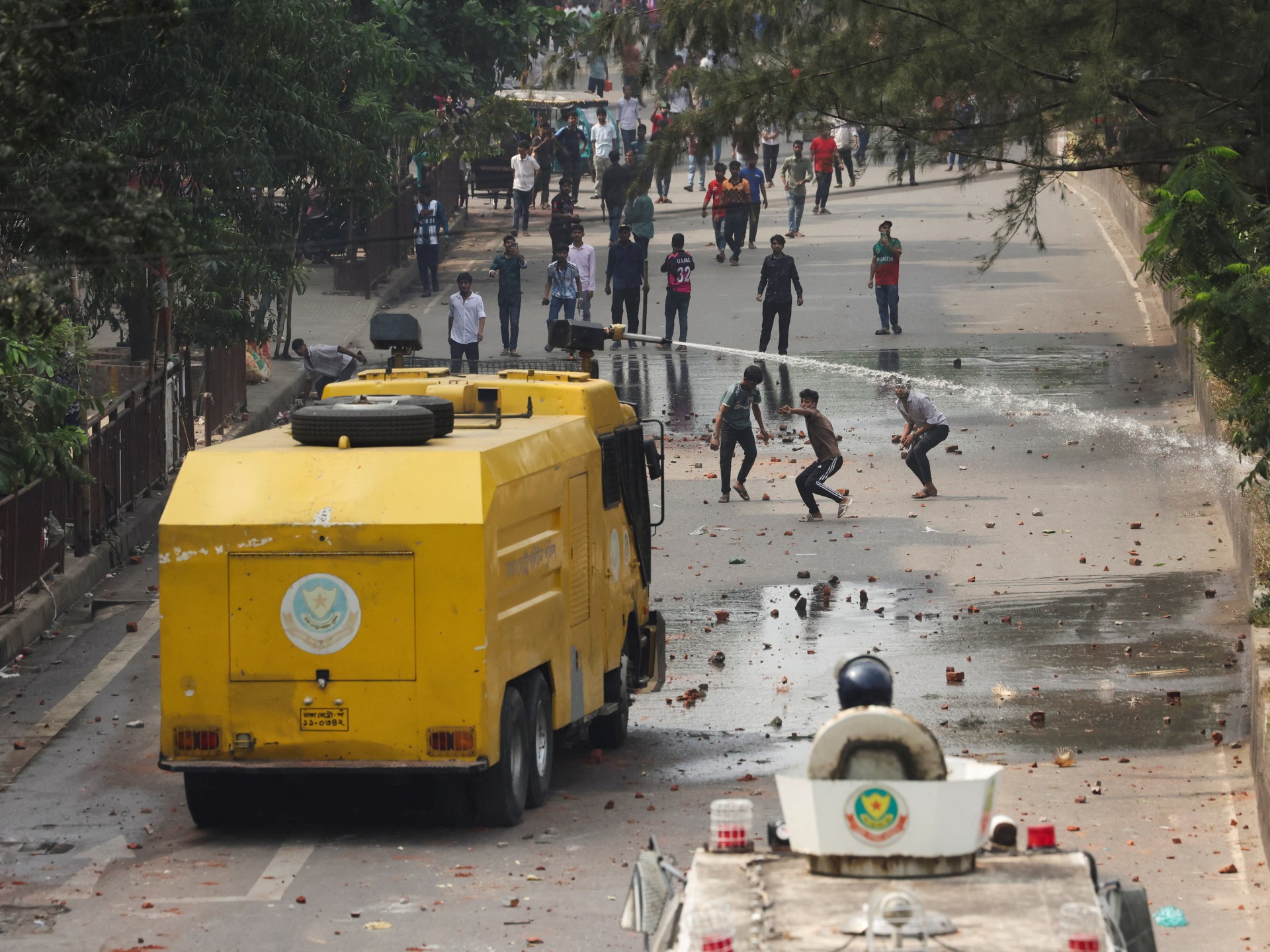
Police fired tear gas and sound grenades at demonstrators. Several people were injured, including police officers, and a police vehicle was set on fire.
Despite the board’s formation, the demonstrations did not stop. Labour and employment adviser M Sakhawat Hossain Chowdhury said the matter was settled: “The issue of forming the wage board has been resolved. There will be no more problems now.”
Labour and Employment Minister Ariful Haque Chowdhury warned that prolonged closures and production stoppages could delay export shipments and payments from international buyers, creating fresh difficulties for manufacturers and workers alike.
Why it matters beyond Bangladesh
Bangladesh runs the world’s second-largest garment industry after China’s, worth about 10 per cent of its GDP and the bulk of its foreign earnings. It supplies many of the same Western buyers that Sri Lankan manufacturers sell to, and it is the benchmark against which the region’s apparel costs are measured — business figures meeting in Colombo last month named Bangladesh and Vietnam as the examples Sri Lanka should learn from in building scale.
A wage settlement in Dhaka therefore resets the cost floor for a market Sri Lanka competes in directly.
Not reported
Neither source gives a total for arrests or a nationwide count of how many workers stopped work. No timetable has been published for the wage board’s decision, and neither filing says whether the 30,000-taka demand is being treated as a starting position.
Two verified newsrooms. Hiru’s filing is a short relay of foreign reporting and carries the factory-closure count and the scale of the wage demand; the detail of the wage board, the officials’ remarks and the policing comes from Al Jazeera.
Update — 4 November: the scale, and a date for the new wage
Later reporting answers the three questions this article recorded as open.
The nationwide count. The protests disrupted operations at 529 factories on Sunday and affected close to a million workers, according to the Bangladesh Garment Manufacturers and Exporters Association, Al Jazeera reported on the third day of the unrest. About 500 factories were temporarily shut after the protests began on Saturday — far beyond the roughly 30 Ashulia plants that declared holidays at the outset. Hiru News carried the same two figures.
A timetable. Workers’ representative Babul Akhter said any new wage set by the board would take effect in January 2027. The minimum was last revised in December 2023.
What the pay buys. Laili Begum, 37, who works at a factory near Dhaka, earns 15,000 taka a month — about US$121 — rising to between 18,000 and 20,000 taka with overtime. “We can barely afford one proper meal a day,” she told Al Jazeera. “We’ve been going hungry.” Her son and daughter have had to leave school. Rasel Khan, 30, an Ashulia worker on a similar wage, has accumulated debts of 100,000 taka (about $805): “It’s impossible to support a family on this income anymore.”
Why the number matters to Colombo
Al Jazeera sets the demand against what garment workers earn in the countries Bangladesh and Sri Lanka both compete with: Cambodia $210 a month, Vietnam $140–$210, and China’s Guangdong province $286–$378. Bangladesh’s current $102 floor sits well below all of them, which is a large part of why it is the world’s second-largest apparel exporter, shipping $39 billion last financial year — more than 80 per cent of the country’s export earnings — on the backs of about four million workers, half of them women.
A rise to 30,000 taka would roughly double that floor to about $241, putting it above Cambodia and Vietnam. For Sri Lanka, whose apparel sector is its largest merchandise export earner and competes for the same Western buyers, that would narrow the labour-cost gap that has drawn orders to Dhaka.
The board’s decision, not the demand, will determine where the floor actually lands — and no figure has been settled.