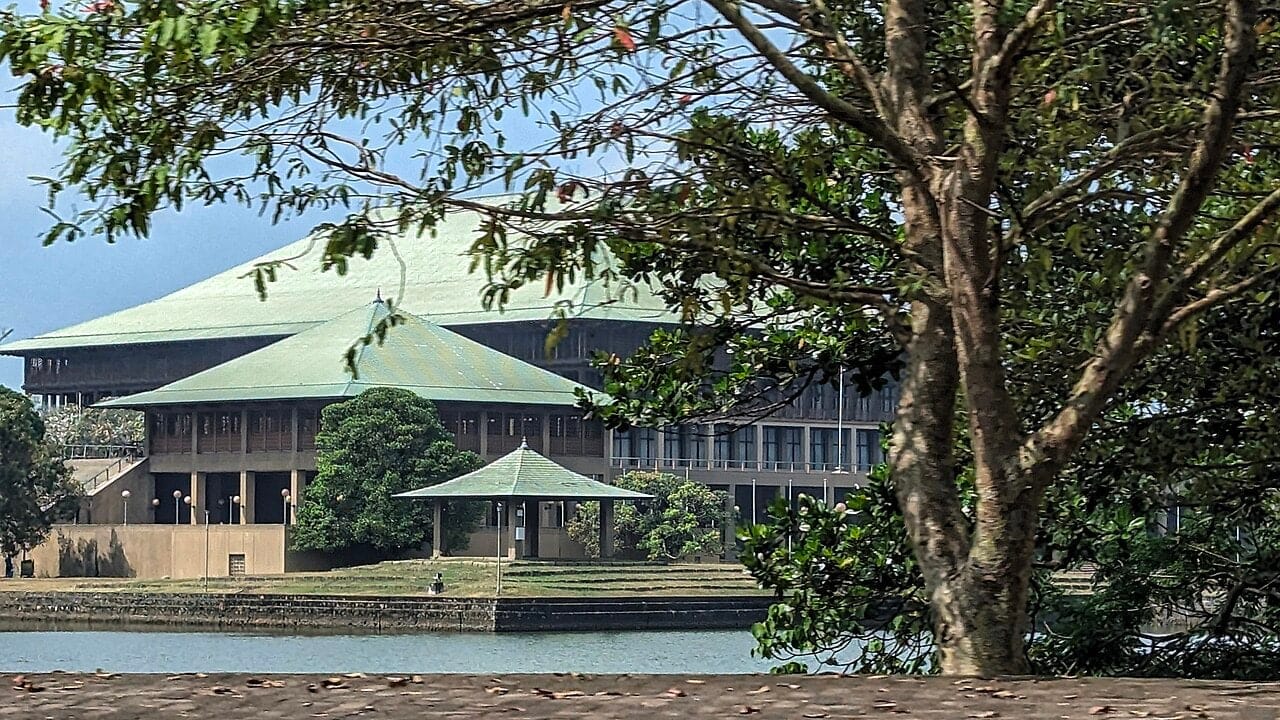
Fifty government MPs have placed a motion on Parliament’s Order Paper seeking an inquiry into the July 1983 anti-Tamil violence, asking for recommendations on national harmony and relief for those affected.
The signatories include two Cabinet Ministers, Ramalingam Chandrasekar and Ananda Wijepala, the Daily Mirror reported on Tuesday. The motion came before the House at the start of a four-day sitting week running from Tuesday 3 November to Friday 6 November, Hiru News reported.
What the motion says
The MPs argue it is the responsibility of the State to provide “some just relief or dignified redress” to everyone affected and aggrieved by the violence.
“The Black July, which took place in 1983, dragged the country back economically, socially and culturally for several decades, and as a result, thousands of valuable lives were lost, massive property damage was caused, and the country suffered,” the motion says. It adds that the most serious damage was “the escalation of tension, fear and suspicion among the communities rather than the physical damage”.
The loss of life, the destruction of property and the psychological and social harm done have not yet been properly assessed, the MPs contend, calling the events the worst tragedy in the country’s history. The motion asks that the factors that led to the violence, and the individuals who led such destructive acts, be uncovered.
It further argues that a strong legal, social and reconciliation mechanism is needed to prevent a recurrence, and that steps must be taken against activity that undermines trust between ethnic groups.
Under the Hiru account, the body sought would carry out a full study of the 1983 events and their effects and report back to Parliament with proposals, including on relief.
The Justice Minister had argued for something broader
The motion comes despite a remark by Minister of Justice Harshana Nanayakkara during a recent parliamentary debate that it would be more appropriate to appoint a select committee on national reconciliation generally, rather than one focused on the July 1983 riots alone.
That disagreement is between the government’s own justice minister and fifty of its own backbenchers and ministers, and neither filing reports it being resolved.
A note on how the two accounts frame it
Hiru describes a proposal to appoint a parliamentary special (select) committee; the Daily Mirror describes fifty MPs seeking a parliamentary inquiry through a motion on the Order Paper. These are the same instrument described at different levels of detail — a select committee is the mechanism by which Parliament conducts such an inquiry — and the two accounts agree on the subject matter, the study of the 1983 events, and the recommendations on relief. Neither outlet contradicts the other on any point of fact.
Also before the House
The government is bringing an adjournment debate on the impact on Sri Lanka of the military situation in the Middle East, according to Hiru. That debate falls on the day the US struck Iran’s Qeshm Island in the Strait of Hormuz, the shipping channel that governs the country’s imported fuel costs.
What is still not stated
Neither filing says how many members the committee would have or how they would be chosen, sets a reporting deadline, or says whether the opposition supports the motion. Neither records what form the contemplated relief might take, or how such a committee would relate to existing reparations machinery. Neither says whether the motion will be divided on, or when it will be debated.
Background
The violence of July 1983 — in which Tamil civilians were killed and homes and businesses destroyed across Colombo and other parts of the island over several days — is commonly treated as the point at which the armed conflict began in earnest. This desk reported on the 43rd commemoration held in Jaffna in July. No parliamentary select committee has previously been appointed to study the events.