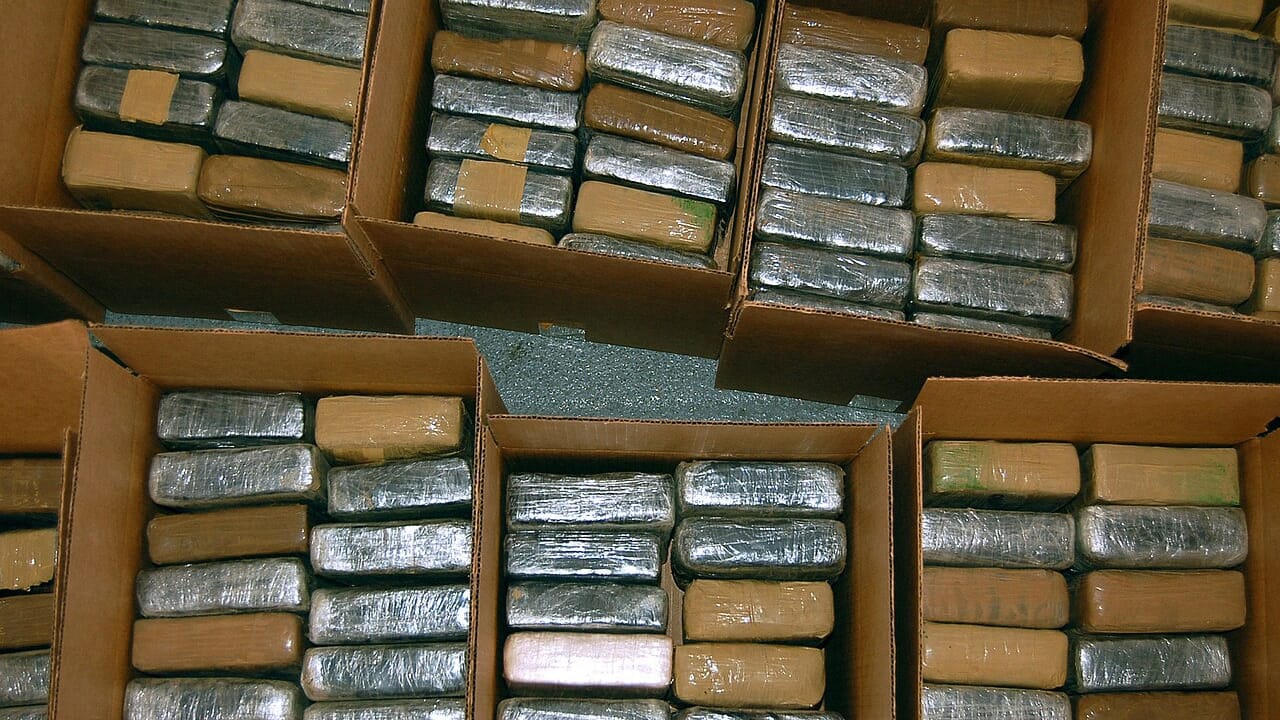
The Sri Lanka Navy has intercepted a local multi-day fishing trawler suspected of transporting a consignment of narcotics in waters south of the island, and is escorting the vessel and its crew ashore.
The interception followed a special naval operation, Hiru News reported on Wednesday evening. The fishermen aboard are being brought to land for further investigation and legal proceedings, the Navy said.
The Navy said further details of the operation would be released in due course, the Daily Mirror reported.
Where it happened
The two filings describe the location differently, and the difference matters. Hiru places the operation in the deep seas south of Sri Lanka. The Daily Mirror says it was conducted in international waters off the southern coast.
Deep-sea fishing grounds are not necessarily outside Sri Lanka’s exclusive economic zone, and neither filing gives a position or distance from shore. Which jurisdiction the vessel was taken in can bear on how a prosecution proceeds, so the point is left as the two outlets reported it rather than resolved here.
What has not been stated
Neither report gives the quantity or type of the suspected narcotics, the number of crew detained, the vessel’s name or port of registration, the date the operation was carried out, or which naval command conducted it. Neither confirms that the consignment has been tested — both describe it only as suspected narcotics.
No arrests have been announced. The Navy’s own account, as relayed by both outlets, is that the boat is still being escorted to shore.
Context
Sri Lanka’s southern deep-sea grounds sit near shipping lanes used for trafficking across the Indian Ocean, and the Navy has intercepted local multi-day craft on narcotics suspicion repeatedly in recent years. Cases of this kind typically pass to the Police Narcotics Bureau once a vessel is brought ashore and its cargo tested — neither filing states that this has happened here.
Update, 4 November evening: the Navy names the drugs and the port
Two of the questions recorded above now have answers. The consignment aboard the seized vessel is suspected to be heroin and “ice” — crystal methamphetamine — the Navy said in a later filing carried by Hiru News at 8.15 p.m. on Wednesday.
The vessel is due to be brought to Dikkowita fishing harbour on Thursday morning, the Navy said.
That supplies the destination the earlier filings left open. Dikkowita, on the coast north of Colombo, is the harbour the Navy has routinely used to land intercepted multi-day craft and their cargo for examination.
The drugs remain suspected rather than confirmed: the update describes what the Navy believes is aboard, not the result of any test. The quantity is still not stated, nor the number of crew detained, the vessel’s name, the position of the interception, or whether any arrest has been made. The jurisdictional question recorded above — deep seas or international waters — is not addressed by the update either.
Update, 5 November morning: the haul is landed, weighed and valued near Rs 3 billion
Three of the questions left open above now have answers. The consignment aboard the seized vessel comes to more than 150 kilogrammes of narcotics with a value close to Rs 3 billion, the Deputy Minister of Defence said in remarks carried by Hiru News at 7.52 a.m. on Thursday.
The vessel was brought in to Dikkowita fishing harbour on Thursday morning, as the Navy had signalled it would be. Five suspects were aboard, the Navy said.
An earlier filing the same morning put the police account alongside it. The trawler, the five detained men and 10 sacks suspected of containing narcotics were brought to Dikkowita, police said in a report carried by Hiru News at 6.47 a.m. The vessel and the men were taken into custody during a special naval operation at sea, that filing repeats.
What the figures do and do not establish
The quantity, the value and the crew count are now on the record, and the landing is confirmed. Note what each is: the Rs 3 billion figure is a valuation attributed to a minister, not an assessed or adjudicated amount, and the 150 kg is a weight given without a breakdown between heroin and crystal methamphetamine. The filings cited here give a combined total only.
The narcotics also remain suspected. Ten sacks have been landed and described as suspected narcotics; no filing cited here reports a Government Analyst’s examination, and under normal practice the cargo would go for testing after being brought ashore.
Still unreported: the vessel’s name or port of registration, the position of the interception, the identities or nationalities of the five men, and whether they have been formally arrested or produced before a court. The jurisdictional question recorded above — deep seas or international waters — is still not addressed.
A note on comparable cases
Narcotics seizures from multi-day trawlers in the island’s southern waters are frequent, and several past cases carry figures close to this one — including a 123 kg heroin haul off Dondra also valued at over Rs 3 billion, and a separate landing of heroin and “ice” put at Rs 3.7 billion. Those are different seizures. This report is pinned to the vessel taken on 4 November and landed at Dikkowita on 5 November, and no detail from any earlier case has been carried into it.
Update, 5 November: the Navy counts the packets and names the departure port
The breakdown between the two drugs is now on the record. A total of 100 packets of crystal methamphetamine (“ice”) and 52 packets of heroin were recovered from the vessel at Dikkowita, NewsFirst reported at 9.17 a.m. on Thursday.
That is the first count of the consignment by drug type. It is consistent with the police account of 10 sacks landed — 152 packets across ten sacks — and with the Navy’s description of a cargo of heroin and ice.
The figure was given by Navy Spokesperson Commander Chaminda Walakuluge, the first named official attached to the seizure in any filing cited here. He confirmed that five suspects have been apprehended, matching the crew count reported earlier in the morning. The Navy puts the estimated street value of the narcotics at more than Rs 3 billion.
The vessel departed on its most recent voyage from the Gandara fishing area, on the southern coast east of Matara — a detail none of the earlier filings carried, and the first indication of where the boat sailed from.
The weight is still provisional
One point sharpens rather than closes. The Police Narcotics Bureau has only now commenced weighing the seized drugs, NewsFirst reports. The “more than 150 kilogrammes” attributed earlier to the Deputy Minister of Defence therefore preceded any formal weighing, and should be read as an initial estimate rather than a measured figure. The Rs 3 billion valuation rests on it.
The narcotics also remain suspected pending examination. Still unreported: the vessel’s name or port of registration, the position of the interception, the identities or nationalities of the five men, and whether they have been produced before a court. The jurisdictional question recorded above — deep seas or international waters — is still not addressed by any filing.
Ada Derana also reported this seizure, including the landing of the 10 sacks at Dikkowita. Its pages have been returning an access block to this desk for some weeks, so its filings could not be fetched or date-verified and are not cited here.
Update, 5 November midday: the weight splits between the two drugs, and the minister is named
The breakdown by weight — flagged above as missing — is now on the record, and so is the identity of the minister who gave the Rs 3 billion valuation. The haul exceeded 150 kilogrammes in total, comprising more than 100 kg of heroin and more than 50 kg of crystal methamphetamine, NewsFirst reported at 12.03 p.m. on Thursday.
The official cited earlier only by office is Deputy Minister of Defence, Retired Major General Arun Jayasekara.
The two counts reconcile
The weight split sits alongside the packet count recorded above without contradicting it, though the relationship is not obvious. There were more ice packets but less ice by weight — 100 packets yielding over 50 kg — against 52 heroin packets yielding over 100 kg. That implies heroin packets roughly four times the unit weight of the ice packets, and the two sets of figures sum consistently to the stated “more than 150 kg”. Neither filing comments on the packaging, so the inference is arithmetic rather than reported.
The qualification recorded above still stands: the Police Narcotics Bureau had only commenced weighing, so these remain initial figures rather than measured ones.
The examination at the harbour
The drugs were examined with the assistance of specialists and officers from the Police Narcotics Bureau, and sniffer dogs were deployed during inspection at the harbour, NewsFirst reports. The operation is described as a high-seas interception.
What the Deputy Minister said
Jayasekara called the seizure a significant success against organised narcotics trafficking and said traffickers operate through sophisticated, coordinated networks, particularly along maritime routes. He credited specialised Navy teams and their commanders with the surveillance and interdiction work.
He said the government has strengthened cooperation among the armed forces, Police, the Police Narcotics Bureau and the Coast Guard to block narcotics arriving by sea, port and air, and that monitoring at major entry points has been intensified.
He also claimed that the political protection once enjoyed by certain traffickers no longer exists, and said authorities would pursue smugglers through every available legal avenue.
These are ministerial characterisations of the state’s enforcement posture, not findings. No charges in this case have been reported, the narcotics remain suspected pending examination, and the identities of the five detained men, the vessel’s name and the position of the interception are still unreported.