Spain’s transport minister, Óscar Puente, has resigned six days after a high-speed train collision near Urda in Toledo province killed at least 69 people, Hiru News reported, citing foreign media.
Puente stepped down on Tuesday. He said a transport minister in a country like Spain could not remain in office after two accidents of that severity in less than a year — a reference to the Urda crash and an earlier high-speed collision in January. Together the two disasters killed more than 115 people.
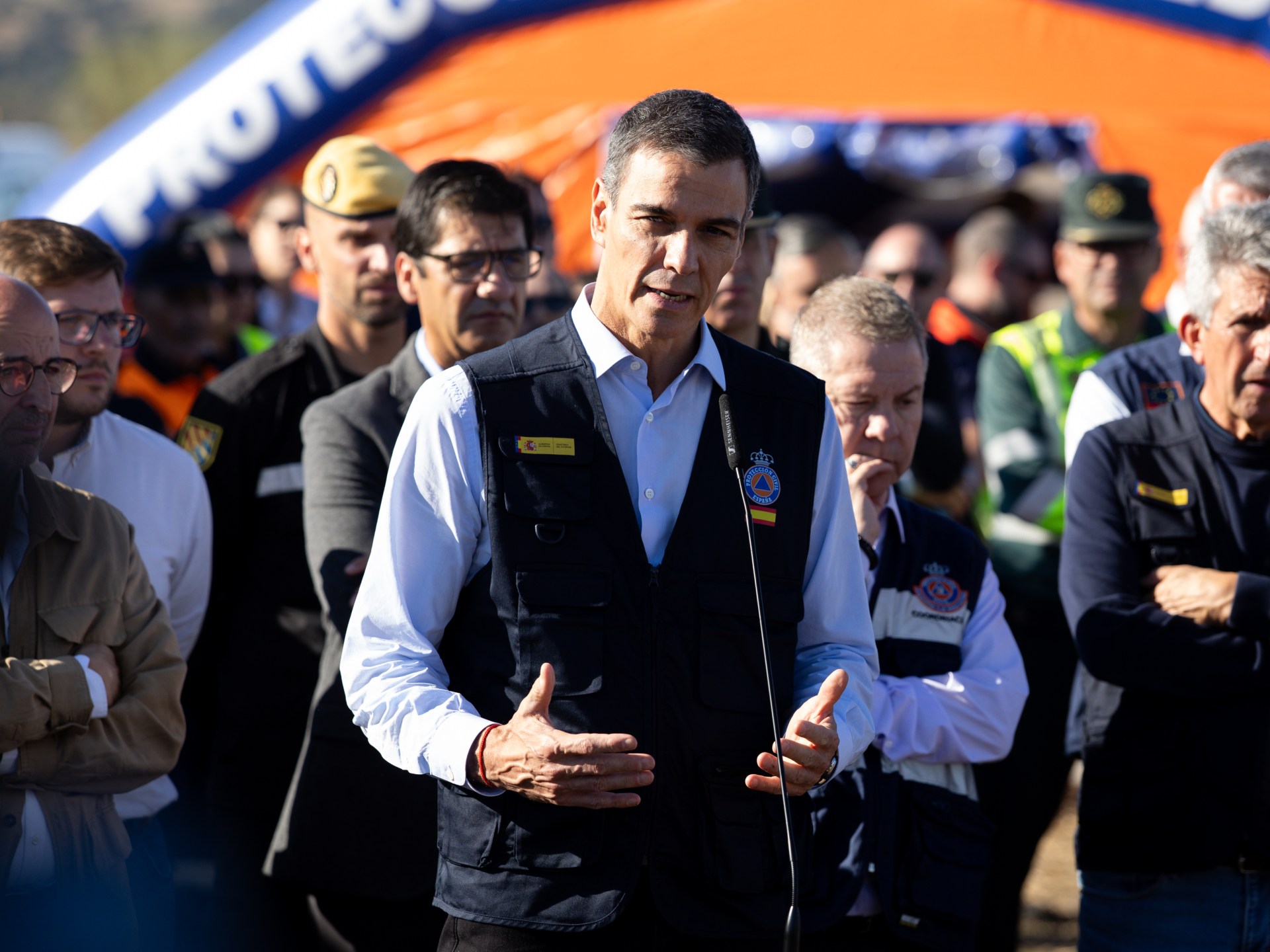
He announced the decision at the close of a parliamentary committee hearing, and said he would also withdraw from the Spanish Socialist Workers’ Party (PSOE) list for the snap general election called by Prime Minister Pedro Sánchez.
The crash
The collision happened on the morning of Wednesday 28 October, when a high-speed service ran into the back of a stationary train near the town of Urda, south of Madrid. Dozens more were injured.
It is among the deadliest rail accidents in recent European history and the worst recorded in Spain since 2013, when 80 people died in a derailment at Angrois, near Santiago de Compostela.
Political context
The crash had already reshaped the campaign before Puente’s departure. Spain votes on 29 November, and the disaster moved rail safety to the centre of the contest, Al Jazeera reported on 30 October. Far-right demonstrators had gathered to demand the prime minister’s resignation.
Puente had publicly rejected the argument that the crash showed Spain’s railways were unsafe, describing the network as reliable and safe.
Note on the death toll
LankaNewz first reported this crash on 28 October with a toll of 64, updated to 68 the following day. The figure now being reported is 69. Al Jazeera’s own 30 October article carries several different counts in different paragraphs — 64, 68 and 69 — so the progression reflects a toll that rose over the first days rather than a correction by any single outlet.
Sri Lanka’s station masters’ union sent condolences to their Spanish counterparts after the crash.
Update: the January toll, and leaked audio from the control room
Two of the three gaps recorded below are now filled. A BBC dispatch carried by the Daily Mirror on 4 November states that January’s collision on the same line killed 46 people — the separate figure this report had noted as missing, and consistent with the combined toll of more than 115 recorded above.
Puente’s own words set the two side by side: “A transport minister in a country like Spain cannot remain in office after two accidents of this seriousness in less than a year.”
What was on the trains
The 28 October crash involved a service run by the state-owned operator Renfe carrying 397 passengers, which ran into a stationary train operated by the private company Iryo with 147 aboard. A reported computer failure in the automatic signalling system had forced all trains on the affected stretch to halt.
The leaked recordings
Three leaked audio recordings of exchanges between Madrid’s control centre and two drivers, published in Spanish media after the crash, appear to show that the Renfe train was cleared to proceed even though the other train had stopped on the track about 25km (15 miles) ahead.
In one, a controller tells the Renfe driver, who was reporting technical difficulties: “Continue your journey and then proceed under [Lateral Signalling Block], at normal speed with normal operation.” The driver asks: “At normal speed?” The controller answers: “Yes.”
The Lateral Signalling Block is a back-up procedure used when the automatic signalling or data transmission system fails. The driver of the stationary Iryo train says in another recording that communication with the train-control system had failed.
This is leaked material reported by Spanish outlets, not a finding. The official investigation’s conclusion on the cause is still unreported.
The politics of the resignation
Puente’s position had been under pressure since the crash, with the conservative People’s Party, the far-right Vox and some of the government’s own allies calling for him to go. They argued he should answer for a high-speed network many Spaniards now regard as unsafe — and whose credibility Prime Minister Pedro Sánchez himself conceded was “broken”. The opposition also faulted him for appearing to attribute the crash to human error.
Having said only days earlier that he would stay, his departure surprised many. He said the decision was driven by “political dignity”. Sánchez praised him for having “faced up to the situation, provided answers and solutions, and then stepped aside — out of dignity. Of his own accord. Out of respect for the victims.”
Spain votes on 29 November.
Not reported
Puente’s successor is still not named in any source cited here, and no source gives the cause finding of the official investigation.