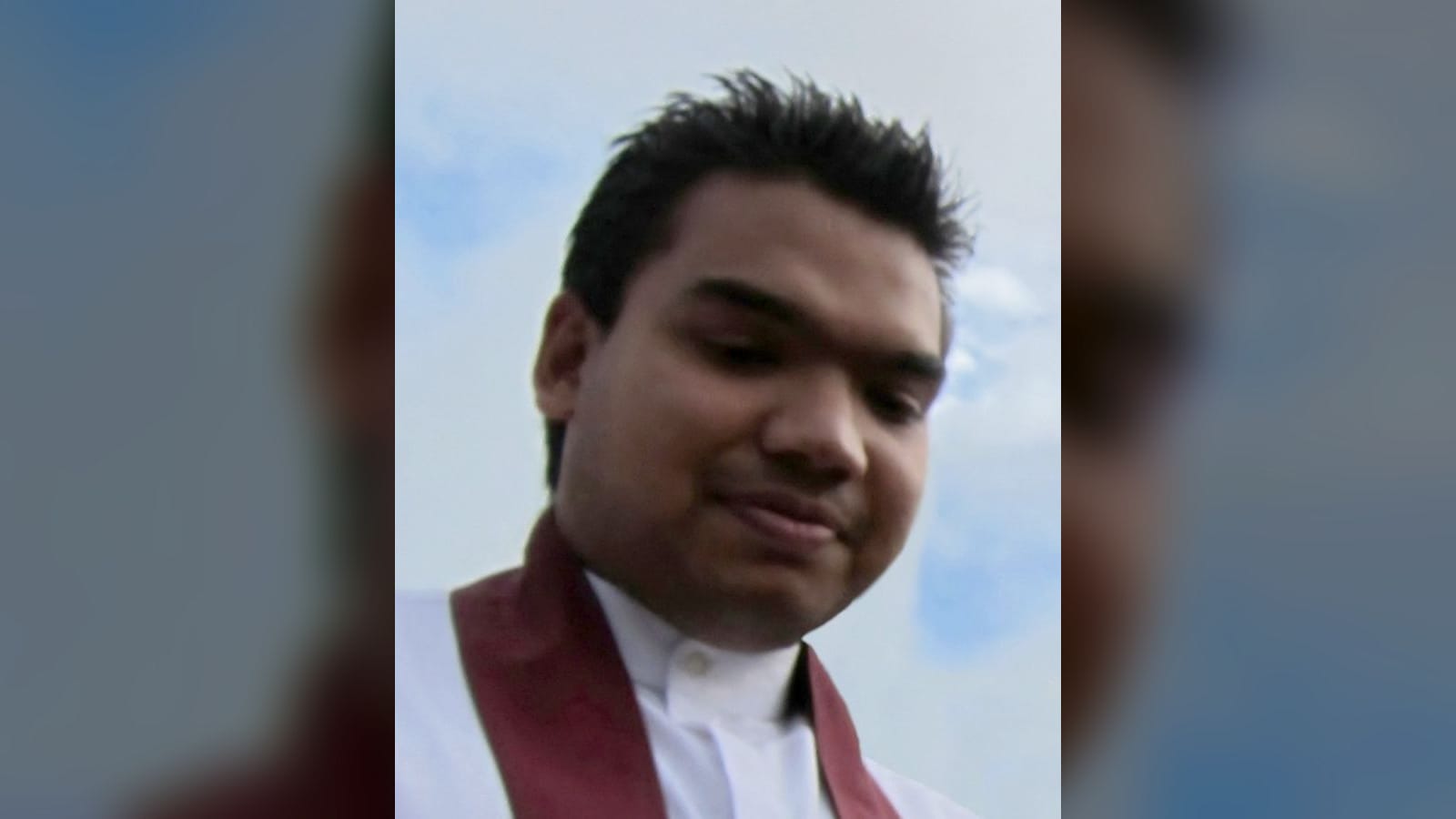
The government has not filled the Treasury so much as failed to spend what it allocated, SLPP national organiser and MP Namal Rajapaksa told Parliament on Saturday, joining the second week of the Budget 2027 debate.
Rajapaksa said the government expects to raise Rs 1,493 billion of the Rs 1,750 billion set aside for capital expenditure through borrowing, Hiru News reported. On those figures roughly Rs 85 in every Rs 100 of capital spending is borrowed, which he said disproves the government’s claim that development is being funded out of money it has saved.
He also argued that money voted to ministries is not reaching the ground, and that leaving allocations unspent withdraws cash from circulation and holds back the economy.
The denominator does not match the Budget
Rajapaksa’s ratio is internally consistent — Rs 1,493 billion is 85.3% of Rs 1,750 billion — but his denominator is not the figure the Budget itself announced. The 2027 Budget put total public investment at Rs 2,000 billion, or 5.12% of GDP, as reported in this desk’s coverage of the railway electrification allocation.
Measured against Rs 2,000 billion, the same Rs 1,493 billion would be about 75%, not 85%. Hiru’s filing does not say which capital-expenditure figure Rajapaksa was using or whether Rs 1,750 billion excludes some component of public investment, and this desk has not reconciled the two.
The Rs 260 billion figure has a different meaning in the Budget papers
Rajapaksa further alleged that Rs 260 billion of the Rs 500 billion allocated for Cyclone Ditwah relief and reconstruction remains unspent.
That figure appears in the Budget record with the opposite sense. When President Anura Kumara Dissanayake tabled a supplementary estimate immediately after the Budget speech on 12 November, he presented Rs 260 billion as additional money still required for 2027 — sought separately from the Budget under Section 16 of the Public Financial Management Act — precisely because the unspent balance carried forward from the Rs 500 billion vote was not enough to finish the work.
Money not yet spent and money still needed are different quantities. No filing states how much of the original Rs 500 billion is in fact unspent; this desk flagged that gap when the supplementary estimate was tabled, and it remains open.
Where his underspending argument is on firmer ground
The broader claim is supported by figures this desk has already reported. Of the Rs 1,380 billion allocated for capital spending in 2026, only about Rs 385 billion — 27.9% — had been spent through the first nine months, two government sources told EconomyNext in October.
His other criticisms
Rajapaksa said the tax structure favours wealthy businesses and called for a formal programme to protect small and medium enterprises, farmers and fishing communities. He said a number of investors already operating in Sri Lanka have left, and that the government should secure those it has before courting new ones. He criticised its handling of growth, inflation and the rupee, and asked it to act within 25 days on relief for farmers, food security, lower electricity and fuel prices, and jobs for young people.
Update — 15 November: the Daily Mirror files the same speech, and the ratio gets a third component
The Daily Mirror published its own account of the speech on Sunday morning, under the byline of Chaturanga Pradeep Samarawickrama. It is a second verified newsroom on the same remarks, and it carries the figure as a direct quotation that Hiru did not print:
“For every Rs. 100 you boast about spending on development, you borrow Rs. 85. Another Rs. 3 comes as foreign aid. The balance is met through State revenue.”
That is a fuller claim than the one reported above. Rajapaksa is not simply saying 85 per cent is borrowed — he is splitting every Rs 100 into Rs 85 borrowed, Rs 3 foreign aid and Rs 12 from state revenue. The Daily Mirror does not attach the Rs 1,493 billion and Rs 1,750 billion figures that Hiru reported, so the two filings give the same ratio by different routes and neither resolves the denominator problem set out above.
The macroeconomic figures he cited
- Economic growth has fallen from 5.3 per cent when the government took office to 4.2 per cent under its third Budget.
- Inflation was negative when it took office and now stands at 8.3 per cent, with the prices of essential commodities up by at least 10 per cent.
- The US dollar has risen from Rs 295 to Rs 332.
He acknowledged global pressures including ongoing wars, but said the government remained responsible for managing the economy.
On tax relief and energy
Rajapaksa said the tax policy benefits the wealthy while placing a heavier burden on poorer people. He asked why, having removed VAT from school textbooks, the government had not extended the same relief to essential food items, milk powder and medicines.
He also questioned the decision to give free smart meters to consumers using more than 180 electricity units, arguing the government should instead concentrate on reducing electricity costs for industry, entrepreneurs and low-income households.
On investors
He challenged the government to produce a clear programme for attracting foreign investors rather than repeatedly debating whether to remain in the IMF programme, and said Sri Lanka needed a better investment climate and stronger existing institutions rather than new committees. Referring to the 2005–2015 period, he said the country had attracted a large number of investors under the system then in place.
“Do not look at every investor with suspicion. You consider every investor a thief and make the official who helped that investor a thief. As a result, officials will not be able to work.”
He added that he was pleased the President had cited Buddhist teachings including the Kalama Sutta in the Budget speech, having earlier criticised religious observances, and said the same principle of examining matters objectively should be applied to the country’s economic problems.
A note on the filing date
The Daily Mirror published this at 10:05 a.m. on Sunday 15 November and its text says Rajapaksa was “addressing Parliament today”. That is not consistent with Hiru having reported the same speech, with the same ratio, on Saturday. This desk treats the speech as Saturday’s and the Daily Mirror’s “today” as an artefact of a next-morning filing; a complete multi-point speech summary published at 10:05 a.m. could not report a sitting that had only just opened.
Sourcing note
Hiru News was the only verified newsroom carrying this speech when this article was first published. The Daily Mirror filed its own account the following morning, and the article now rests on two verified sources. The reconciliation of Rajapaksa’s figures against the Budget papers still draws on this desk’s own earlier reporting rather than on either filing.
Not reported
Neither filing states which Budget line Rajapaksa’s Rs 1,750 billion refers to, names the investors he says have left, or carries any government response. Neither gives the source or basis for the growth, inflation and exchange-rate figures he cited, and neither checks the Rs 85/Rs 3/Rs 12 split against the Budget’s own financing tables.