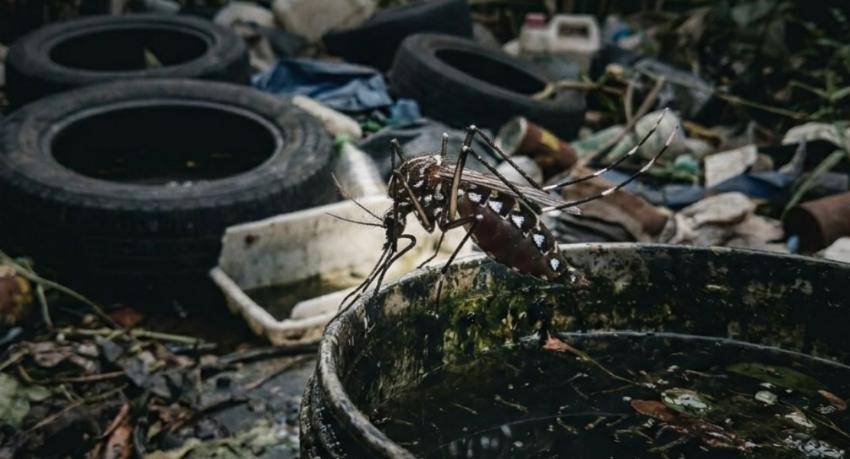
Inspectors found 42,903 potential mosquito breeding sites during the national Mosquito Control Week that ended on Saturday — 29.5 per cent of all the premises they checked, the National Dengue Control Unit said.
Over five days, teams inspected 631 Grama Niladhari divisions across 74 Medical Officer of Health areas, covering 148,894 premises in 13 districts, NewsFirst reported.
Enforcement followed: 4,928 red notices were issued, and fogging was carried out at 2,890 locations.
Acting Director of the National Dengue Control Unit Dr. Kapila Kannangara said the campaign was launched in response to rising mosquito density, to reach the public before infections spread, and that maximum public cooperation is essential.
Another round is already scheduled
Dr. Kannangara said a further special mosquito control programme will run in the final week of November, and later put the timing at the end of November or early December. The filing does not reconcile the two, or say whether the next round will cover the same 74 divisions.
What the figures add to what was already known
The campaign is the one this desk reported on 8 November, when the Health Ministry declared a National Dengue Prevention Week for 9–14 November across 74 high-risk MOH divisions. That announcement had been postponed from 2–7 November because of bad weather, and at the time the ministry had published no target for inspections and no list of the divisions covered.
Saturday’s results supply the scale that was missing — 148,894 premises, and a strike rate close to one premises in three. They do not supply the list of divisions, and the 13 districts are still not named.
The underlying case load remains high. Sri Lanka had recorded 107,651 dengue cases and 81 deaths when this desk last reported the national count on 9 November.
Why the timing matters
Dengue case numbers characteristically rise several weeks after sustained rainfall, because the small pockets of standing water left behind are where Aedes mosquitoes breed. Heavy rain across much of the island through early November is the reason the campaign was both postponed and then mounted — and it is the reason a second round has been scheduled before the first one’s effect can be measured.
Sourcing note
This article rests on a single verified source. A search of the other newsrooms this desk treats as verified found no filing from any of them on the campaign’s results; the Daily Mirror and Hiru News rails carried nothing on it, and Ada Derana has been unreachable for roughly three weeks.
Not reported
The filing does not name the 13 districts or the 74 MOH divisions, give a district-by-district breakdown of the 42,903 sites, say what a red notice requires of a householder or what follows if one is ignored, or offer any comparison with the equivalent figures from previous control weeks — so there is no way to tell from it whether a 29.5 per cent strike rate is better or worse than usual.