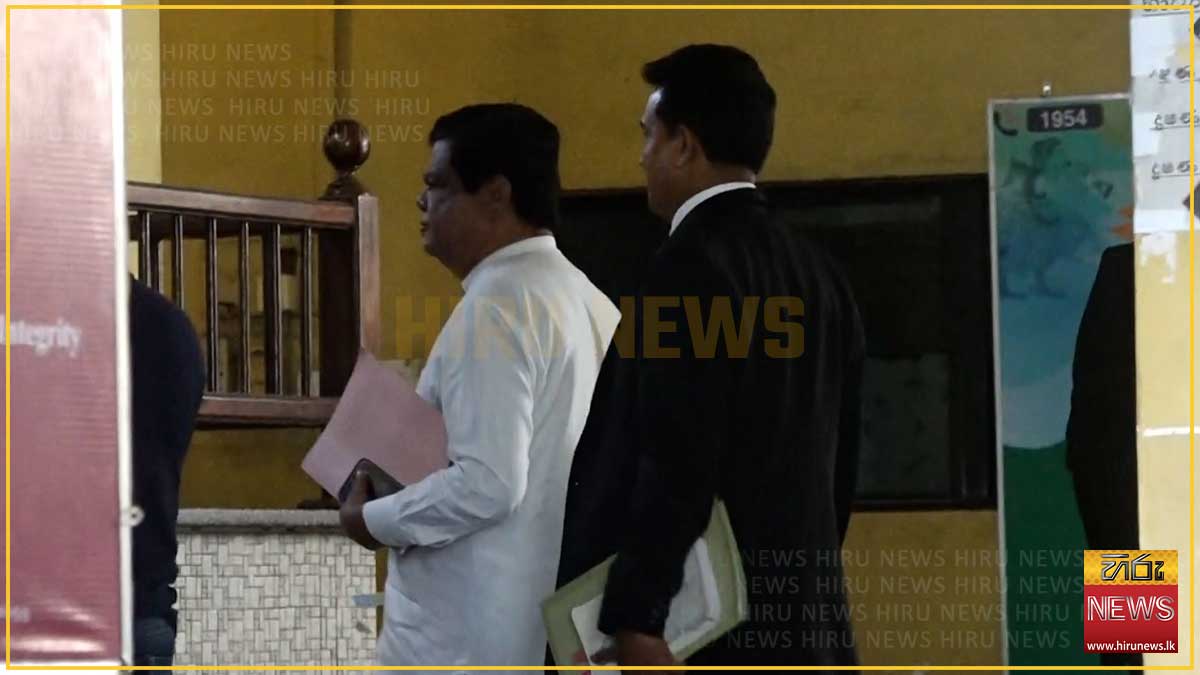
The Joint Opposition says it will challenge the 22nd Amendment to the Constitution in the Supreme Court and will ask that the petitions be heard by every judge currently sitting on the court.
Convenor of the Joint Opposition, Professor G.L. Peiris, set out the plan at a media briefing on Monday. The amendment raises the retirement age of judges.
Why 12 judges
“There are 17 judges in the Supreme Court, but four have retired. Another is expected to retire early next month. Therefore, we will call for a bench comprising all 12 Supreme Court judges to look into petitions against the 22nd Amendment,” Peiris said, according to the Daily Mirror.
Petitions against a constitutional amendment are normally heard by a bench of a small number of judges. A request for the full complement of sitting judges is unusual and would be a matter for the Chief Justice to decide.
The bill it targets
The government published the 22nd Amendment in the gazette on August 7, raising the retirement age of Supreme Court and Court of Appeal judges to 67, alongside a separate bill enlarging the High Court bench. Cabinet had approved the measure on August 4.
Once a bill is placed on the order paper of Parliament, citizens have a limited window to petition the Supreme Court on its constitutionality.
The proposal has drawn objections from several quarters over recent weeks. The Bar Association called a special general meeting on the issue, the Mahanayake Theras wrote to the President, and the International Association of Judges urged the government to reconsider. Opposition Leader Sajith Premadasa has repeatedly argued a referendum is required.
More from the same briefing: “an extremely dangerous amendment”
Further remarks from Monday’s briefing, reported by the Daily Mirror on Tuesday, set out the opposition’s broader case against the bill. The briefing was held at the People’s United Opposition office in Colombo.
Peiris said the amendment poses a serious threat to human rights, the role of the Opposition and Sri Lanka’s democratic institutions, and that the Opposition would use all available democratic and legal means to stop it becoming law.
He argued the measure goes well beyond adding two years to judges’ tenure and could ultimately open the way to extending presidential and parliamentary terms. “This is an extremely dangerous amendment. Its consequences are too severe to assess,” he said.
Criticism of the consultation process
Peiris said the Mahanayake Theras of the Malwatte and Asgiri Chapters had conveyed their concerns to the President without receiving even an acknowledgement of their letter, and questioned whether that was an appropriate way to treat the prelates given the place Article 9 of the Constitution accords Buddhism.
He also said the BASL, which represents around 26,000 lawyers, had sought an opportunity to put its views to the President and had not been granted one, and that its meeting with Justice Minister Harshana Nanayakkara was allowed only after Cabinet had already decided the matter. The President’s Media Division announced the following day that he would meet the BASL on Wednesday.
On the case-backlog justification
Peiris rejected the government’s argument that the amendment is needed to clear the backlog of cases. “Giving judges two additional years will not mean they will hear twice the number of cases,” he said.
Speeding up the courts required strengthening the Attorney General’s Department, the Government Analyst’s Department and the Criminal Investigation Department, along with procedural reform, he said, adding that the government had not raised case backlogs as an issue when it came to power two years ago.
He said the government had instead promised to abolish the executive presidency, reform the electoral system and introduce a new Constitution — commitments on which it secured a two-thirds majority and which are no longer being discussed.
Update — August 12: “We are going to court next week”
The Joint Opposition will file its Supreme Court challenge next week, Peiris said on Wednesday after a meeting between its representatives and British High Commissioner to Sri Lanka Andrew Patrick.
“We are going to court next week. We will convince the Supreme Court beyond any doubt that this proposed move will not provide any solution whatsoever to the backlog of cases or delays in the administration of justice,” he said, according to Ada Derana. “Only around 1% of the total number of cases are before the Supreme Court and the Court of Appeal.”
The figure sharpens the argument he made on Monday against the government’s case-backlog justification: if the higher courts handle only a small fraction of pending cases, extending the tenure of their judges does little for the wider delay problem.
Peiris said the Joint Opposition had briefed the High Commissioner on the proposal. “There has been a long-standing and close relationship between the Sri Lankan judiciary, Great Britain and the Commonwealth. We told him that what is happening in our country today is unbelievable,” he said.
Asked about the Bar Association’s meeting with President Dissanayake scheduled for the same day, Peiris repeated his objection to its timing. “There is no point in the Bar Association meeting the President now. A meeting has been granted only after everything has already been done,” he said.
Sources: Daily Mirror — Joint Opposition seeks full 12-judge SC bench; Daily Mirror — 22A poses serious threat to democracy; Ada Derana — Joint Opposition to challenge judges’ retirement age amendment in court, August 12.