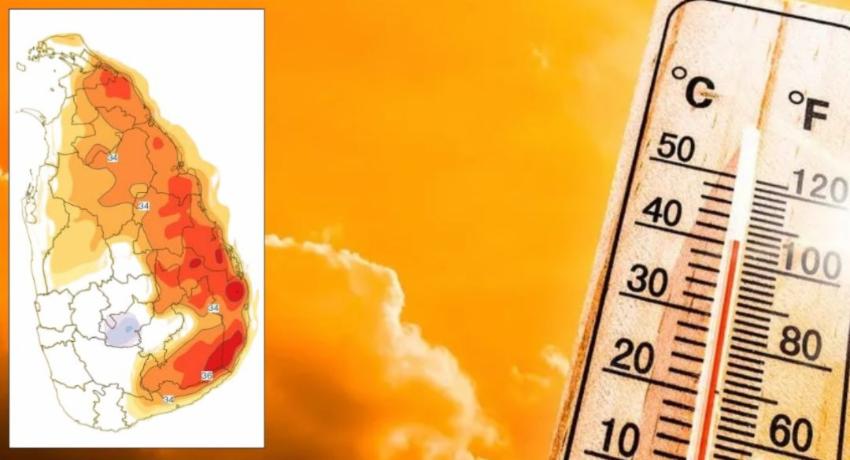
The number of people affected by Sri Lanka’s prolonged dry weather has risen to 81,765, drawn from 25,628 families across seven districts, the Disaster Management Centre said on Friday.
Monaragala remains by far the worst-hit district, accounting for 33,023 affected people from 10,264 families — roughly two in every five of those affected nationally. Ampara, Badulla, Batticaloa, Polonnaruwa, Ratnapura and Hambantota make up the rest.
The figure is a sharp escalation from the 68,041 people across four districts reported a week ago, with Badulla, Polonnaruwa and Hambantota added to the list since.
Water distribution widens
Drinking water distribution programmes are running in 20 Divisional Secretariat divisions across the seven districts. The Disaster Management Centre said water has so far reached 72,053 people from 23,048 families.
Briefing reporters on the El Niño pattern a day earlier, the National Disaster Relief Services Centre’s Senior Assistant Secretary, Prageeth Dhanansuriya, said the government had raised the daily allocation for drinking and sanitation from six litres to 15 litres per person, Ada Derana reported. Some 324 water bowsers are in service, with more available from local authorities and the security forces if needed.
Rs. 4.8 billion has been allocated from the national budget for relief. A committee of the Divisional Secretary, Medical Officer of Health, Public Health Inspector and disaster relief officials decides distribution needs in each area.
Heat advisories for 10 districts
Separately, the Department of Meteorology issued heat advisories on Friday covering 10 districts, including the Eastern and North Central provinces along with Jaffna, Kilinochchi, Vavuniya, Mullaitivu and Monaragala. The heat index is expected to reach caution level in places during daytime. The public has been urged to limit strenuous activity, stay in shade and drink enough water.
The Met Department has put the likelihood of the current El Niño persisting into the first quarter of next year at 97%.
Update: August 22 — caseload edges up, water reaches 72,153
The Disaster Management Centre’s latest figures, reported by the Daily Mirror on Saturday evening, put the number affected at 81,865 people from 25,628 families — a rise of 100 people on Friday’s count, with the number of families unchanged. The affected area has widened from 20 Divisional Secretariat divisions to 23.
Monaragala remains worst hit at 33,023 people from 10,264 families across seven divisional secretariat divisions. Batticaloa, not broken out in Friday’s figures, accounts for 28,523 people across eight divisions — making the two districts together roughly three-quarters of the national caseload.
In Ampara, 8,783 people have been affected and 7,882 have been supplied with drinking water. Badulla, Polonnaruwa, Ratnapura and Hambantota also report affected communities.
Drinking water is now being distributed to 72,153 people, up from 72,053. The DMC said relief operations are continuing under the direction of the National Disaster Relief Services Centre.
Update: August 24 — relief centre details the water increase
The National Disaster Relief Services Centre set out the mechanics of the increased water allocation at a media briefing on Monday, saying the rise from six litres to 15 litres per person a day was made on the instructions of the President.
Senior Assistant Secretary Prageeth Danansooriya — rendered “Dhanansuriya” in earlier reporting — said distribution to affected communities is continuing without interruption, and that funds have also been allocated to clean and restore wells and other water sources used to supply drinking water.
The financial allocations have already been released to the District Secretaries of the affected districts, with more to follow as required, he said. Relief is being coordinated through those District Secretaries.
People struggling to obtain drinking water were asked to notify their Grama Niladhari officer, who will inform the Divisional Secretary so assistance can be arranged.
Polonnaruwa, one of the seven affected districts, recorded the country’s highest temperature of 37.2°C on the same day.
Update: August 23 — tanks dry up, crop losses reported outside the counted districts
A Disaster Management Centre notice reported by Hiru News on Sunday afternoon put drinking water distribution at 72,153 people from 23,048 families — the same figures the Daily Mirror carried a day earlier. Hiru described that as the volume distributed in the 24 hours to 6.00 a.m. on Sunday; the Daily Mirror presented the same numbers as the running total to date. The DMC notice itself was not published in full, and the two framings cannot both be right.
Hiru’s report set out impacts in districts that fall outside the DMC’s seven-district count. The Nachchaduwa tank in Anuradhapura has dried up. Chilli cultivations in the Pandiketuwa area of the same district have been lost for want of water, and residents say watermelon and pumpkin plots at Mawatawewa in Thirappane are at risk.
In Polonnaruwa, which is among the counted districts, residents of Rathmale in Hingurakgoda report crop losses as the village’s Gonamalayawa tank dries up, with villagers saying wild animals are also being affected.
Water cuts in Batticaloa, bowsers to Monaragala
National Water Supply and Drainage Board Chairman Engineer Chandana Bandara said supply is currently restricted in parts of the Batticaloa district, with a daily cut of about four hours in force, and that the board expects to be able to address the district’s water problems in future. Bowsers are supplying the Bibile and Medagama areas of Monaragala.
Update: August 23 — rainfall expected to increase from Tuesday
The Department of Meteorology expects rainfall to increase from Tuesday, August 25, across several parts of the island including the south-west, Hiru News reported on Sunday evening. It would be the first signalled break in a dry spell that has run for weeks.
The department did not say whether the expected rain would reach the seven worst-affected districts. Ampara, Badulla, Batticaloa, Monaragala, Polonnaruwa, Ratnapura and Hambantota remain under severe dry-weather impact, with the Disaster Management Centre’s caseload unchanged at 81,865 people from 25,628 families and drinking water reaching 72,153 people.
Hiru also reported an acute shortage in the Lehediyangala water village in the Wilgamuwa Divisional Secretariat division of Matale, where about 500 families live. Residents there are asking authorities for a water purification project for the village. Matale is not among the seven districts in the Disaster Management Centre’s count.
Separately, the rapid fall in the Walawe River level at Ambalantota has disrupted treatment work, and purification was suspended from Sunday afternoon with supply restricted to several areas.
Update: August 24 — deputy minister warns the dry spell could reach 12 districts
Deputy Minister of Housing, Construction and Water Supply T.B. Sarath said 12 districts could be affected if the dry conditions continue to intensify, NewsFirst reported on Monday. He named Polonnaruwa, Monaragala, Hambantota, Batticaloa, Vavuniya and Kurunegala among the districts expected to feel the impact.
Two of those — Vavuniya and Kurunegala — are outside the seven districts in the Disaster Management Centre’s current count, making the deputy minister’s list the first official signal that the counted area may widen. He said work was already under way with the relevant authorities to supply water to vulnerable communities.
The Disaster Management Centre’s caseload was unchanged for a third day. Ada Derana reported on Monday morning that 81,865 people from 25,628 families remain affected, with drinking water reaching 72,153 people from 23,048 families.
Ada Derana’s figures also resolve an ambiguity in Saturday’s reporting: the 23 Divisional Secretariat divisions are those recorded as affected, while the 20 divisions are those receiving distributed drinking water. The two counts refer to different things rather than to a widening of the same measure.
Update: August 26 — caseload passes 84,000, and the increase is almost entirely Monaragala
The Disaster Management Centre’s caseload has risen to 84,545 people from 26,457 families across the same seven districts, Ada Derana reported on Wednesday. Drinking water is being distributed to 75,734 people from 24,144 families across 22 Divisional Secretariat divisions in five districts.
That is a rise of 2,680 people and 829 families on the count that had held steady since August 22. Almost all of it comes from one district: NewsFirst reported Monaragala at 11,074, against the 10,264 families recorded there on August 22 — an increase of 810 of the 829 families added nationally.
The district figures are families, not people
NewsFirst presented its district breakdown as counts of people, giving Monaragala 11,074 as the highest, Batticaloa 9,547 and Ampara 2,823. Those figures cannot be people.
If Monaragala were the worst-affected district at 11,074 people, seven districts could account for at most 77,518 — short of the 84,545 national total in the same report. The numbers work as families: they track closely against the family counts reported for the same districts on August 22, when Monaragala stood at 10,264 families and 33,023 people. Ada Derana’s national figures, which give people and families separately, support the same reading.
Read as families, the three named districts hold 23,444 of the 26,457 affected nationally, or 89 per cent.
Water shortages spread, heat index climbs
Dry weather has also caused water shortages in several Divisional Secretariat divisions across Badulla, Polonnaruwa, Hambantota and Ratnapura, NewsFirst said.
The Department of Meteorology placed the heat index — the temperature as the body feels it — at a level requiring attention on Wednesday, particularly across the Eastern Province and in the Polonnaruwa, Jaffna, Kilinochchi, Mullaitivu and Monaragala districts, and urged the public to follow health guidelines against excessive heat.
Rain in the wet zone, not where it is needed
Senior Meteorologist Malith Fernando said showers were expected from time to time on Wednesday in the Western, Sabaragamuwa and North Western provinces and in the Kandy, Nuwara Eliya, Galle and Matara districts, Ada Derana reported.
None of those areas is among the seven districts in the Disaster Management Centre’s count. The rain arrived heavily enough in the upper catchment of the Kukuleganga reservoir for one spill gate to be opened, releasing water into the Kuda Ganga at 20 cubic metres per second — a reservoir spilling in the south-west on the same day the dry-zone caseload passed 84,000.