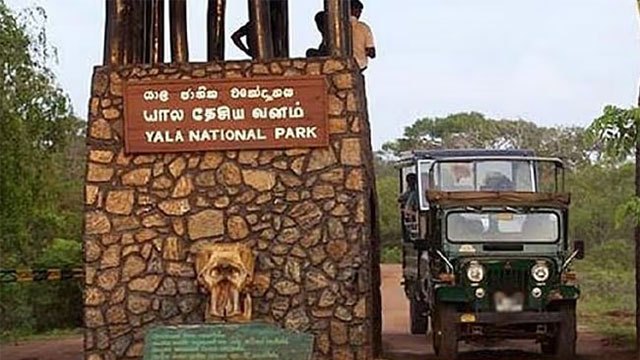
Blocks 1 and 2 of Yala National Park will be closed to the public from September 14 to October 15 because of drought conditions in the area, the Department of Wildlife Conservation has announced.
The two blocks are the park’s most visited sections and the ones most closely associated with Yala’s leopard population. Neither Ada Derana nor the Daily Mirror reported whether the park’s remaining blocks will stay open during the month-long closure, and the department did not set out what visitors holding bookings for the period should do.
A park already being trucked water
The closure follows months of worsening conditions inside the park. The Wildlife Conservation Department has been trucking water into Yala daily using three bowsers and running solar-powered pumps to fill small ponds at six locations, measures reviewed when Environment Minister Dr. Dammika Patabendi visited the park on August 16.
Yala’s difficulties mirror conditions across the dry zone. Wildlife officers began trucking water into Wilpattu in late July after tanks in that park’s eastern zone ran dry, and bowsers have been dispatched to forest reserves and national parks nationwide as small tanks empty across the dry zone.
Closing a national park during the driest weeks is a long-standing management practice in Sri Lanka: it reduces vehicle pressure on animals concentrated around the few remaining water sources and allows habitat and infrastructure work while conditions are at their harshest.
Wider drought picture
The announcement lands amid a broad El Niño-driven dry spell. More than 84,000 people across several districts have been affected by dry weather, the government has allocated Rs. 3 billion in compensation to farmers, and Opposition Leader Sajith Premadasa this week called for advance preparation for El Niño and La Niña conditions.
The Meteorological Department has separately warned that El Niño could bring heavy rainfall and flooding in October and November — which would fall immediately after the scheduled reopening date.
Update, September 7: officials confirm the closure, and give a second reason
With a week to go before the closure takes effect, both Ada Derana and NewsFirst returned to the story — and named different officials giving different emphases.
Additional Director General (Operations) of the Department of Wildlife Conservation, Manjula Amararathna, told Ada Derana’s BIG FOCUS programme that the closure takes into account the heat stress experienced by animals and by wildlife officers in the prevailing high temperatures, with animals affected by both water scarcity and heat.
He added a point not previously reported: the large number of safari jeeps operating inside the park under these conditions creates significant difficulties for officers carrying out their duties. That makes visitor pressure itself part of the stated rationale, rather than only a side-effect of the drought.
Director General of Wildlife Ranjan Marasinghe told NewsFirst that the two blocks close from 14 September until 15 October because of the prevailing dry weather — the framing used in August.
The two accounts are compatible rather than contradictory, but only the Ada Derana version explains why officers, not just animals, are a reason to shut the gates.
Other parks under watch
Amararathna said officials are monitoring conditions in other arid areas, naming the Mannar area and the vicinity of Wilpattu National Park alongside Yala’s Blocks 1 and 2. Further national parks would be closed where necessary, he said, or facilities provided so that animals and officers can function without being adversely affected by heat stress.
That puts Wilpattu — already being trucked water since late July — explicitly on the list of candidates for closure.
Sources
- Blocks 1 & 2 of Yala National Park temporarily closed to public — Ada Derana, August 26
- Yala National Park Blocks 1 and 2 to close temporarily — Daily Mirror, August 26
- Yala National Park’s Blocks 1 & 2 to be temporarily closed from Sep. 14 — Ada Derana, September 7
- Yala National Park Blocks 1 And 2 To Close Temporarily From September 14 — NewsFirst, September 7