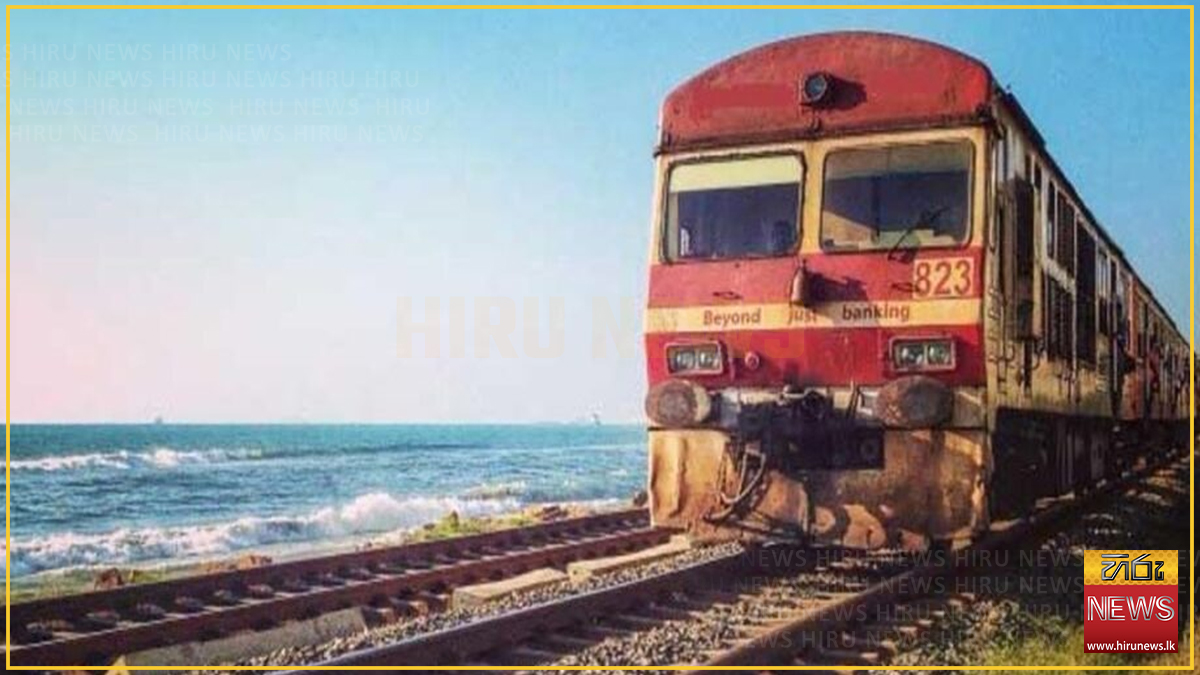
Twenty-seven railway trade unions are planning a 48-hour strike on 17 and 18 September, in protest at what they say is the failure of authorities to address persistent train delays, cancellations and technical breakdowns.
A special discussion on the planned action was held on Saturday, Hiru News reported. The unions said the absence of proper solutions to frequent delays, cancellations and recurring technical faults led to the decision to launch trade union action.
The unions’ case
The Railway Joint Trade Unions have warned that continuing disruption could undermine public confidence in the railway system altogether, the Daily Mirror reported.
They said the cancellation of main office trains and the resulting overcrowding had made peak-hour travel particularly difficult, and that some trains were developing technical problems before reaching their destinations, forcing authorities to delay, stop or cancel services. The disruption, they said, affects not only passengers but workplaces and schools that depend on the service.
Taking the case to commuters
Rather than announce the stoppage and leave it there, the unions organised an awareness discussion with commuters on the problems affecting the service and the reasons for the planned action, the Daily Mirror reported separately. They said they wanted to obtain commuters’ own views and suggestions, and urged passengers and relevant organisations to take part.
That is an unusual step for a stoppage that will strand the same commuters for two days, and suggests the unions expect to be blamed for disruption they argue is already routine.
Update (September 13): talks set for Monday, and a new demand surfaces
The unions will meet the Deputy Minister of Transport on Monday 14 September to discuss the issues affecting the department, and will decide their next step after that discussion, the Daily Mirror reported on Sunday. They warned the strike will go ahead on the 17th if satisfactory solutions are not provided.
The report adds a demand not mentioned in the earlier coverage: the failure to appoint a new General Manager for the Railway Department, which union spokesman Somaratne named alongside the operational grievances as a trigger for the action. The framing has widened from service disruption to the administration of the department itself.
It also reports that railway passenger associations have extended their support to the trade union action for the first time, citing the failure to address long-standing passenger concerns, particularly train delays. That answers the question raised by the unions’ commuter outreach: the passengers’ own organisations have sided with the strikers rather than against them.
Update (September 14): talks fail, strike confirmed for the 17th and 18th
Monday’s discussion ended without agreement and the two-day token strike will go ahead on 17 and 18 September, the Daily Mirror reported on Monday evening.
The meeting was held between the Secretary to the Ministry of Transport and representatives of the Joint Railway Trade Unions — not the Deputy Minister, as Sunday’s report had indicated. The unions set out administrative and operational problems in the department, staff grievances and the disruption affecting passengers, and said their action was aimed not at opposing the government but at rebuilding the department into an efficient and reliable service.
The Secretary is reported to have accepted that the unions’ objective was to improve the department, and to have said that a letter seeking an explanation from the Secretary of the Station Masters’ Association was inappropriate and should not have been issued — an apparent concession on a disciplinary matter that had not surfaced in the earlier coverage.
But on the central demand he asked for more time. The unions refused, saying enough time had already been given on a problem they said had run for nearly two years, and that they no longer had confidence in the General Manager’s administration. Unless an acceptable decision is reached on his removal, they told the Secretary, the strike stands.
A demand that changed shape
The core demand has now been stated three different ways across four reports. The first accounts put the strike down to delays, cancellations and technical faults. Sunday’s report named the failure to appoint a new General Manager. Monday’s report has the unions demanding the removal of the current General Manager, in whom they say they have lost confidence.
Those last two are not the same thing — one describes a vacancy, the other an incumbent. Monday’s account is the more detailed and the more recent, and it is the only one to quote the unions on their reasoning, but no outlet has acknowledged the discrepancy or named the officer concerned.
Update (September 16): strike starts at midnight, another union joins, first cancellations posted
The strike begins at midnight on Wednesday, and a further union has joined it. The Railway Technological and Operating Service Union has told the Secretary of the Railway Joint Trade Union Alliance it will take part, the Daily Mirror reported, bringing assistant drivers, shunting drivers and yard workers into the action, according to Hiru News.
In its letter the union said the administration had failed to maintain the progress and standards of the railway service, and raised the long-delayed processing of railway employees’ pensions — a problem it said it had expected the General Manager’s previous experience in using technology to streamline administration would resolve. It argued that the head of the department requires expertise suited to a highly specialised engineering and operational institution, and warned that continued experimentation with its administration could damage the service further. The union said it was joining the action to draw the attention of President Anura Kumara Dissanayake to the issues.
Two gaps in the earlier reporting now closed
Hiru’s account supplies two details that four previous reports had withheld.
The Transport Ministry Secretary is named: Asiri Karunawardhana, Secretary to the Ministry of Transport, Highways and Urban Development. And the disciplinary matter he was reported on 14 September to have called inappropriate is now identified — a letter issued by the railway administration against Kasun Chamara Jayasekera, General Secretary of the Sri Lanka Railway Station Masters’ Union. Karunawardhana wrote to have it suspended.
Hiru also describes the strike as a protest against “the administrative conduct of the General Manager of Railways” — wording closer to the “remove the current” version of the demand than to the “appoint a new” version.
Seven services cancelled before the strike begins
The Railways Department has cancelled seven scheduled services, the Daily Mirror reported on Wednesday afternoon: six night mail trains running between Colombo Fort and Kankesanthurai, Trincomalee and Batticaloa in both directions, and the 11.00 p.m. Colombo Fort–Rambukkana service. Passengers were advised to make alternative arrangements.
The report does not attribute the cancellations to the strike, and the department has given no reason for them. They fall on the night the stoppage begins.
A count that does not agree
Hiru puts the number of participating unions at 26, including engine drivers, controllers and station masters. Our earlier reporting, and the Daily Mirror’s, put it at 27. Neither outlet acknowledges the other figure, and the new union’s accession would in any case change the total. The two outlets also name the joining union differently — the Daily Mirror calls it the Railway Technological and Operating Service Union, Hiru the Railway Technical and Operations Service Union.
Update (September 17): the strike is on, the General Manager is named, and the Minister says no
The stoppage began at midnight on Wednesday, the Daily Mirror reported on Thursday morning, after talks with the government failed to resolve the unions’ central demand.
Two things reported for the first time close gaps left open across five previous filings.
The General Manager is named. The officer whose removal the unions are demanding is Ravindra Pathmapriya. No outlet had identified him in any earlier report on the dispute.
The government has refused. Transport, Highways and Urban Development Minister Bimal Rathnayake has said he cannot agree to the unions’ demand, leaving the dispute unresolved as the strike began. This is the first recorded position from a minister rather than from the Ministry Secretary, and it is a rejection rather than the request for more time the unions turned down on 14 September.
The Daily Mirror also states the unions’ demands as two, not one: the removal of the General Manager, and the withdrawal of the letter seeking an explanation from Station Masters’ Union General Secretary Kasun Chamara Jayasekara over comments he made to the media. That is the same disciplinary letter the Ministry Secretary was reported on 14 September to have called inappropriate and to have written to suspend — so on the unions’ account it has still not been withdrawn.
Sri Lanka Railways says the trains are running
The department’s response — absent from every previous report — is that the strike will not bite.
Railway Spokesperson Asanka Samarasinghe said train services commenced as usual on Thursday and that the stoppage is unlikely to disrupt services, NewsFirst reported at 7.56 a.m.
That claim rests on which unions actually walked out, and the two accounts of that do not fully agree.
| Body | Position | Reported by |
|---|---|---|
| Station Masters’ Association | Striking | NewsFirst |
| Assistant Drivers’ Association | Striking | NewsFirst |
| Locomotive Drivers’ Association | Striking | NewsFirst |
| Railway Yard Employees’ Association | Striking | NewsFirst |
| Keepers of Unprotected Railway Crossings Association | Supporting | Hiru News |
| Railway Technical and Operations Association | Supporting | Hiru News |
| All Ceylon Railway Drivers’ Association | Not participating | NewsFirst |
| Locomotive Operating Engineers’ Association | Not supporting | Hiru News |
Three similarly named drivers’ bodies appear in that list on opposite sides, and neither outlet explains how they differ. If the All Ceylon Railway Drivers’ Association and the Locomotive Operating Engineers’ Association between them hold enough footplate staff, the spokesman’s claim is plausible; if the striking Locomotive Drivers’ Association and Assistant Drivers’ Association do, it is not. No outlet reports membership figures for any of them, and neither the department nor the unions has published a count of services actually run against those scheduled.
The union total is also still unsettled: our earlier reporting and the Daily Mirror put it at 27, Hiru at 26, and two of the bodies now named as abstaining were never identified as participants in the first place.
The seven cancellations: three accounts that do not fit together
The seven services cancelled on Wednesday night — reported here on 16 September without a stated reason — are now the subject of a direct dispute.
Several railway unions allege the department cancelled them pre-emptively, ahead of the stoppage, Hiru News reported. Hiru lists the same services the Daily Mirror did: six night mail trains between Colombo Fort and Kankesanthurai, Trincomalee and Batticaloa, and the 11 p.m. Colombo Fort–Rambukkana.
But Samarasinghe told Hiru that no decision had been taken to cancel the services as of Wednesday afternoon.
The three accounts cannot all be right as stated. The Daily Mirror reported the cancellations as fact on Wednesday afternoon; the unions say they were made in anticipation of the strike; the department’s spokesman says no such decision had been taken. One possible reconciliation is timing — a decision taken after the spokesman spoke — but no outlet puts that to him, and none has asked the department to account for the discrepancy since. We are recording all three rather than choosing between them.
The allegation matters beyond the seven trains: if the department pre-emptively stood down services, then the disruption attributed to the strike is partly its own, and the spokesman’s Thursday claim that services are running normally becomes harder to test.
A wider protest at Maradana
The dispute has also drawn in unions outside the railway. Railway unions and several other public-sector unions — including postal and teacher-principal unions — staged a protest outside Maradana Railway Station, Hiru reports, calling for the General Manager’s removal.
That is the first indication that the demand has support beyond the railway workforce, and the first protest action reported in a dispute that until now has been conducted through letters and meetings.
Update (September 17 evening): the alliance is 29 unions, and tickets went on sale online
A later Hiru filing puts the Railway Joint Trade Union Alliance at 29 unions, not the 27 reported through the build-up, and names four of them: the Sri Lanka Railway Station Masters’ Association, the Railway Employees’ Association, the Sri Lanka Unprotected Railway Crossing Gatekeepers’ Association and the Railway Security Officers’ Association. It is the first time any outlet has named constituent unions or given a figure other than 27. Hiru does not say whether two unions joined or whether the earlier count was simply wrong.
The same filing confirms the practical shape of the first day: ticket issuing halted at numerous stations, while trains ran to schedule through the morning and afternoon. The Daily Mirror published a photograph at midday captioned “Free travels during rail strike” — passengers travelling on a running service with no tickets being sold.
Against that backdrop, the Department of Government Information announced that ordinary journey tickets can now be bought online through pravesha.lk, extending a platform previously used only for concessionary season tickets. No outlet says whether the rollout was scheduled independently or brought forward.
The Station Masters’ Association warned that trade union action will be intensified if the demands are not addressed — the first indication of escalation beyond the 48 hours.
Update (September 17, later): a cost is put on the strike, and the removal demand runs into a mechanism
A NewsFirst analysis piece published on Thursday supplies several things five days of straight-news filings had not. It is framed as an argument rather than a report — its headline asks whether the strike is about workers’ rights or politics, and it reaches a view — so its factual additions and its conclusions are separated here.
The strike has a price. General Manager Ravindra Pathmapriya says the suspension of ticket sales is costing nearly Rs. 5 million a day. That is the first figure anyone has put on the stoppage, and it closes a gap left open by every previous account — including the Daily Mirror’s “Free travels during rail strike” photograph, which showed the effect without quantifying it. It should be read knowing its source: the official whose removal the unions are demanding is also the official costing their action.
The removal demand has a procedural answer. Two separate figures now say the same thing from different directions. Deputy Minister of Transport and Highways Dr. Prasanna Gunasena says a General Manager cannot be removed simply because a trade union demands it — discussions can take place if there are genuine concerns, but there is no mechanism permitting a dismissal on the basis of a strike. And Pradeep Jayasuriya, President of the All Ceylon Railway Station Masters’ Union, says removal “is not something that can be carried out immediately” and would require a Cabinet-level decision.
Between them that answers a question this thread has carried since Thursday morning: why Minister Bimal Rathnayake said he cannot agree to the demand rather than that he will not. Neither man is a neutral party, and no outlet has yet cited the rule or regulation either is relying on.
A fourth similarly-named union, and a pattern in the names. Jayasuriya’s All Ceylon Railway Station Masters’ Union is critical of the strike and blames the initiating unions for the lost revenue — while the Sri Lanka Railway Station Masters’ Association is among the strike’s originators and one of the four unions Hiru named in the 29-union alliance. These are not the same body, and the distinction matters because a reader seeing “station masters” on both sides would reasonably assume a split within one union.
Set against the drivers’ bodies already tabulated above, a pattern emerges: the two organisations reported as standing apart from the strike are the All Ceylon Railway Drivers’ Association and the All Ceylon Railway Station Masters’ Union, while the striking bodies carry Sri Lanka or unprefixed names. We note the pattern without drawing a conclusion from it — no outlet has explained the relationship between the parallel organisations, and none gives membership figures for any of them.
The department’s account, in more detail. Asanka Samarasinghe — designated Transport Superintendent here, having been described as Railway Spokesperson in Thursday morning’s NewsFirst report — says office trains and school trains ran as scheduled, and that the department’s next priority was long-distance services. Some stations were closed, and trains would be run only where authorities were satisfied they could operate safely. The department was also working to run the remaining night mail services, the six cancelled on Wednesday night notwithstanding.
The Locomotive Operating Engineering Services Union — listed above as not supporting the action — has its Secretary, Dimuthu Edirisinghe, calling the strike ineffective, saying there is no shortage of train drivers and operations are continuing normally, and suggesting the personal agendas of certain union leaders are influencing it.
A demand the government says is already settled. Gunasena says one of the unions’ other demands has already been addressed. He does not specify which, but the only other demand on record is the withdrawal of the explanation letter issued to Station Masters’ Union General Secretary Kasun Chamara Jayasekera. If that is what he means, it conflicts with the Daily Mirror’s Thursday account, in which the unions still list the letter as outstanding — and with the sequence recorded here on 14 and 16 September, where the Ministry Secretary wrote to suspend the letter but no withdrawal was confirmed.
NewsFirst’s argument, and what supports it
The piece’s thesis is that the stoppage is politically motivated. Its evidence is a timeline: on 29 August the Sri Lanka Railway Station Masters’ Association publicly backed the Bar Association of Sri Lanka’s position on the proposed 22nd Constitutional Amendment, and on 31 August it joined 40 other trade unions and professional organisations in signing a joint statement with the BASL opposing the amendment. It is against that backdrop, NewsFirst argues, that the strike unfolded. Gunasena reaches the same conclusion, saying only a limited number of unions joined, that participation was not widespread, and that the action was driven by political motivations rather than labour concerns.
That the Station Masters’ Association took a public position on 22A in late August is a matter of record, and it had not been reported alongside this dispute before. Whether it explains a strike whose stated demands concern a General Manager and a disciplinary letter is an inference, and NewsFirst does not establish the link beyond the chronology. The union has not been asked to answer it, and no striking union is quoted anywhere in the piece.
The report also characterises public reaction as “largely critical,” citing unnamed commuters describing the action as criminal or a conspiracy. No survey or count is given, and the commuter quoted on the substance makes a narrower point — that people are travelling without tickets and the loss falls on taxpayers.
Day two: the department says trains ran normally, and the strike ends tonight
On Friday 18 September, the second day of the action, Sri Lanka Railways said trains were operating as usual, NewsFirst reported at 1.25 p.m.
Departmental spokesman Asanka Samarasinghe — named for the first time in this dispute — said the morning office trains were also running to schedule. General Manager Ravindra Pathmapriya said measures had been taken on Thursday as well to run trains without inconveniencing passengers.
The strike is scheduled to end at midnight tonight, closing out the 48 hours announced from midnight on the 16th.
NewsFirst’s account also names three participating unions specifically — the Railway Station Masters’ Union, the Assistant Engine Drivers’ Union and the Depot Workers’ Union — a much shorter list than the 29-union alliance figure carried in the build-up, and one that does not resolve which body is coordinating the action. Note the naming convention that has run through this dispute: the striking bodies carry unprefixed or “Sri Lanka” names, while the “All Ceylon” organisations have stood apart.
It restates the two demands unchanged: the immediate removal of the General Manager, and a protest over an administrative letter issued to an officer of the Station Masters’ Union which the union says violates his rights.
The department’s claim that services ran normally remains the department’s own, and no union has been quoted contesting or confirming it. No passenger count, cancellation figure or punctuality measure is offered by either side.
Update (September 18 evening): the strike ends, the unions put their own price on it, and the General Manager is reported to the Bribery Commission
The stoppage ended at midnight on Friday, and the unions marked its close with a press conference, a set of loss figures larger than the department’s own, and a warning of further industrial action if their grievances remain unresolved, the Daily Mirror reported at 7.35 p.m.
Separately the same day, the Railway Station Masters’ Association lodged a complaint with the Bribery Commission against General Manager Ravindra Padmapriya, Hiru News reported. The complaint seeks an investigation into irregularities within the Railway Department, fraud in the issuance of train tickets, and financial losses incurred by the department.
Neither outlet carries the other’s story. Read together they show the same union body pursuing the dispute on two tracks at once — an industrial one it has just suspended, and a legal one it has just opened.
The first station count of the dispute
The unions say that of Sri Lanka’s 196 railway stations, only two — Veyangoda and Ragama — issued tickets during the 48 hours. At the rest, ticket issuing, parcel transportation and seat reservation services were all suspended.
That is the first count anyone has put on the “ticket issuing halted at numerous stations” reported on the 17th, and it widens the action’s scope: previous filings described only ticketing, not parcels or reservations. Both stations named are on the Main Line immediately north of Colombo.
Two figures that do not fit the department’s
The unions put the Railway Department’s own losses above Rs.40 million over the two days, and the overall loss above Rs.60 million.
Set against the figure already on record, those numbers do not reconcile. General Manager Ravindra Pathmapriya said on Thursday that suspended ticket sales were costing nearly Rs. 5 million a day — roughly Rs. 10 million across the stoppage. The unions’ departmental figure is about four times that, and their overall figure about six times.
Part of the gap is scope. The Rs. 5 million is ticket sales alone, while the unions’ halted-services list adds parcels and seat reservations, and “overall loss” may reach beyond the department to passengers and businesses — the Daily Mirror does not say what the extra Rs. 20 million covers, or how either union figure was calculated.
But the direction is what stands out. In most stoppages the struck employer publishes the larger loss and the union disputes it. Here it is reversed: the General Manager’s figure is the smaller one, and the unions are the party insisting the damage was severe. The bribery complaint explains why. Among its grounds is “financial losses incurred by the department” — so for the unions the loss is not the cost of their action but evidence against the man they want removed.
Neither figure has been independently verified, and the unions are no more disinterested here than Pathmapriya was on Thursday.
Roughly half the timetable, on the unions’ own numbers
The unions say only around 90 train services were scheduled to operate on Friday, several of which were cancelled anyway — six on the Upcountry route and a number of regional trains.
In the same briefing they said the department runs 189 journeys a day at present, against 256 a day in 2022 — a fall of about a quarter over three years, offered as evidence for their case that the service is deteriorating under the current administration.
Those two figures sit together awkwardly with what the department said hours earlier. Sri Lanka Railways told NewsFirst at 1.25 p.m. on Friday that trains were operating as usual. On the unions’ own count, Friday’s schedule was roughly half the current daily norm before cancellations. The comparison is not exact — the Daily Mirror does not say whether “services” and “journeys” are the same unit — but no outlet has put the two claims side by side, and the department has not been asked to give a figure of its own. Six days into this dispute, neither side has published a count of services run against those scheduled.
The unions answer the political-motivation charge
Asked about it for the first time, the unions rejected the allegation that the strike was politically motivated, saying they would not be deterred by criticism from trade unions aligned with the Government.
“As rank-and-file trade unions, we will continue to fight to protect the rights of our members and the future of the Sri Lanka Railways Department and the railway service,” they said, adding that their aim was “not to stop the railway service, but to preserve it and ensure a strong and efficient state railway service.” They said they would answer their critics through actions rather than words.
That closes a gap recorded here on Thursday: NewsFirst’s analysis argued the stoppage was politically driven, and Deputy Minister Dr. Prasanna Gunasena said the same, but no striking union was quoted in that piece and none had been asked to respond. One now has. The unions do not address the specific chronology NewsFirst relied on — the Station Masters’ Association’s public backing of the Bar Association’s position on the 22nd Amendment in late August — and no outlet has put it to them directly.
An unintended endorsement
The unions also said railway authorities had worked continuously through the 48 hours to keep trains moving, and that the General Manager had become directly involved in the effort.
“If work is carried out like this every day, the railway service can function properly,” they said.
It is an unusual note on which to end a strike demanding that same official’s removal — the complaint is not that he cannot run the railway, but that this level of attention appears only under industrial pressure.
A spelling split
Hiru gives the General Manager’s name as Ravindra Padmapriya; the Daily Mirror and NewsFirst have used Ravindra Pathmapriya throughout. Same officer, same post. We have kept each outlet’s spelling where it is cited.
Not reported
On the bribery complaint, the newest and least-reported development: Hiru gives three words of detail and no more. No outlet says what the alleged “fraud in the issuance of train tickets” consists of, whether it predates the strike or arises from it, what period it covers, or what sum is involved. None reports whether the Bribery Commission has accepted the complaint or opened a file, whether Ravindra Padmapriya has been told of it, or whether he, Minister Bimal Rathnayake or the Transport Ministry has any response. Nor does any outlet ask the obvious question — whether a complaint lodged by the same union that has just struck for his removal is a fresh allegation or a continuation of that campaign by other means.
On the loss figures, no outlet says how the unions arrived at Rs.40 million or Rs.60 million, what the Rs.20 million difference between them covers, or whether the department accepts either. Pathmapriya’s Rs. 5 million a day has never been broken down either — gross fare income, a year-on-year comparison or an average — and no one has put the two sets of figures to the other side.
On the strike’s actual effect, the department has not been asked to confirm or dispute the unions’ count of two ticket-issuing stations out of 196, or their figure of around 90 scheduled services against 189 daily journeys. Six days in, neither side has published services run against those scheduled, and no passenger count, cancellation total or punctuality measure exists from any source. Whether the six cancelled Upcountry services were struck or stood down is likewise unstated.
On what comes next, the unions warn of further industrial action but name no date, form or trigger, and no outlet reports whether talks with the Transport Ministry will resume now the stoppage has ended.
Standing gaps, still open. No report names all 29 unions or identifies which alliance is coordinating them, or gives Somaratne’s full name and union. Pathmapriya has been quoted only on revenue — never asked to answer the case against his administration — and Rathnayake has still given no explanation of his own for refusing the demand, the procedural accounts offered by Gunasena and Jayasuriya coming from neither man and citing no rule or regulation. None gives membership figures for the competing drivers’ or station masters’ associations, or explains how the parallel “All Ceylon” and “Sri Lanka” organisations relate to one another. None names the passenger associations backing the action, reconciles the “appoint a new” and “remove the current” versions of the demand, or explains why the Station Masters’ Union explanation letter remains live after the Ministry Secretary was reported to have moved to suspend it. And no outlet has put the unions’ pre-emptive-cancellation allegation to the department for an answer.