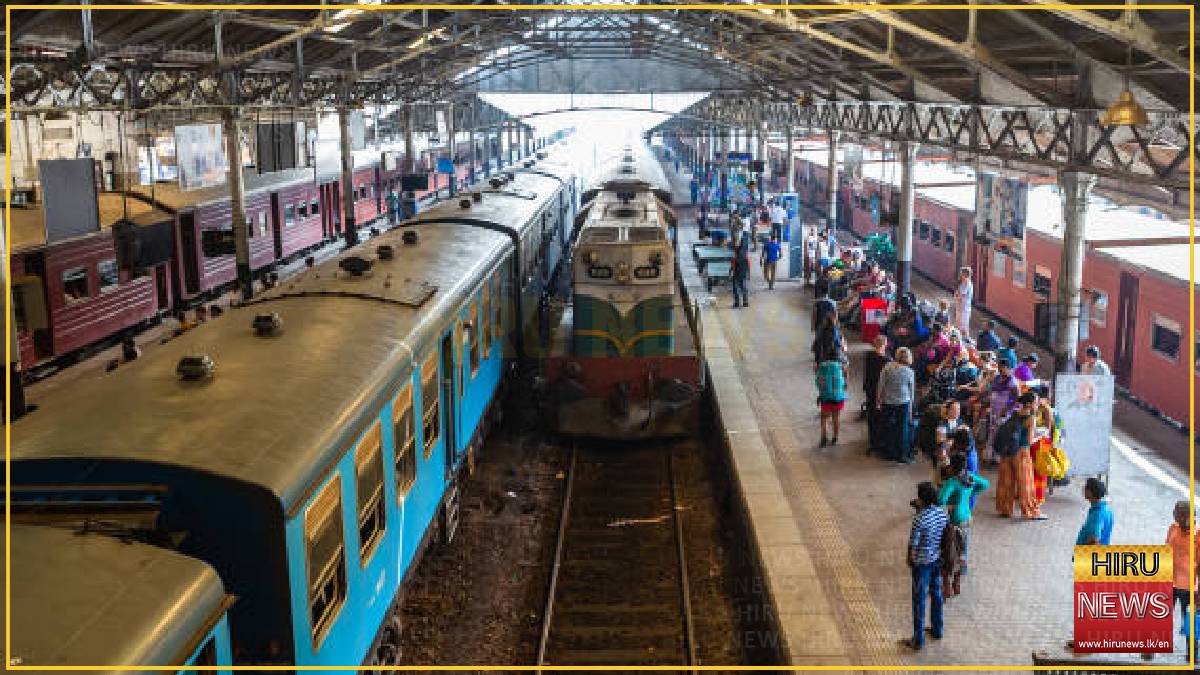
Commuters can now buy ordinary train tickets online through the www.pravesha.lk website or the Pravesha mobile app, following an announcement by the Department of Government Information, Hiru News reported.
Passengers enter their trip details, pay by credit or debit card, receive the e-ticket by SMS or email, and validate it with a QR code at stations and on board.
The timing is the story. The facility was announced as a 48-hour token strike entered its first day, having begun at midnight, with ticket issuing halted at numerous stations.
What is actually new
Pravesha itself is not new. The platform was used from June to issue concessionary season tickets to government officials, and in August the Transport Ministry said the season-ticket facility would be extended to private sector employees from October 1.
What changes now is the ticket type: ordinary point-to-point journey tickets, sold to any commuter, rather than concessionary season passes issued through an employer. Hiru does not describe it that way — it reports the facility as a launch — and does not say whether the rollout was scheduled independently or brought forward because of the strike.
The strike
Hiru puts the Railway Joint Trade Union Alliance at 29 unions, naming the Sri Lanka Railway Station Masters’ Association, the Railway Employees’ Association, the Sri Lanka Unprotected Railway Crossing Gatekeepers’ Association and the Railway Security Officers’ Association among them. Earlier filings across the build-up to the strike had put the alliance at 26 or 27 unions.
The unions are demanding the immediate removal of the current General Manager of Railways, whom they accuse of acting arbitrarily and ignoring staff grievances. Transport Minister Bimal Rathnayake has refused.
Despite the counter closures, the Railway Department said services ran to schedule through Thursday morning and afternoon, and Hiru reported commuters confirming that. The Daily Mirror published a photograph captioned “Free travels during rail strike” at midday — the practical effect of unissued tickets on a running service.
The Station Masters’ Association warned that trade union action will be intensified if the demands go unaddressed.
What the closed counters are costing
A figure has now been put on the revenue the online facility is being offered against. General Manager of Railways Ravindra Pathmapriya says the suspension of ticket sales is costing nearly Rs. 5 million a day, NewsFirst reported on Thursday.
That is the scale the Daily Mirror’s “Free travels” photograph illustrated without measuring, and it sets the commercial stake behind a same-day online rollout: over a 48-hour stoppage, roughly Rs. 10 million in fares that would otherwise go unissued.
It does not follow that Pravesha recovers it. No outlet reports how many tickets were sold through the platform, so the figure describes the problem rather than the effect of the remedy. Pathmapriya is also an interested party — he is the official whose removal the striking unions are demanding, and the loss figure is his department’s own.
A commuter quoted in the same report described the practical position at the stations: with counters closed, people were travelling without tickets, and the loss ultimately falls on taxpayers.
Update — day two: trains still running, counters still shut
On Friday, the second day of the stoppage, Hiru News reported that regular and office trains are not being obstructed even as the strike continues. The confirmation came from Sumedha Somaratne, chairman of the Railway Station Masters’ Association — the first time an office-bearer of a striking union has been named as the source for the claim that services are unaffected.
Ticket issuing remains suspended, the Association said, and the Department of Government Information again pointed passengers to the online channel and the Pravesha app. That answers one of the questions left open below: online sales are still running on day two, and the facility was not a one-day expedient.
It also sharpens the shape of this dispute. Two days in, the unions have withheld ticketing but not traction — the trains move, the money does not. On the department’s own figure of nearly Rs. 5 million a day in lost ticket sales, a full 48-hour stoppage puts roughly Rs. 10 million in fares at stake, and the strike is due to end at midnight.
Hiru adds that passengers reported no disruption to operations on Thursday, consistent with the Railway Department’s account of the first day.
The government portal names the Transport Ministry — closing one question below
The government news portal news.lk attributes the launch to the Ministry of Transport, not the Department of Government Information, and dates the facility’s introduction to Wednesday the 17th — the first day of the strike.
That answers the last question in the list below. The Department of Government Information distributed the announcement; the Transport Ministry made it. The distinction matters because the ministry is the same body whose minister, Bimal Rathnayake, has refused the unions’ central demand — so the online rollout and the refusal come from the same office on the same day.
news.lk otherwise restates the mechanics already reported — purchases through www.pravesha.lk or the Pravesha mobile app — and notably does not mention the strike at all. The government account presents the facility purely as an added convenience for passengers, with no reference to closed counters, lost revenue or industrial action.
Update — Saturday: the action is still running, and 187 journeys operated
Speaking at a media briefing on Saturday the 19th, Deputy Minister of Transport and Highways Dr. Prasanna Gunasena referred to the trade union action as ongoing — which places it past the midnight deadline the 48-hour token strike was due to end at, Daily Mirror reported. Daily Mirror does not say the strike was formally extended, or by whom.
Gunasena put Friday’s operations at 187 train journeys, with express services to Jaffna including the Yal Devi maintained. That is the first hard service-volume figure anyone has published for this dispute, and it gives the “trains move, the money does not” pattern a number.
He said some railway officers had worked nearly 24 hours continuously, and that operations normally requiring large crews were run with only a limited workforce.
“This cannot be considered a normal duty. The officers and employees who took responsibility for maintaining a public service during difficult times should be clearly appreciated. They should be respected by the entire government and by the people who travel by train,” he said.
The framing is worth noting. The Deputy Minister’s statement is addressed entirely to the employees who did not join the action — thanking those who reported for duty — and says nothing about the strikers’ demands or about talks. It is a government minister publicly dividing the workforce into those owed gratitude and those not, without engaging the dispute itself.
Not reported
Daily Mirror does not say whether the strike was extended or has ended, how many workers are still out, whether negotiations have resumed, or how 187 journeys compares with a normal Friday. It gives no updated revenue-loss figure and no response from the 29 unions.
Hiru does not say how many of the striking unions are observing the action on day two, whether talks have resumed with the Transport Ministry, or whether the Station Masters’ Association has made good on its warning to intensify the action. It gives no revised loss figure for the second day, and no outlet has reported whether the strike will end on schedule at midnight or be extended.
Neither outlet says how many passengers used the online facility, whether the system handled demand, or what happens to travellers who hold an e-ticket on a train no one is checking. Hiru does not say whether conductors were able to scan QR codes during the strike, or whether online sales continue after the action ends on Friday.
No outlet says how much of the Rs. 5 million a day the online channel recovered, whether ticket revenue rose after the announcement, or how the figure was calculated — whether it is gross fare income, a comparison against the same day last year, or an average. And while news.lk now identifies the Transport Ministry as the source of the announcement, no outlet says whether the rollout was scheduled independently of the strike or brought forward because of it.