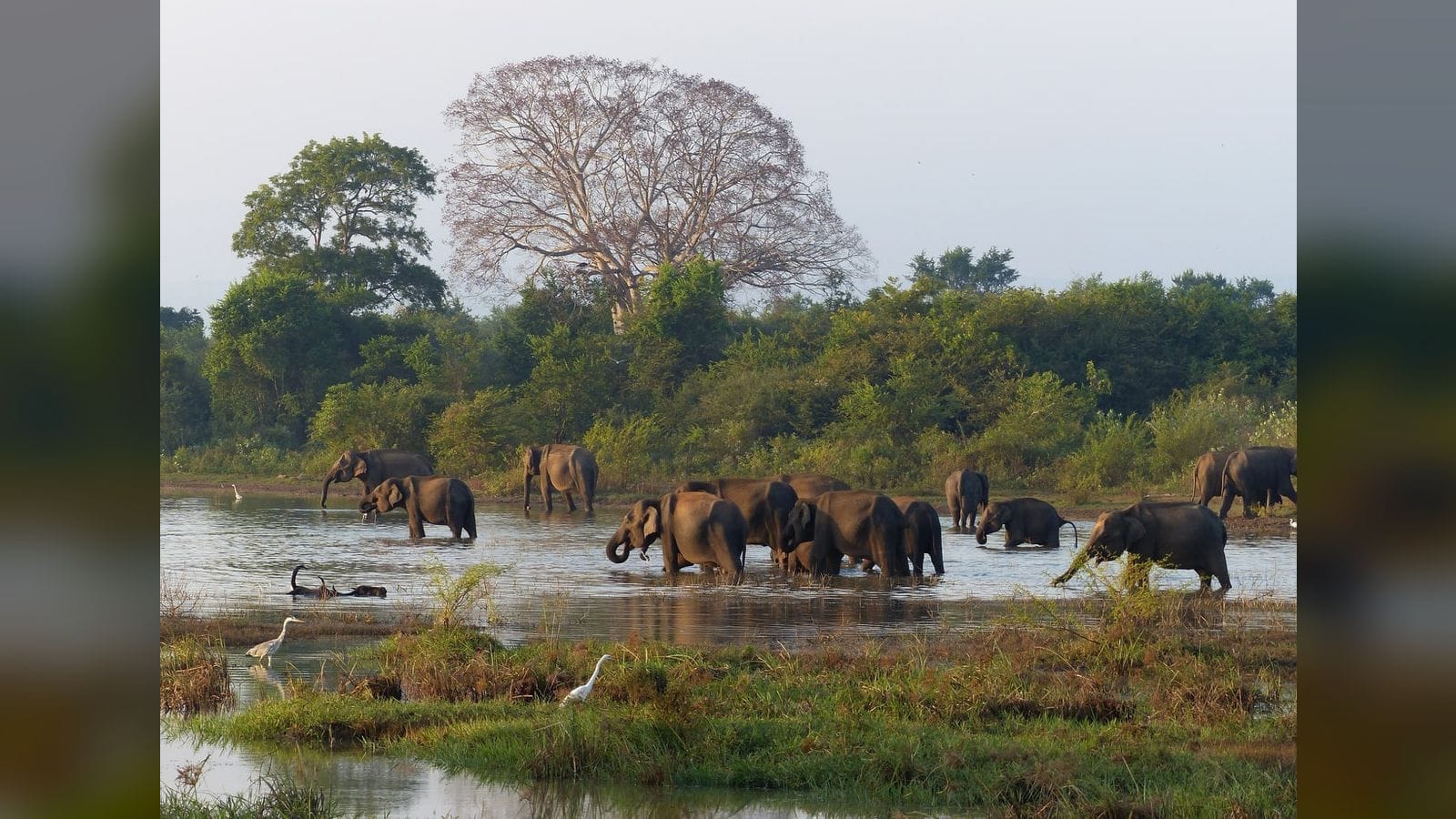
Sri Lanka’s armed forces and its wildlife service are to be joined into a single elephant-protection structure, under decisions taken at the Ministry of Environment on Friday. A dedicated operations room will be set up at Army Headquarters, soldiers will be trained by wildlife officers in elephant behaviour, and joint emergency raids will be intensified in conflict-hit areas.
The meeting was chaired by Environment Minister Dr. Dammika Patabendi and Deputy Minister Anton Jayakody, with Army Commander Lieutenant General K. V. Nilantha P. Premarathne, senior environment officials, representatives of military intelligence and drone operations units, and voluntary environmental organisations attending, the Daily Mirror reported.
What was agreed
- The Department of Wildlife Conservation will train military personnel in elephant behaviour and the procedures to follow when handling wild elephants in the field.
- The military will provide accommodation and field research facilities inside military camps for wildlife officers working on conservation.
- A dedicated operations room at Sri Lanka Army Headquarters will bring together wildlife officers, veterinarians and Tri-Forces personnel to coordinate field operations, monitor vulnerable elephants and run emergency responses.
- Special military security detachments will monitor the movements of vulnerable tuskers identified in high-risk areas.
- Joint emergency raids will be intensified, with legal measures strengthened against elephant killing and against hakka patas — the improvised explosive baits that detonate in an animal’s mouth, the Daily Mirror reported separately.
- A new reporting mechanism for wildlife crimes is to be introduced to speed up information sharing between agencies.
- Weekly data evaluations and monthly progress reviews will assess the programme.
The crowd problem
One agreed measure is unusual enough to be worth isolating: the meeting gave “special attention” to managing public gatherings when an elephant falls ill or is injured, because crowds and other disturbances obstruct wildlife officers and veterinarians trying to treat the animal.
That is not an abstract concern. It is a direct read-across from the death of the tusker Kavantissa, whose prolonged and heavily attended attempt at treatment this month ended in failure and triggered a presidential committee of inquiry, an opposition call for a parliamentary select committee, and the resignation of the attending veterinary surgeon.
The scale it answers
Parliament was told this month that 455 wild elephants died in 2025, a 17% rise on the previous year, against a national population surveyed at 7,451 animals. Elephants killed 160 people in the same year.
A programme that puts soldiers, drone units and military intelligence behind the wildlife department is a substantial escalation of state resources. Whether it reduces those numbers is a question for next year’s figures, not this announcement.
Update — a second newsroom confirms the account
The original version of this report rested on two Daily Mirror filings about the same meeting. The Island has since published its own account, independently confirming every element above: the Army Headquarters operations room staffed by wildlife officers, veterinarians and Tri-Forces personnel; the special military detachments assigned to monitor identified at-risk tuskers along their migratory routes; the training exchange in both directions; the intensified joint raids and strengthened law against killings and hakka patas; the new wildlife-crime reporting mechanism; the crowd-management measure; and the weekly data evaluations with monthly progress reviews.
It also confirms the attendance list, including Army Commander Lieutenant General K. V. Nilantha P. Premarathne, the Secretary to the Ministry of Environment, the Director General of Wildlife Conservation, and representatives of military intelligence and drone operations units alongside voluntary environmental organisations.
The Island states the meeting was held on the afternoon of 23 October at the Ministry of Environment, and describes the programme’s aim as protecting forest resources, preserving human lives and securing the survival of wild elephants.
Still not reported
No cost, funding source, start date or staffing figure has been given for the operations room or the training programme, and no timetable has been set out for the legal amendments. The number of tuskers classified as at-risk, and the criteria for that classification, are also unstated.
Sources
- Military personnel to receive special training in elephant protection — Daily Mirror, October 23
- Joint raids planned to curb elephant killings and wildlife crimes — Daily Mirror, October 23
- Joint operations room and special mechanism by Wildlife Department and Tri-Forces to ensure protection of Wild Elephants and Tuskers — The Island, October 23