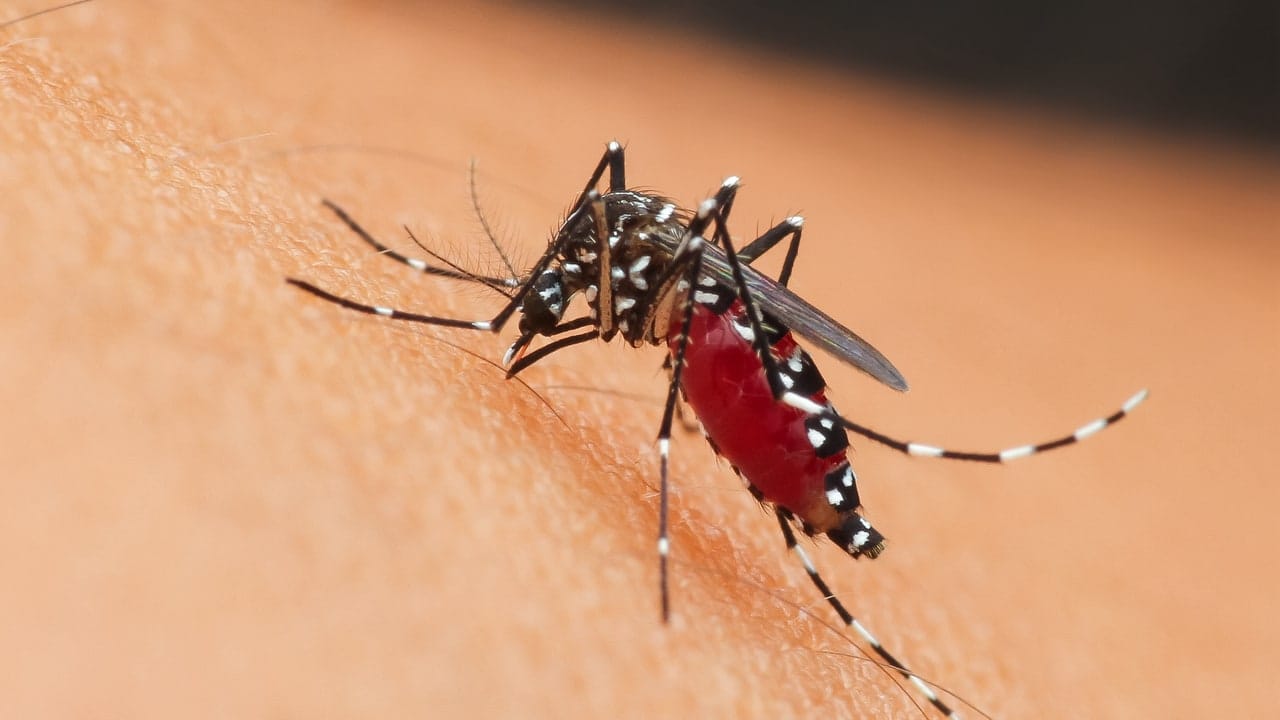
Dengue transmission is rising again with the current spell of rain, the Government Medical Officers’ Association says, and the National Dengue Control Unit has identified 28 Medical Officer of Health divisions across the country as high-risk.
The control unit puts the national caseload at 105,097 dengue cases so far this year, with 79 deaths.
Speaking at a news conference in Colombo on Monday, the GMOA’s assistant secretary, Dr. Chamil Wijesinghe, said a systematic programme is needed to stop the spread.
What the figures show
Set against the last national count this desk carried, the picture is mixed rather than uniformly worse.
| 16 October | 27 October | |
|---|---|---|
| Cases this year | 104,094 | 105,097 |
| Deaths | 79 | 79 |
| High-risk MOH divisions | 32 | 28 |
The year has added roughly 1,000 cases in eleven days — a rate of about 90 a day. That is far below the 1,200–1,300 daily cases the control unit described at the peak earlier in 2026, and close to the slower pace recorded through October.
Two things stand out. The death toll has not moved from 79 across those eleven days, even as the caseload rose. And the count of high-risk MOH divisions has fallen from 32 to 28, though neither figure’s criteria are published, so the two are not necessarily measured the same way.
Why rain matters
The association’s warning tracks the weather. Sri Lanka is in a sustained wet spell driven by the Bay of Bengal system now crossing towards India, with showers exceeding 75 mm forecast for several provinces today and schools closed island-wide.
Rain leaves standing water in discarded containers, tyres, blocked gutters and construction sites — the breeding habitat for Aedes aegypti. Cases typically follow one to two weeks behind the rain, which is why control units push cleanup drives during a wet spell rather than after it. The control unit had already flagged a rise in larval density in mid-October and scheduled a special mosquito control campaign for 2 to 7 November.
Update, 28 October — the GMOA puts a case to the Health Ministry
Two of the gaps flagged below were closed within a day. The Daily Mirror carried a fuller statement from Dr. Wijesinghe at 9.26 p.m. Colombo time on Wednesday, in which he set out both what the association says is missing and what it wants instead — and named the Health Ministry directly.
The entomological basis. Dr. Wijesinghe said data shows an upward trend in Breteau indices, indicating a rise in both mosquito density and larval density. “This serves as a clear warning sign that we may soon see a resurgence of dengue and an increase in the number of patients,” he said. He identified the Eastern, Northern, North Central and Uva provinces as of particular concern — the first provincial breakdown this desk has from the association, though still not the MOH-division list sought below.
He attributed the risk to intermittent heavy rainfall over the past two to three weeks combined with the onset of the Northeast Monsoon.
The accusation. Dr. Wijesinghe alleged the Health Ministry has failed to implement a comprehensive, long-term national programme to eliminate dengue, and that authorities respond mainly after the fact. “Currently, the response is largely reactive, triggered only when the number of dengue cases spikes or rainfall intensifies,” he said, adding that there is “little evidence” of a ministry-driven initiative of the kind required.
What he says is not enough. This answers the question left open on Monday of what the GMOA means by a systematic programme — largely by elimination. Media statements, appeals to the public to clean their surroundings and short cleanup campaigns will not eradicate dengue, he said: “The solution does not lie merely in counting the number of dengue patients or fatalities, nor in conducting a one- or two-day cleanup drive around homes, gardens, office premises, drains or the immediate surroundings.”
He called for a sustained national-level programme rather than temporary measures during periods of high transmission, while also urging the public to keep checking for new breeding sites at homes, workplaces, schools and religious premises.
Still no ministry response. The third gap identified below remains open: no reply from the Health Ministry or the National Dengue Control Unit is reported, and the 2–7 November campaign is not mentioned. The claims above are the association’s, and the Breteau index figures themselves are not published — Dr. Wijesinghe describes a trend without giving values.
Not reported
Hiru does not name the 28 high-risk divisions, give a district-level breakdown, or say how the high-risk list is compiled — nor does it explain why the figure has fallen from the 32 areas reported on 16 October. It gives no weekly case count, no hospital admission figures and no larval density values. Dr. Wijesinghe is not quoted on what a “systematic programme” would involve or what the GMOA says is currently missing, and no Health Ministry response is included. Whether the 2–7 November campaign still covers 32 areas or the revised 28 is not stated.
Only Hiru News had filed on Monday’s news conference at the time of writing; neither the Daily Mirror’s breaking news listing nor NewsFirst’s front page carried an account of it. Corroborated as of 28 October — the Daily Mirror has since filed on the association’s position, though on a later statement rather than on Monday’s conference, so the 105,097 case count and the 28-division figure still rest on Hiru alone.