Iran’s Islamic Revolutionary Guard Corps launched a second drone attack on Bahrain in three days on Sunday, saying it sent six drones against a US air defence radar at Riffa Air Base. Bahrain’s military says its air defences stopped them.
The Bahrain Defence Force said its air defence systems intercepted and destroyed the incoming drones “before they could achieve their objectives”, the Daily Mirror reported, citing the BBC. CNN reported the same interception, and Al Jazeera said the force described thwarting several Iranian “aerial attacks” on the kingdom.
It was the second time in three days that the IRGC claimed to have targeted a US radar in Bahrain, following a Friday attack this desk reported on 14 November.
Sirens before dawn
Bahrain’s Interior Ministry issued two alerts within about three hours, Al Jazeera reported, the first at around 4:30am local time (01:30 GMT). It warned of a “potential threat” and told residents to remain calm and move to the nearest safe location, without giving further detail.
Bahrain’s foreign ministry condemned the attacks “in the strongest terms”, calling them brutal and holding Iran “fully responsible for their consequences”. Al Jazeera reported the ministry said the strikes violated international law and that “no pretext can legitimise violations of state sovereignty”. Manama is the home port of the US Navy’s Fifth Fleet.
In a statement carried by the IRGC-affiliated Fars news agency and by Iran’s state broadcaster, the Guard said: “The Strait of Hormuz is closed, and any aggression by the American enemy will be met with an even harsher and more forceful response.” It also claimed US efforts to escort ships through the waterway had failed.
What the three accounts do not agree on
The target. The Daily Mirror and Al Jazeera both describe a US air defence radar at Riffa Air Base. CNN says the IRGC had claimed an attack on a US helicopter base in Bahrain. No filing reconciles the two descriptions.
The number of drones. The IRGC says six. Bahrain’s military says only that it stopped “several”.
Who said what about Sunday. US Central Command had not commented on Sunday’s attack at the time all three outlets filed — Al Jazeera says CENTCOM “has yet to comment”, and CNN says it had asked for comment. CENTCOM’s statement that it shot down two IRGC drones and that there were no injuries or damage relates to Friday’s attack, not Sunday’s. The two should not be merged.
The wider war
The US-Israel war on Iran began on 28 February, and the Strait of Hormuz — through which about a fifth of the world’s oil and gas normally passes — has had shipping restricted since. A Pentagon inspector general’s report released in September found Iranian attacks had damaged or destroyed buildings at US installations in eight countries, Bahrain among them, in the war’s first four months.
Al Jazeera reported, citing Reuters, that Friday’s strike was the first time since early September that Iran had claimed an attack on US military assets in a Gulf country. The IRGC’s navy also said two oil tankers struck sea mines on Saturday while trying to transit Hormuz.
CNN reported that Iran was angered by a Gulf Cooperation Council suggestion last week that it would owe its neighbours compensation for attacks on their territory. Iranian foreign ministry spokesman Esmaeil Baghaei told a news conference on Sunday: “How can countries that actively participated in military aggression against a neighbouring country and made their airspace, territory and waters available to those who attacked Iranian territory speak of seeking compensation from Iran?” He said the Gulf states “must be careful not to reopen old wounds”, a reference to their backing for Iraq in the 1980s war.
The GCC last week announced an advanced headquarters in Kuwait for its unified military command, with secretary general Jasem Mohamed Al Budaiwi calling it “a firm Gulf commitment to safeguarding the security and sovereignty of the GCC states”.
Diplomacy has stalled
A preliminary US-Iran agreement to end the war and reopen the strait was reached in June but collapsed within weeks, after Iranian attacks on shipping resumed and the US reinstated a naval blockade of Iranian ports. Iranian negotiators have since discussed with mediators a proposal to reopen Hormuz within two days if the US meets seven conditions, reportedly including lifting the blockade and releasing frozen Iranian assets.
This week Donald Trump said the US was no longer interested in a deal, and ordered Vice-President JD Vance, who had been working to restart negotiations, to concentrate on domestic politics instead — a shift this desk covered on 13 November.
Why it matters in Colombo
Sri Lanka imports all of its crude and refined fuel, and the Hormuz disruption has run through the import bill all year. CNN reported that Gulf oil exports excluding Oman reached 18.4 million barrels a day in October on International Energy Agency figures, close to pre-war levels, and that the resulting fall in oil prices has cost Tehran leverage in negotiations. Cheaper crude has helped Sri Lanka, but renewed attacks on Gulf infrastructure are the main upside risk to that.
Not reported
None of the three filings says whether any drone reached its target, what damage if any was caused at Riffa, or whether US forces took part in Sunday’s interception. CENTCOM’s account of Sunday is still outstanding, and the discrepancy between a radar installation and a helicopter base is unresolved.
A note on sourcing
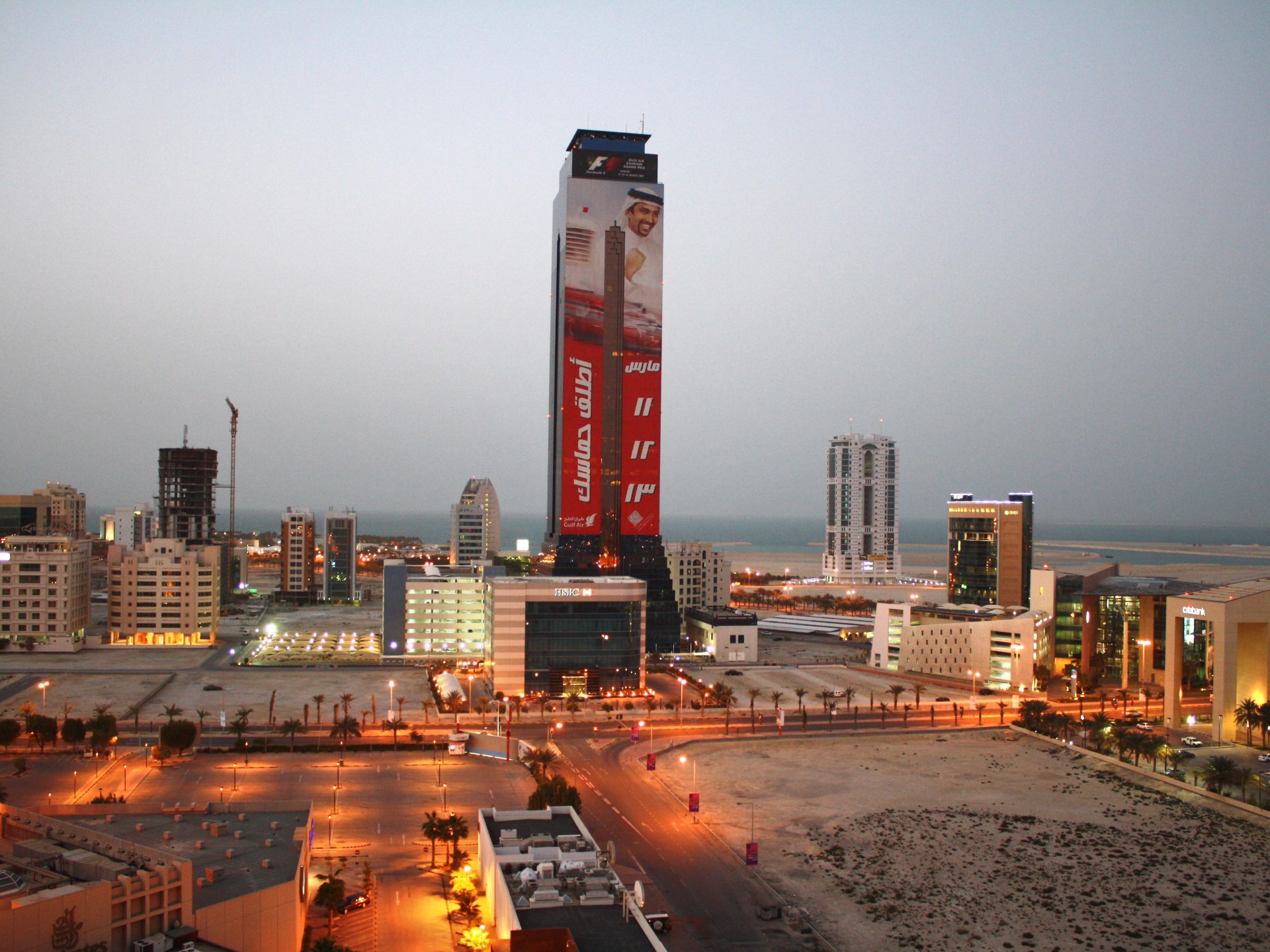
Three verified newsrooms, all filed on 15 November. The Daily Mirror’s account is credited to the BBC; Al Jazeera and CNN reported independently. The lead photograph is Al Jazeera’s file image of the Bahrain skyline, not a picture of this attack.