The Bar Association of Sri Lanka has asked President Anura Kumara Dissanayake to decide on the proposed constitutional amendment raising the retirement age of judges only after broad consultation with legal and academic experts.
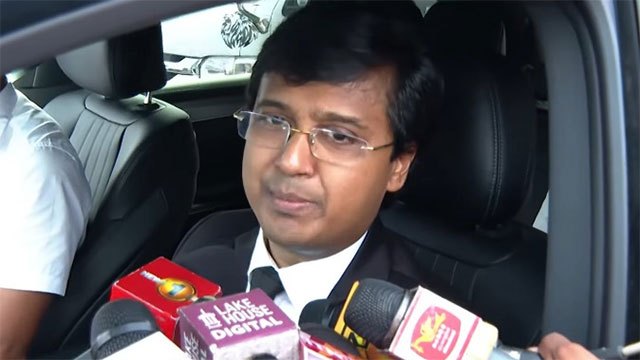
BASL President, President’s Counsel Rajeev Amarasuriya, set out the request to reporters after a delegation from the association met the President at the Presidential Secretariat on Wednesday. The meeting had been announced a day earlier and was set for 1.00 p.m.
It was the first time the association had met the President over the amendment, Amarasuriya said, having sought a meeting some time ago. NewsFirst reported that the BASL delegation numbered 24 and included its Secretary Nalin Silva, former BASL presidents Upul Jayasuriya, Geoffrey Alagaratnam, U.R. de Silva and Rienzie Arsecularatne, all President’s Counsel, and Professor Savitri Goonesekere.
“We explained our position to the President, and he also shared his views with us. Ultimately, we requested that any decision to make a change of this nature should be taken only after conducting broad academic and expert consultations,” he said.
A difference of opinion, not a confrontation
Amarasuriya described the discussion as constructive and said he hoped it would lead the government to reconsider. He stressed that the BASL’s stance was not aimed at any individual but reflected a difference of opinion between the Bar and the legal profession on one side and the President on the other.
The government held the constitutional authority to amend the Constitution, he said, while the association had the right to oppose a proposal it considered inappropriate. The BASL wants any further consultation to draw in university academics and researchers who have studied judicial tenure.
“I hope things will turn around for the better following today’s discussion. We met the President, who is a mature leader and an experienced politician. He has fought for years for the rule of law and the independence of the judiciary. Therefore, we will wait and see how this matter develops,” he said.
Amarasuriya also rejected suggestions that the association had stayed silent over personal and derogatory remarks directed at the Chief Justice in connection with the amendment. The BASL had consistently opposed personal attacks and unfair criticism of individuals, he said, adding that he had himself been the target of criticism and smear campaigns in recent weeks without the association issuing a statement. Attacks on judges or others, including through fake social media accounts and bots, were unacceptable, he said.
The President’s response
President Dissanayake told the delegation that the decision to extend the retirement age had not been taken with any individual or group in mind, but in the broader public interest, according to a statement issued by the President’s Media Division after the hour-long meeting.
He said the administration of justice did not rest with the judiciary alone but was an integrated process encompassing investigations, prosecutions and adjudication. On that basis, the government was moving to strengthen the human resources of the Attorney General’s Department, the Commission to Investigate Allegations of Bribery or Corruption, the Sri Lanka Police and the Government Analyst’s Department.
Plans were also under way to expand CIABOC’s services to the district level, increase the number of Court of Appeal judges and provide the infrastructure for that court to sit regionally, the statement said. The President said the number of High Court judges would also be increased and court buildings and facilities improved.
The retirement age change was only one component of a wider reform programme addressing problems across the justice system, he said, and should not be read as his personal position or that of the government alone.
The President’s Media Division said the BASL representatives had told the meeting they had no policy-level objection to increasing the number of judges or to extending the retirement age, but proposed that the decision on the retirement age be reconsidered with a view to reaching a broader consensus.
Justice and National Integration Minister Harshana Nanayakkara and the President’s legal adviser, Attorney-at-Law J.M. Wijebandara, also took part in the discussion.
”I am ready to leave”
A fuller account of what the President said in the room, reported by NewsFirst and Ada Derana on Thursday, has him addressing directly the argument that the amendment could rebound on him personally.
“It has been suggested that because of this constitutional amendment, the next President, and even I myself, may have to leave office. I am prepared for that. I did not come here expecting to hold on to positions. I am prepared to take risks to bring about change,” he said.
“I do not believe change can happen without risk. Change always requires someone to take a risk. The best example is the Easter Sunday investigation. The investigation involves the intelligence services, and they are responsible for my security. Yet I continue with those investigations. I know there are risks involved.”
He said he was prepared to accept the consequences: “If, in the process, I lose my position, I am fully prepared to accept that and leave. I am ready for that.” Ada Derana rendered the same passage as “I am a person who is ready to leave. I did not come here intending to remain seated.”
The President also gave an assurance on the use of executive power. “My approach is rooted in the Constitution. I will never use my executive powers or any authority available to us beyond what is permitted by the Constitution,” he said.
On the argument that the reforms confer privileges, he turned the question back on his critics. “Where do we draw the line when it comes to privilege? Is it not a privilege when someone attempts to position a person of their choosing to occupy the office of Chief Justice in the future? There have been instances in history where such situations have occurred,” he said.
Any change involving the judiciary was open to competing readings, he said, citing proposals to raise the number of Supreme Court judges from 11 to 17 and Court of Appeal judges from 12 to 20 — which some read as an attempt to bring in a particular group of judges. Even salary increases or vehicle permits for judges could be characterised as privileges, he said, adding that he had tried to ensure the reforms were not built around any one individual. He described the package as “a process of transforming the judiciary from its current state to a stronger and more effective one”.
The President said he had come to the meeting with an open mind, but objected to the substance of such discussions being set out in media statements beforehand, which he said obstructed open discussion. He added that he treated Amarasuriya’s submissions as representing the legal community rather than personal opinions: “I do not regard him as an individual. I regard those views as representing the legal community he represents.”
BASL floats a Parliamentary Select Committee
In a signed statement issued after the meeting, the BASL said it had proposed that a “proper and meaningful consultative process” be started with all relevant stakeholders — the legal profession, judges, academics and others — before the government decides whether to proceed.
The association added that the matter could be referred to a Parliamentary Select Committee as part of that process. It is the first specific procedural route the BASL has put forward for resolving the dispute.
The statement put the association’s position more firmly than Amarasuriya’s remarks to reporters. It said the amendment would have a serious impact on judicial independence, that no case had been demonstrated for treating it as a priority, and that on those grounds the government should not proceed with it at this stage. Several other matters required the government’s attention more urgently, it said.
The BASL described its delegation as 20-strong; NewsFirst put the number at 24.
According to the statement, Amarasuriya invited Professor Savitri Goonesekere to set out the constitutional argument, which she did from the separation of powers, the need for an independent judiciary and the importance of sustained public confidence in it. She drew a distinction between extending tenure in the public service generally and extending the tenure of judges, who form one pillar of democracy. The President then explained the government’s position.
What the amendment would do
The bill gazetted on August 7 would raise the mandatory retirement age of Supreme Court judges from 65 to 67 and Court of Appeal judges from 63 to 65 — ages fixed in the Constitution, so the change needs a two-thirds majority in Parliament.
Hours before Wednesday’s meeting the BASL issued a signed statement arguing the amendment also requires a referendum and urging the government to abandon it in its present form. The proposal has drawn objections from the Mahanayake Theras, the International Association of Judges and opposition parties.
Sources
- BASL meets President, urges to decide on judges’ retirement age after discussing with experts — Ada Derana, August 12
- BASL urges President to consult experts before extending judges’ retirement age — Daily Mirror, August 12
- Bar Association requests the President to decide on the revision of the retirement age of judges after an expert discussion — Hiru News, August 12
- BASL suggests referring judges’ retirement age proposal to a Parliamentary Select Committee — Ada Derana, August 12
- President Defends Judges’ Retirement Age Extension, Says Move Is in National Interest — NewsFirst, August 12
- Judges’ retirement age extension not intended for any individual or group - President — Ada Derana, August 12
- President says judges’ retirement age extension not aimed at any individual — Daily Mirror, August 12
- ‘I Am Ready to Pay the Price for Change’ — Sri Lanka President tells BASL — NewsFirst, August 13
- President vows not to exercise powers beyond constitutional limits — Ada Derana, August 13