The United States began rolling out sanctions on Iran’s trading partners on Monday under what Treasury Secretary Scott Bessent called “the greatest financial offensive ever marshalled against an adversary” — and Tehran responded by threatening to stop all oil leaving the Gulf.
“At dawn begins an economic D-Day,” Bessent wrote in an opinion piece published in the Financial Times on Sunday. Without naming specific measures, he signalled that Washington would target what he called “fearful nations” practising “appeasement” by dealing with Iran’s economy and financial system. “They would do well to consider the consequences of sustaining it,” he wrote. Al Jazeera reported him saying the aim was to “sever every economic lifeline” sustaining Iran.
Bessent is due to hold a press conference at 2.00 p.m. EDT (1800 GMT) on Monday.
Tehran’s counter-threat
Mohsen Rezaei, secretary of Iran’s Supreme National Security Council, escalated the warning he issued at the weekend into an explicit export threat.
“If the economic war continues, not a single drop of oil will be exported, neither through the Strait of Hormuz nor from anywhere in the Persian Gulf,” Rezaei wrote in a social media post. He added that Iran would treat any country’s participation in or support for the campaign as “an act of war”.
Iran’s parliamentary National Security and Foreign Policy Commission separately advanced a draft law that would charge ships permitted to transit Hormuz for services provided by Tehran, Al Jazeera reported.
Bessent has pressed China to cooperate, noting it draws half its oil imports from the Gulf. A spokesperson for China’s embassy in Washington said “sanctions and pressure do not help resolve the problem” and called for diplomacy.
Six months, no talks
Neither side has conducted military strikes for weeks, but nor have they held meaningful negotiations. The last face-to-face US–Iran talks were in Switzerland in June. Qatar, Pakistan and Turkey have all attempted mediation, and Pakistan’s army chief Asim Munir was due in Tehran on Monday, timed to coincide with Bessent’s announcement.
Thousands have died — most of them in Iran and Lebanon — since the United States and Israel began strikes on February 28. The campaign degraded much of Iran’s conventional military and killed Supreme Leader Ayatollah Ali Khamenei. The US has reported 18 military personnel killed and more than 750 wounded.
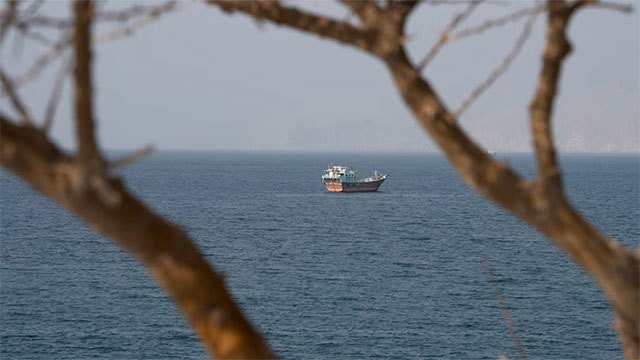
Iran retains enough missile and drone capability to threaten tankers in the Strait of Hormuz, where shipping has slowed to a near standstill — the mechanism through which the conflict reaches Sri Lanka, via fuel and freight costs and food prices.
Update: Oman’s foreign minister due in Tehran on Tuesday
Oman’s Foreign Minister Sayyid Badr Albusaidi will travel to Tehran on Tuesday to continue talks between Iran and Oman on the Strait of Hormuz, Iranian Foreign Ministry spokesperson Esmaeil Baghaei said on Monday.
The visit adds a second mediator to the week’s diplomacy. Baghaei had said on Sunday that Pakistan’s army chief would arrive in Tehran on Monday, timed to coincide with Bessent’s announcement. Oman has historically served as the quiet back channel between Washington and Tehran, hosting indirect talks between the two.
Neither Ada Derana, which carried the Reuters report, nor Daily Mirror reported an agenda for the Omani visit beyond the Strait of Hormuz, or whether the United States would be represented in any form.
Update: Iran warns shipping away from Hormuz without its permission
Iran has issued a fresh warning to shipping not to pass through the Strait of Hormuz without its permission, Ada Derana reported on Monday afternoon, citing Reuters. It is a step beyond Tehran’s earlier export threat: the demand now applies to third-country vessels transiting the waterway, not only to Iranian oil leaving it.
Around a fifth of the world’s oil and gas normally moves through the strait. Traffic has been effectively blocked by Iran since the conflict began at the end of February.
In the same report, Bessent was quoted claiming the US-Israel war with Iran was “entering its endgame”, and warning that any nation partnering with Iran financially would itself be isolated. He said Washington would sever all economic ties with the country.
The two wire accounts differ on when Bessent’s press conference was due: Ada Derana’s Monday report put it at 13:00 US local time (18:00 BST), an hour earlier than the 2.00 p.m. EDT (1800 GMT) reported earlier in the day. Ada Derana also noted that the threat follows a series of U-turns and extended deadlines from the Trump administration on earlier warnings to Tehran — including Trump’s statement in April that “a whole civilisation will die tonight” unless Iran agreed a deal, a position Washington abandoned after Pakistani mediation.
The report set the campaign against the collapse of the 2015 nuclear agreement, under which Barack Obama and several US allies lifted many sanctions in exchange for limits on Iran’s nuclear programme. Trump withdrew from it in 2018, calling it “defective at its core”, and reimposed US sanctions. Joe Biden made some attempts to restore it without success. In April this year, the Trump administration opened a wave of sanctions on foreign banks and firms dealing with Tehran after its military campaign failed to force a surrender.
Sources
- US vows ‘economic D-Day’ as Iran threatens to halt all oil exports — Ada Derana (Reuters), August 24
- Iran faces ‘greatest financial offensive ever’, says US treasury secretary — Ada Derana, August 24
- Top Oman diplomat due in Tehran for talks on Hormuz, Iran says — Daily Mirror, August 24
- Iran war live: Iranian parliament advances plans for Hormuz service fees — Al Jazeera, August 24